


Go Back
News
YCYW Educational Insights
How can IGCSE subject choices keep options open when university plans are undecided?
YCYW Educational Insights
20 Oct, 2026
12 : 18

The options form is due, and your child still cannot answer the question, “What would you like to study later?” It is tempting to keep every route open: retain the sciences, add something that sounds useful for business, and make room for the art your child enjoys. Yet timetables, time and energy have limits. Taking more subjects cannot replace making a judgement.
Start by naming what remains uncertain. Which kinds of work already interest your child? Which later courses genuinely require particular foundations? Which worries come from something the family has heard rather than checked? Keeping options open needs both a route you have investigated and a combination your child can sustain.
Check what the school actually offers before comparing subjects
A list of IGCSE subjects found online is not a list of what your child can choose at school. Cambridge International's curriculum guidance describes a broad curriculum and flexibility for schools to build subject combinations. Begin with the options information for your own campus, school year and examination cohort. Ask which subjects are compulsory, which are optional, whether any clash in the timetable, and what learning and assessment actually involve.
A 30 April 2026 article published by YWIES Beijing puts the focus on access to information. Referring specifically to YCYW Beijing Yizhuang, it describes IGCSE options information sessions for students and parents, alongside continuing communication between guidance staff and families. The useful question is what comes after understanding the course names: how could this particular child's subjects fit together? The report describes Beijing Yizhuang's approach; families still need their own campus's formal information for the relevant year.
Your child could take two subjects they are considering to a teacher and ask to see a representative classroom task from each. What would they need to do? What knowledge or skills would they bring to it? With two tasks in front of them, your child can explain which kind of work they want to do and what they do not yet understand.
Check the next stage separately from university requirements
“Will this subject help with university?” contains two different questions. How does it connect with the next stage of school study? How could choices at that later stage affect university applications? IGCSE, A Level or IB Diploma Programme (IBDP) study, and university entry requirements should not be collapsed into one universal checklist.
Christ's College, Cambridge, advises that post-16 subject choices can affect the university courses a student can apply for, and that requirements differ between courses. That advice concerns the later stage of study. It does not establish a particular IGCSE subject as compulsory for all universities. With the school, check entry conditions for the next qualification first. Then look at the official requirements for a small number of university courses of interest, distinguishing what is required, recommended or simply not specified.
A child who has no career target does not need a parent to choose one for them. List two or three fields worth exploring for now. For each, ask whether the proposed subjects could affect access to relevant later courses, and what keeping that route would involve. Consider time, the opportunity to study a different subject, and the child's willingness to commit. “Keeping options open” becomes a set of conditions to check, rather than an assumption that more science must always be safer.
Test an interest through some actual learning
A child who says they like business might enjoy running a small shop, analysing a market, or something they have not yet encountered. Those possibilities need exploring. Ask which recent task they wanted to take further, and whether they still wanted to understand it when it became difficult. An interest need not already have the name of a degree, but it helps to build experiences the child can discuss.
A graduate interview published by YWIES Shanghai Lingang on 29 May 2026 describes one such process. A student interested in business was recommended an economics course by the Careers and University Guidance Office (CUGO) team. Classroom “young entrepreneur” activities and a business group he organised gave him further ways to explore that interest. What matters here is the opportunity to bring a broad interest into actual learning and then make a judgement about it.
This is one student's retrospective account. The original does not identify the recommendation as part of an IGCSE options procedure or specify when it happened, so it cannot stand for an arrangement every student receives. Take the underlying question to your own school: are there suitable sample tasks, activities or conversations with a subject teacher for this stage? Afterwards, ask your child what they enjoyed and what they did not, and revisit the reasons for their proposed choice.
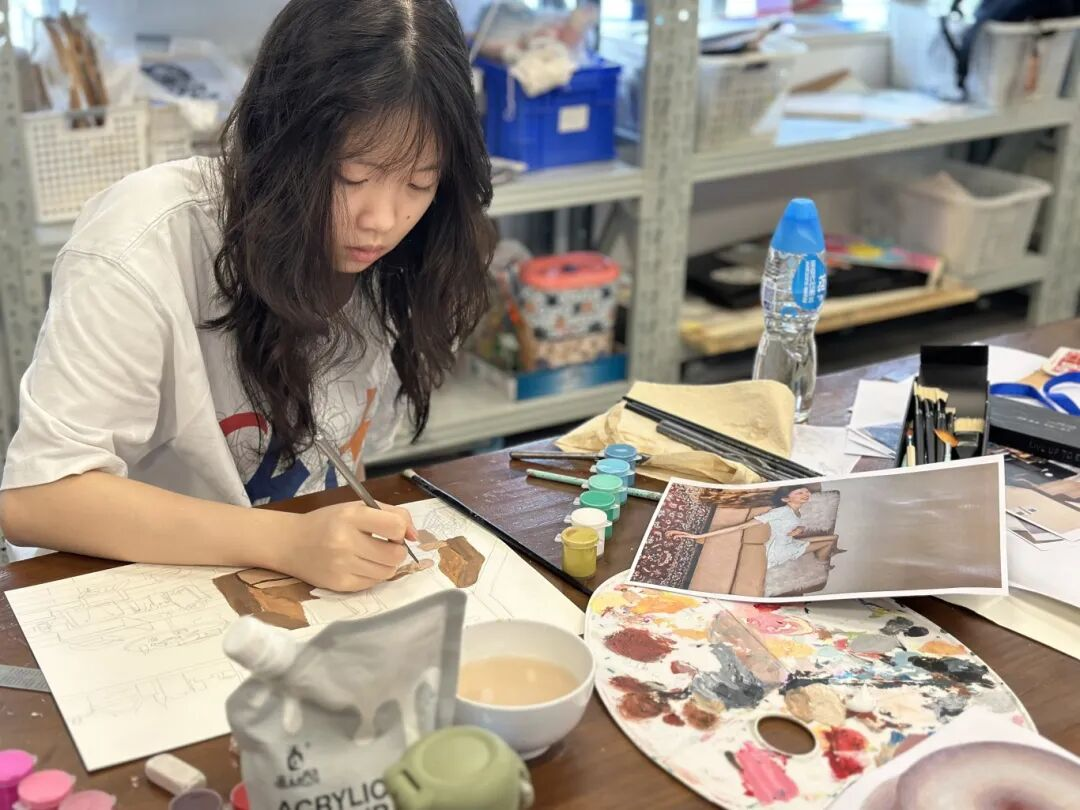
Art-making in the original YWIES Guangzhou graduate interview. Image source: YWIES Guangzhou; article published 1 June 2026. View source article
If the direction changes, ask which assumption has changed
Sometimes a subject's reputation, rather than a student's ability, narrows the options. “Art is only for people who draw well” or “economics is about running a business” are ideas worth checking against actual course work. Before asking whether to change direction, ask what the child has discovered. Have they encountered a new way of working, or found that the course differs from their original picture of it?
In an arts graduate interview published by YWIES Guangzhou on 1 June 2026, a student recalls choosing other subjects at IGCSE after hearing that art was difficult. The interview also describes her interest in software and typography, and an art teacher encouraging her to explore graphic design. Her account gives parents a reason to investigate what a subject contains before ruling it out on reputation alone.
That individual experience does not mean students can change subjects freely at any stage, or establish general conditions for entry to arts courses. If a new direction emerges, ask the school to check timing, prior learning, the timetable and assessment progress before considering an adjustment. Where relevant, check later course or portfolio requirements as well. Reconsidering a choice can be well founded; whether a particular change is possible still needs a specific answer.
Leave the options meeting with reasons for the decision
Keep the meeting preparation to a page. Your child can write down the subjects they are willing to commit to and why. Parents can identify the later routes they are concerned about. Subject teachers can explain the work involved, while guidance staff can help check progression requirements. The framework below is for families to use in discussion; it is not a promise of a particular campus service.
| What needs an answer? | What can the family record? |
|---|---|
| What can the student actually choose now? | This year's campus options information, restrictions and submission date |
| Why does the child want this subject? | One actual task or learning experience, and what remains uncertain |
| What does the next step require? | Formal conditions for later study, including when and with whom they were checked |
| Is the combination manageable? | Subject teachers' advice on readiness, assessment and time commitment |
| When should the decision be reviewed? | A follow-up date, questions still to check, and the formal rules on possible changes |
Not every blank needs filling before a decision is made. Record an undecided university direction as something to explore. If a condition is unclear, identify who will check it rather than treating a guess as a requirement. The record should help the family understand the basis for the choice and recognise what new information would justify another conversation.
The Beijing, Lingang and Guangzhou accounts offer different glimpses of information sharing, interest exploration and reconsidering a subject. Each remains bounded by its campus and the experience described. Families can take a common question from them: do we understand the work our child would be choosing, and the conditions for the next step? A child can make a reasoned choice they are willing to commit to, even before deciding on university study.
For the course background, see YCYW's introduction to IGCSE, in Simplified Chinese. This article focuses on the options conversation; use your school's current formal information for specific arrangements.
Frequently asked questions
Should a child give up a subject they enjoy if their current results are weak?
Ask the subject teacher to identify the difficulty, such as foundational understanding, expression or completing tasks, and check the demands of the next stage. Agree on a focused preparation task with your child, then return to the discussion with new evidence of their learning. Interest is one reason for a choice; readiness, time and school conditions also need to inform whether the subject is suitable.
Who should decide when a parent and child disagree?
Turn the disagreement into questions that can be checked. If a parent is concerned about a later route, look up the formal requirements together. If the child prefers a subject, ask them to explain why using an actual task. Relevant teachers can help clarify the issue. The child needs to commit to the learning, while formal choices follow the school procedure. Neither a parent’s imagined career nor a passing preference should replace that discussion.
Should a child choose the same combination as their friends?
Friends can share experiences, but the same combination may not suit different students. Ask your child for a reason that would still stand without their friends, then check learning demands and progression. If the reason is simply wanting to share a class, ask a teacher about the actual class arrangements before returning to the work your child is willing to commit to.
