


Go Back
News
YCYW Educational Insights
Applying to Cambridge: What Makes Super-Curricular Learning Meaningful?
YCYW Educational Insights
14 Sep, 2026
17 : 38

Your child has finished a book or attended a lecture. Should they sign up for another activity, or spend time working through a question they still do not understand? For families considering Cambridge, that choice deserves more discussion than the length of an activity list.
The YCYW Careers and University Guidance Office (CUGO) webinar on 9 September 2026 explored a recurring question: how can students show their engagement with a subject through learning beyond the school syllabus that relates to the course they hope to study? These experiences are known as super-curricular activities. The speakers focused on the thinking and understanding that follow an activity, rather than the number of programmes attended. CUGO webinar, approximately 17:29–24:45
Cambridge's official advice makes a similar point: when students discuss activities in their personal statement, their experiences and reflections matter more than the number of activities. Applicants must still have predicted grades that meet the requirements of their chosen course and College. Super-curricular learning should sit alongside schoolwork; it cannot replace the basic entry requirements. Cambridge application preparation guidance
Explore what you want to study before choosing activities
Exploration can help a student answer the question, “Why do I want to study this subject?” For those still considering their direction, reading, public lectures or a small practical exercise can reveal what a subject involves and whether they want to keep asking questions about it.
The webinar encouraged students in Year 9 and Year 10 to begin exploring areas of interest and bring what they learn into discussions about subject choices. CUGO webinar, approximately 08:11–15:48 This is advice about early exploration, rather than a Cambridge requirement to settle on a career in a particular school year. Year labels in different education systems should not be treated as direct equivalents.
Parents can look with their child at the content and entry requirements of university courses that interest them, then discuss IGCSE, IB Higher Level or A Level subject choices with a subject teacher or university guidance counsellor. The aim is to understand which options a choice may keep open and which it may restrict, while recognising that interests can still change.
Let one piece of reading lead to the next question
Once a student has found a starting point, their questions can guide what comes next. Activities need not take the same form for everyone. A keen reader might begin with an article; a student who prefers observation and practical work might start with an exhibition or a small design problem. What matters is whether the content relates to the subject they want to explore and whether they can engage with it.
Consider this hypothetical example, which does not describe a real student. A student interested in engineering reads about bridge materials and wants to know how to judge whether one material is more environmentally friendly. They find two articles, but notice that the comparisons use different conditions: one focuses on manufacturing, while the other also considers transport and service life. They note the different assumptions and ask a teacher to help them work out what further information they would need to make a comparison.
The exploration may not produce a definite answer, but it can make the student's interest more specific. They began by wanting to know which material was “best”; now they want to understand how engineering judgements account for different conditions. They could also look at how university courses in materials science or engineering approach such questions. The next step is further reading and checking, without rushing to present the reading as university-level research.
A short set of notes can preserve this process: what I explored; which question caught my attention; how I responded; and what I want to investigate next. This is a tool for organising thought, not an application form, and there is no set word count. When listening to their child explain, a parent might ask, “What made you change your mind?” and allow them to be unsure for now.
Look at the learning opportunities before booking a summer course
Some students use summer courses to encounter new subjects. Discussing these programmes at approximately 26:21–29:25, the webinar cautioned that a short period of participation is no magic solution for becoming a more competitive applicant. Students still need to reflect on the experience and continue using and developing what they have learnt. CUGO webinar
Before committing time and money, families can ask the organiser what problems students will tackle themselves. Will they have opportunities to discuss ideas, receive specific feedback and revise their thinking? How can they continue exploring afterwards? Families can then consider whether the level of difficulty, timetable and cost suit their child's current needs.
A prestigious university setting, a speaker's title or a certificate cannot answer those questions on its own. A book that a student can engage with, accompanied by a substantive discussion with a teacher, can also provide a starting point. These questions help parents assess learning opportunities; they are not Cambridge's admissions scoring criteria.
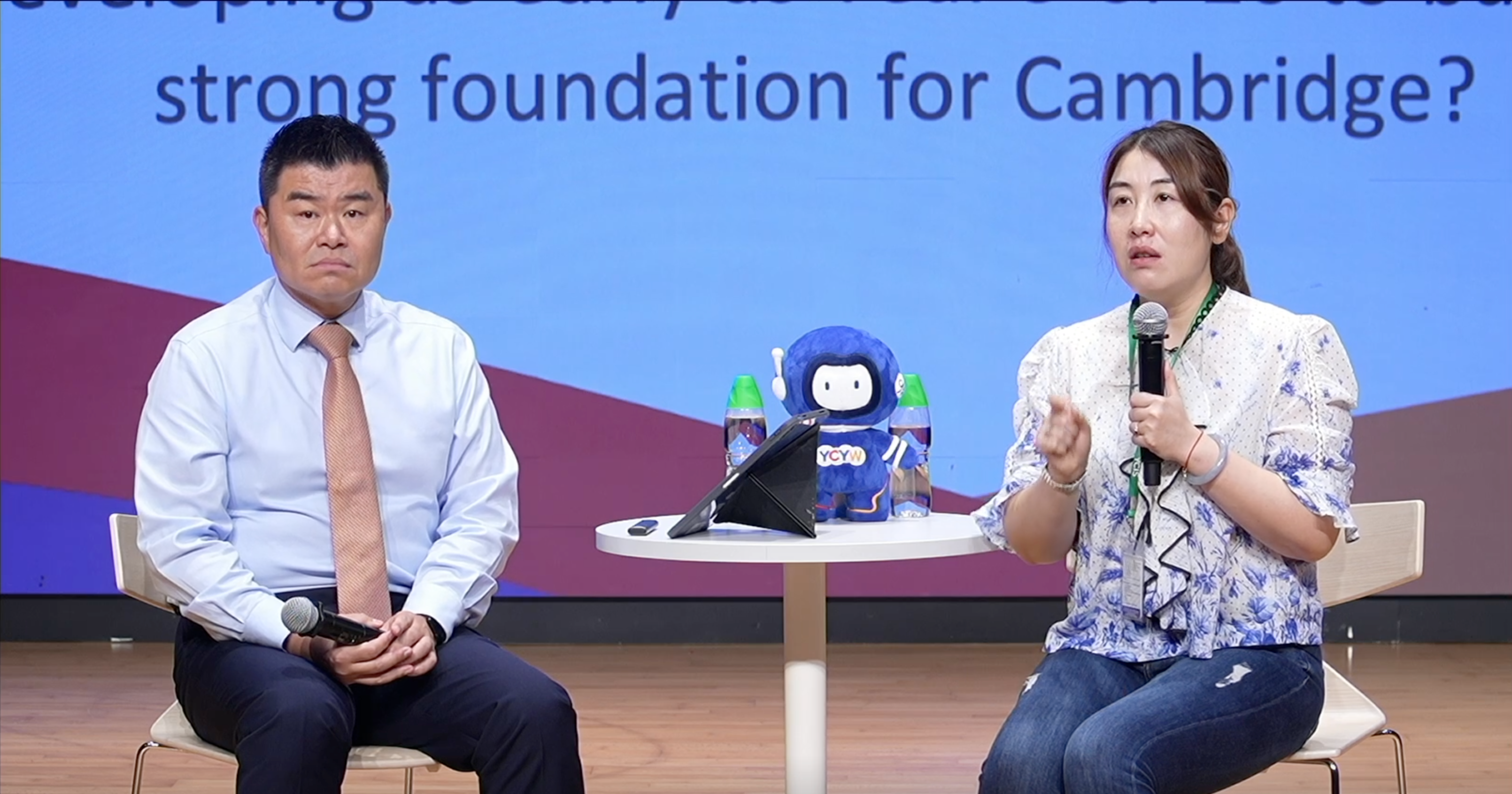
An on-stage discussion during the CUGO webinar on 9 September 2026. Image: screenshot from the event replay.
Explain how your understanding developed in the personal statement
When it is time to prepare an application, everyday notes can help students choose experiences worth discussing. Instead of simply writing, “I attended an engineering lecture, which increased my passion for engineering,” they can explain why a particular problem interested them, what they investigated afterwards and how their understanding changed. The content must come from something they actually did. The hypothetical example above must not be presented as their own experience.
Cambridge's current personal statement guidance asks students to focus mainly on academic content, discuss a few activities and their own thoughts in depth, and explain connections between their interests. The UCAS personal statement now has three sections, but Cambridge has no preferred way of dividing the content between them. The personal statement is also only one part of the overall application. Cambridge personal statement guidance
A parent can act as a listener: ask their child to explain an experience clearly, point out anything they do not understand, then let the student revise it themselves. If the child can only repeat the activity's description, it is worth returning to the material to identify their own questions and judgements before polishing the sentences.
Help the interviewer follow your reasoning
Super-curricular learning can also provide material for practising how to explain ideas. Cambridge describes interviews as academic conversations about the subject a student hopes to study. They help assess subject understanding, potential, and the ability to think critically and independently. Students may be asked to apply their knowledge to unfamiliar situations. Cambridge interview guidance
At approximately 01:03:40–01:06:59, the webinar encouraged students to practise expressing their thought process and engaging in discussion. CUGO webinar In everyday practice, a student can explain a concept to a teacher, classmate or family member: set out what they know, then explain where they would begin. If something is unclear, they can describe their uncertainty, listen to a prompt and try again.
This does not mean knowledge or answers are unimportant. Clear expression helps another person see the student's reasoning and understanding; fluent speech cannot conceal a gap in knowledge. For parents, hearing their child's own ideas is more informative than hearing a rehearsed account of what an “excellent applicant” should say.
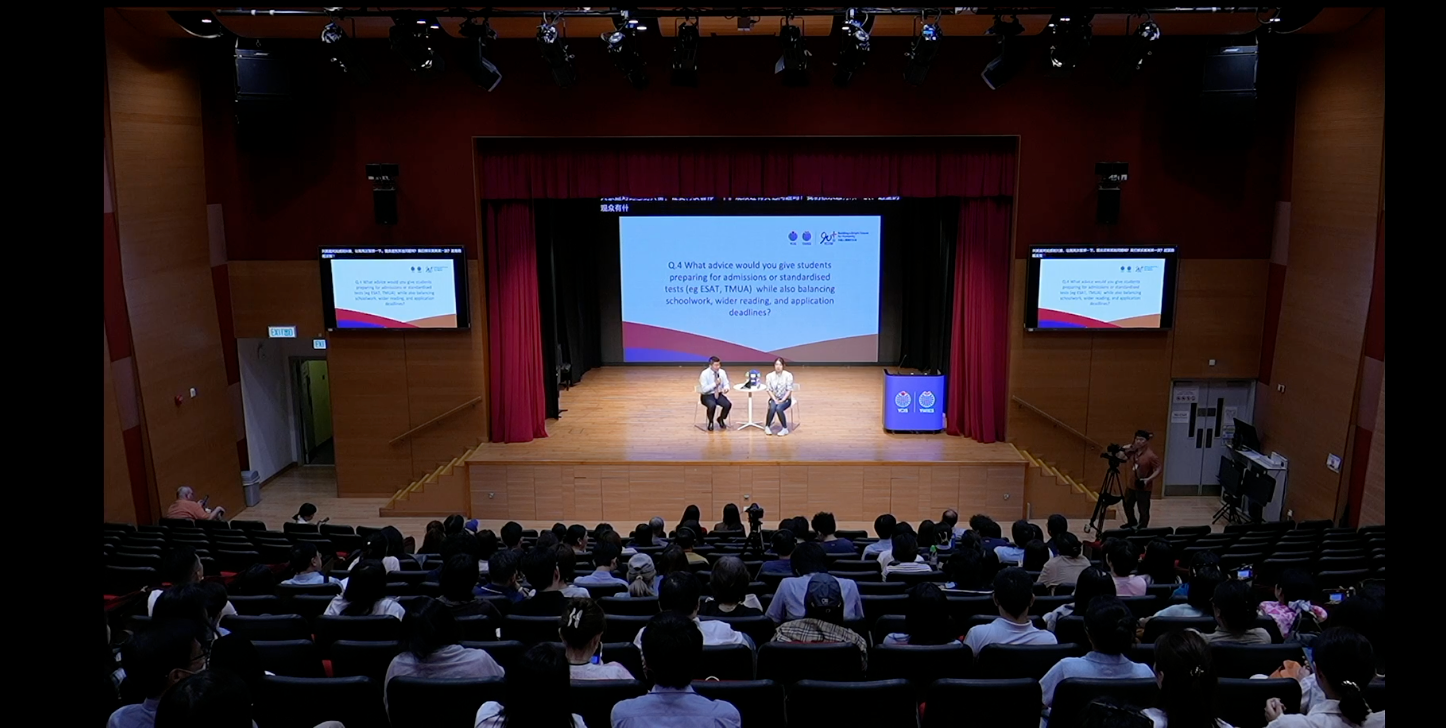
A wide view of the CUGO event auditorium, with an audience listening to the on-stage discussion. Image: screenshot from the event replay on 9 September 2026.
Bring your exploration to the next subject-choice or university guidance conversation
During the same webinar, the host invited YCIS students to discuss their interests and the progression from IGCSE to IB subject choices with their school university guidance counsellor. CUGO webinar, approximately 15:48–16:20 A 2024 YCIS Hong Kong public school newsletter also records how CUGO used university fairs and careers talks to introduce students to information about courses and careers. These are opportunities to explore and ask questions; they do not establish an individual student's admissions outcome.
At the next meeting with a teacher or university guidance counsellor, a student could bring something they have read, a question they have not yet resolved and a course that currently interests them. Parents can help check subject requirements and available time, so that the conversation leads to a manageable next step.
For ways to recognise learning processes in everyday lessons, see How Parents Can Recognise Deep Inquiry Learning. In the upper secondary years, exploration brings an additional question: has this learning helped your child understand more clearly why they want to continue studying the subject?
Frequently asked questions
Should students give up interests unrelated to their subject to apply to Cambridge?
Application value should not be the only reason to keep an interest. Cambridge distinguishes subject-related exploration from unrelated extracurricular interests; other universities may assess them differently. Sport, music and other interests can still have their own place in a student’s life. Families can plan time around their child’s needs without turning every activity into application material.
Is an exploration worth including in a personal statement if it did not lead to a clear answer?
It may be, if the student can explain what they came to understand. They can describe the original question, the sources they compared, how their thinking changed and what remains unresolved. If they can only name an activity without explaining their own thinking, further reading or a discussion with a teacher may help. This is a way to select material for a statement, not a suggestion that lacking an answer is itself an advantage. An initial piece of reading should not be presented as a completed research project.
How can parents help without taking over when they do not know the subject?
Parents can be interested listeners who ask the student to explain: “What question are you exploring?”, “Which source changed your thinking?” and “What would you like to find out next?” Point out what needs clarification; questions about subject accuracy can go to a teacher. Parents can also help with time planning and finding accessible resources, while leaving the choices, notes and application wording to the student.
Sources and event
The discussion draws on the CUGO webinar of 9 September 2026 and the linked Cambridge guidance, checked on 14 September 2026. Approximate timestamps follow the supplied transcript. For Cambridge’s distinction between subject exploration and other interests, see its application preparation guidance.