

Go Back
News
YCYW Educational Insights
How Parents Can Recognise Deep Inquiry Learning
YCYW Educational Insights
20 Aug, 2026
17 : 52
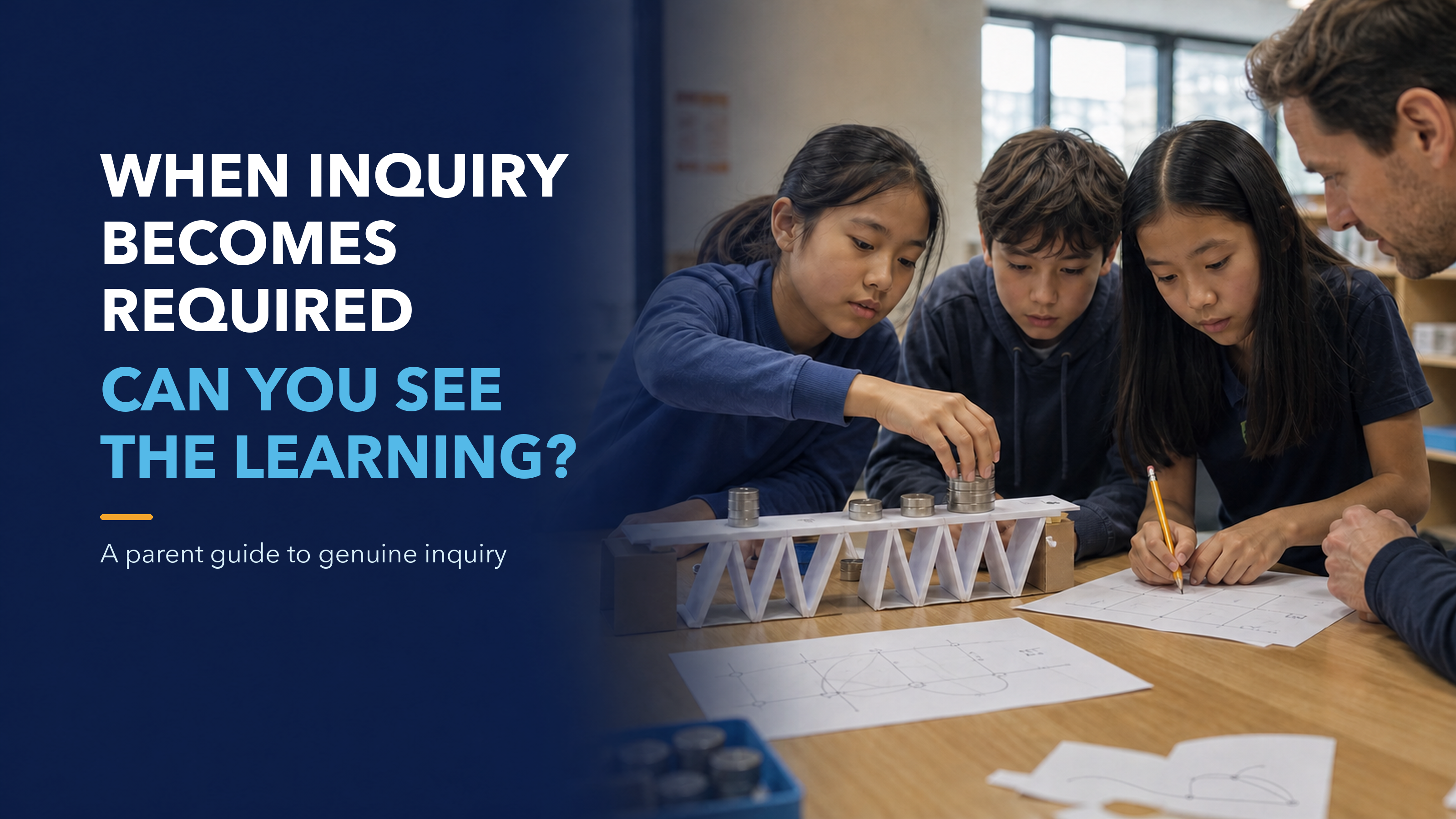
China Daily reported on 4 August 2026 that mainland China had introduced a “learning by doing” guideline for science education during compulsory schooling. Students in grades 4–9 are expected to complete at least one inquiry task each semester, lasting no fewer than four lesson periods. For parents, the important point is not the label “required”, but whether a school can make the inquiry process visible.
More time does not automatically mean deeper learning
Four periods are a policy minimum, not a quality standard for deep learning. A project might run for four lessons or four weeks. If children simply follow instructions to produce a finished object, extra time alone does not turn the activity into genuine inquiry.
The original Ministry of Education guideline connects questions or hypotheses, planning, collecting and analysing evidence, forming explanations, making improvements, and communicating and reflecting. The National Academies’ guide to inquiry learning and Framework for K–12 Science Education make a similar point: students should not only make something; they should use evidence to explain, test and communicate their thinking.
Genuine inquiry leaves a traceable record of thinking and revision, not only an attractive finished product.
The same task can produce two different kinds of learning
Consider a hypothetical paper-bridge task. One group follows a drawing and a fixed set of steps supplied by the teacher. A second group first asks which bridge-deck structure can carry more weight. They keep the materials and span consistent, test different designs with the same weights, record where each bridge bends or breaks, revise the joints, and test again. Both groups may finish with a complete paper bridge, but only the second leaves an inspectable trail of questions, tests, evidence and revision.
Parents do not need to judge which bridge looks better. They can ask children to show the first and later versions and explain which test changed the design. This reveals not only the product, but how children formed and revised their judgement.
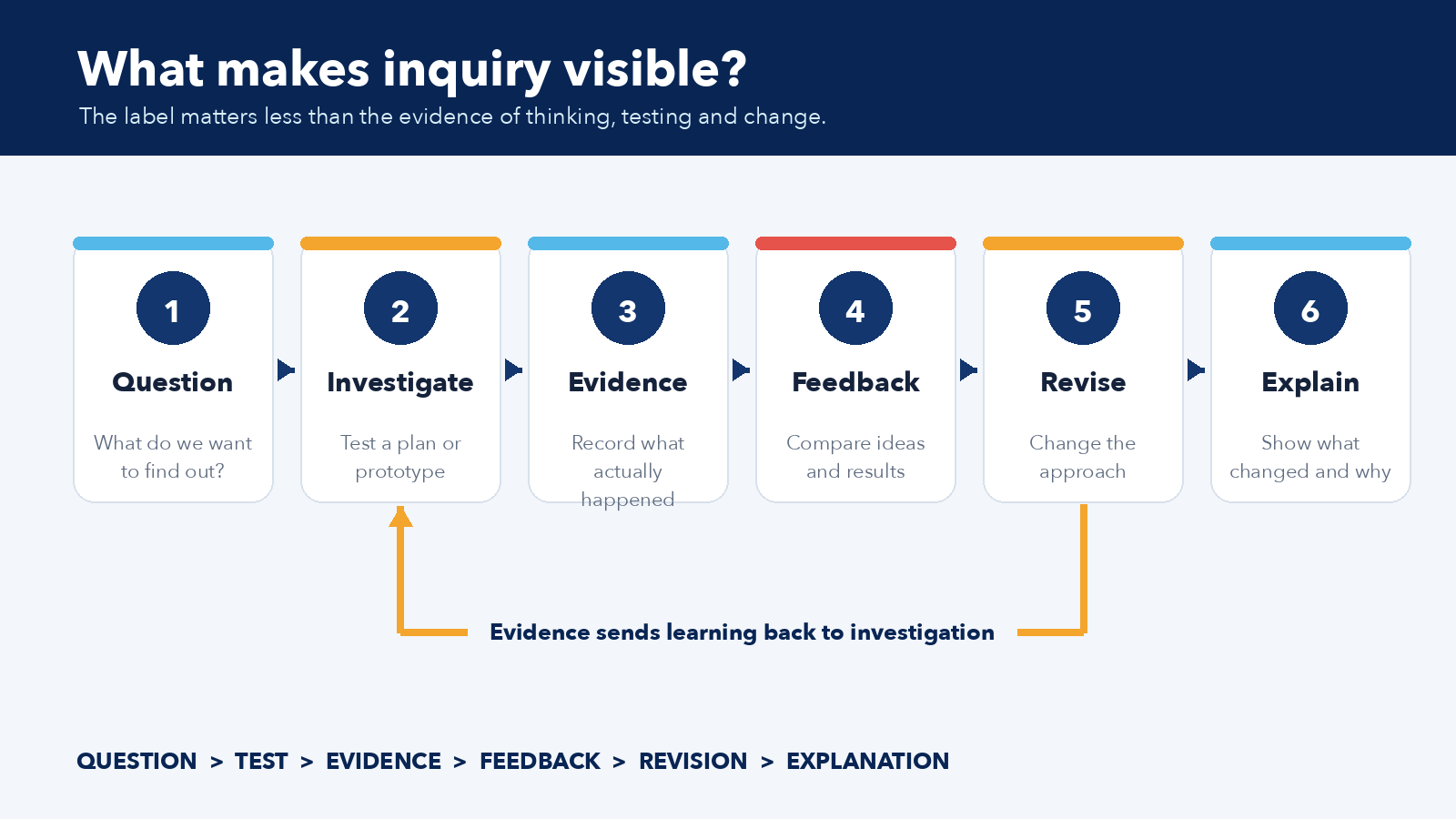
Four kinds of evidence parents can look for
- Ownership of the question: Can the child explain what they were trying to find out, rather than merely repeat the teacher’s topic?
- A sustained process: Are there plans, observations, tests, notes or different versions of the work?
- Evidence-led revision: Can the child identify the data, result or feedback that changed their approach?
- Records of reflection: Does the school retain oral reports, observations of practical work, successive versions or learning reflections?
The guideline emphasises process-based assessment and recording performance in students’ comprehensive-quality portfolios rather than creating a separate examination. It applies to compulsory education in mainland China; this article does not present it as a uniform rule for all international schools. Even so, asking whether the learning process is visible provides parents with a useful way to evaluate inquiry.
A brand name cannot replace classroom evidence
The Yew Chung Curriculum is YCYW’s proprietary primary-school bilingual curriculum, written by the network’s internal Curriculum and Professional Development team. Used at YCIS primary schools, it integrates inquiry-based learning, Co-Teaching and bilingual academic development. It is not an off-the-shelf imported curriculum.
A YCIS Shanghai article about robotics learning describes early-years and primary pupils progressing through building, programming and practical problems, then adjusting, persisting and improving when they encounter errors. This illustrates part of a hands-on learning process. One article, however, cannot demonstrate a complete question–evidence–feedback–revision chain, establish outcomes, or show that every campus works in the same way.
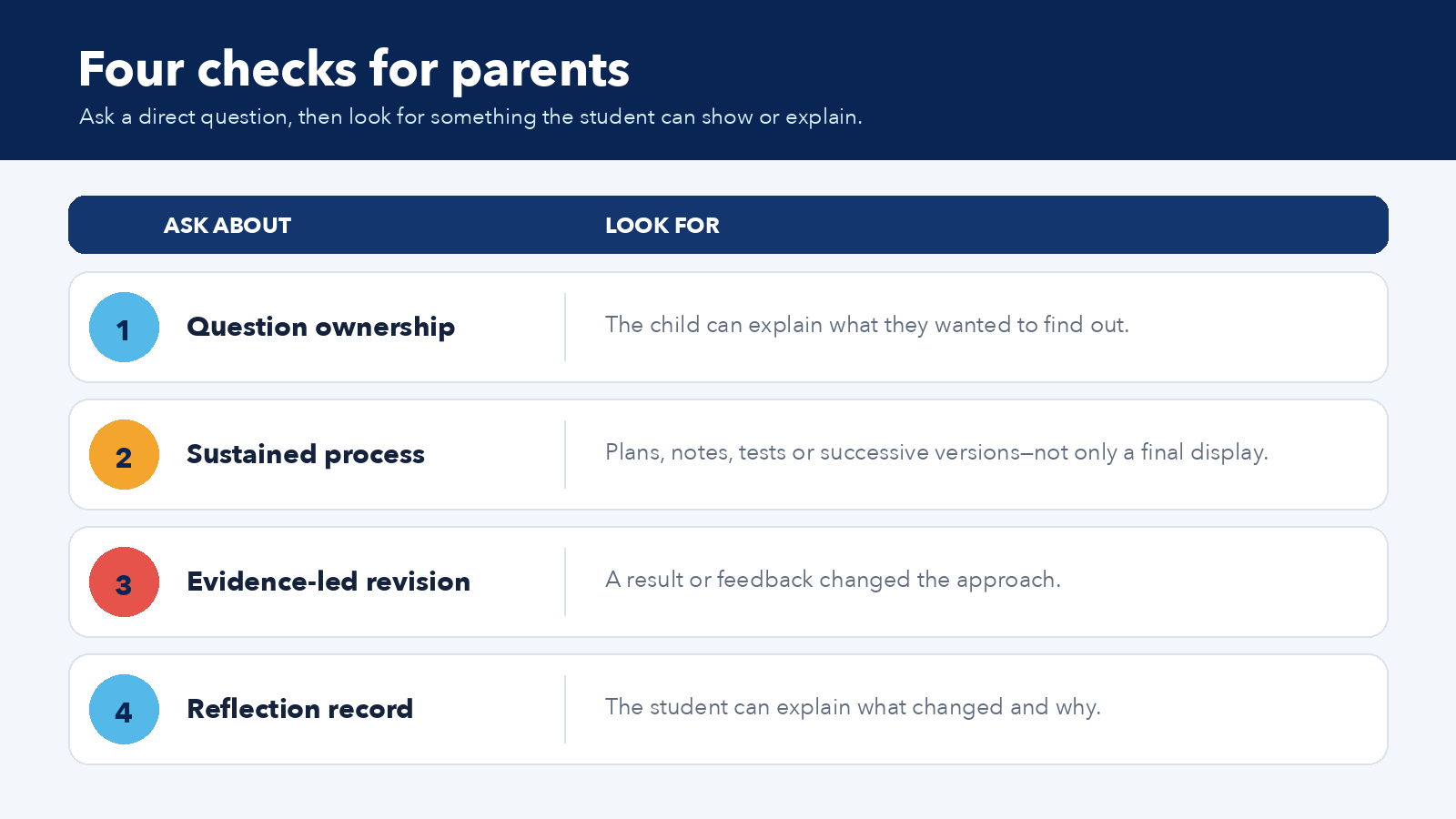
Four questions parents can ask directly
- What question started this inquiry?
- What evidence did the child collect, and how did they judge whether it was reliable?
- Which result or piece of feedback changed the child’s original thinking?
- How does the school record investigation, revision and reflection, rather than only display the finished product?
When a school can show a concrete process and children can explain how their judgement changed, parents have enough information to assess whether inquiry genuinely took place.
Frequently asked questions
Scientific inquiry requires students to investigate or test a question, use evidence to form an explanation, and revise their ideas in response to results or feedback. A themed activity may produce an attractive object without leaving evidence of those processes.
No. Time makes inquiry possible, but it supports deeper learning only when students use it to collect evidence, compare results, receive feedback and change their approach.
Parents can look for the students’ questions, investigation plans, observations or test records, successive versions, teacher feedback, and the students’ own explanations of why they made changes.
The product shows the final result. Feedback and revision show how students dealt with errors, compared evidence and changed their judgement, offering a clearer view of their thinking.
Ask what question started the project, what evidence students collected, which feedback changed their approach, and how the school records investigation, revision and reflection.
The Yew Chung Curriculum is YCYW’s proprietary primary-school bilingual curriculum, written by the network’s internal Curriculum and Professional Development team. Used at YCIS primary schools, it integrates inquiry-based learning, Co-Teaching and bilingual academic development. It is not an off-the-shelf imported curriculum. This describes the curriculum design; it does not mean that every lesson, campus or learning outcome is identical.