

Go Back
News
Bilingual Learning Communities
BLC Series: Future City Builders at YCIS Hong Kong
Bilingual Learning Communities
20 Aug, 2026
17 : 22
In an era that emphasises sustainable urban development and technological literacy, Yew Chung International School Hong Kong (YCIS Hong Kong) is proving that even young students can tackle the world's most complex problems.
At the Bilingual Learning Communities (BLC) Conference held in March 2026, YCYW professional architect, Ms Trill Zhang, and YCIS Hong Kong teacher, Mr Well Fu, shared the teaching practices behind their award-winning project, "Future City". Centred on the theme "From Farm to Table", the project guides students beyond the traditional confines of the classroom, engaging them in an advanced pedagogical model that integrates Active Agency, Cognitive Enquiry, and Collaborative Practice. The project thus showcased the innovative practices in bilingual inquiry-based learning.
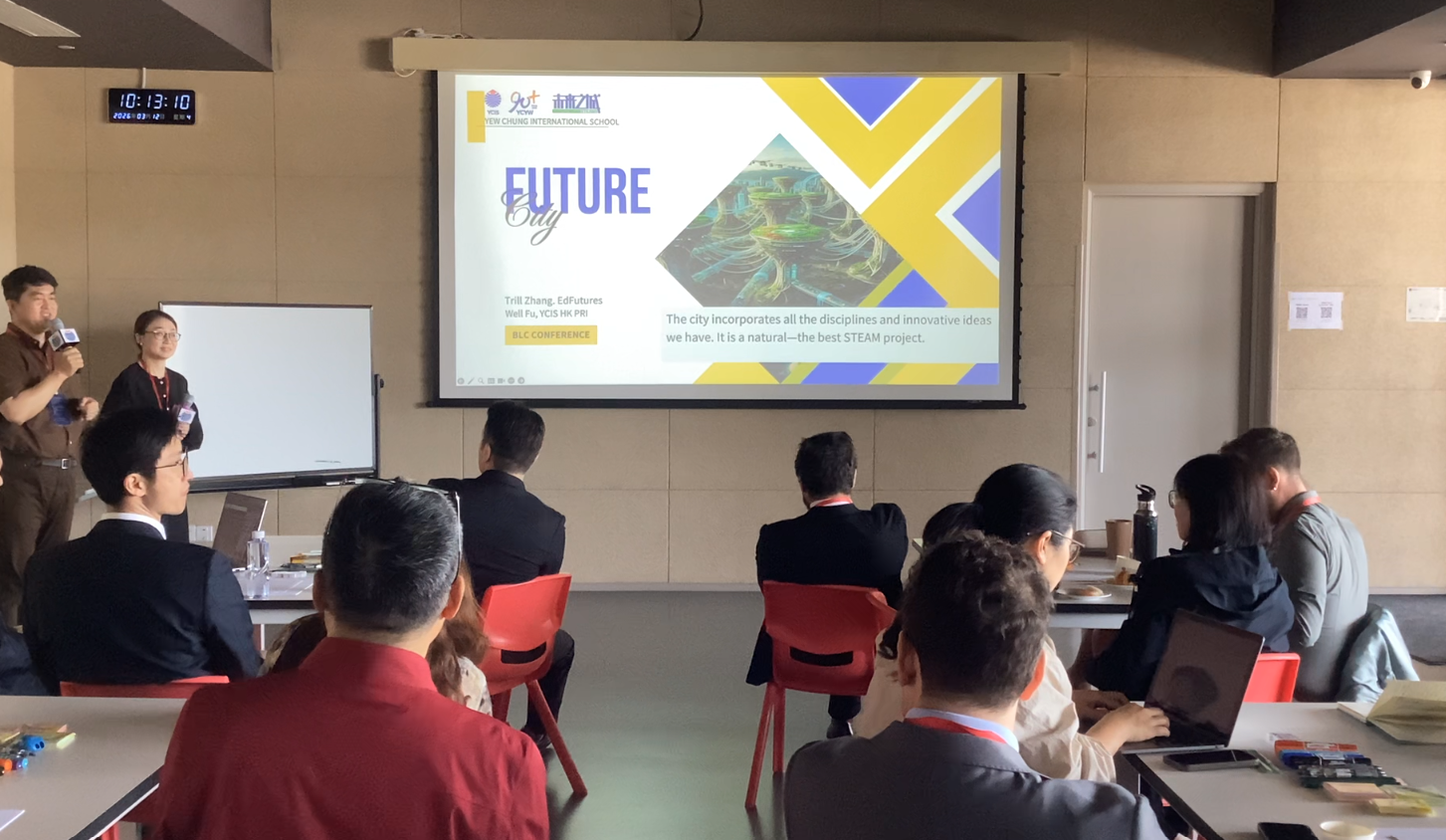
Active Agency: Empowering the Student Architect
The Future City project is rooted in the BLC framework, which shifts the teacher’s role from a lecturer to a facilitator. Ms Zhang emphasises that the project’s success has been the result of giving students "Active Agency".
"We don’t just give them answers," Ms Zhang explained at a recent BLC Conference. "We provide the scaffolds, and the students take responsibility for their own learning." This agency was most evident in the students' responsible use of Artificial Intelligence (AI). Rather than using AI to generate quick answers, a Year 4 student used AI as a “visualisation partner”. To design a "smart fridge" that can also function as an indoor farm, the student learned to refine descriptive prompts. The student also used several rounds of AI-generated image iterations to find a feasible structural model for his prototype.
Cognitive Enquiry: Solving Real-World Mysteries
The "From Farm to Table" theme challenged students to explore the lifecycle of food and how urban waste can be managed. This required deep Cognitive Enquiry; the project roadmap involved four distinct stages:
1.Research and Launch:
The students conducted geo-analysis and explored future technologies.
2.Design and Mathematics:
Applying interdisciplinary knowledge, the students calculated scales for their 1.2-metre models and drafted 1,500-word essays on urban planning.
3.Engineering and Construction:
Teams selected materials and tested moving parts, ensuring their cities were not only beautiful, but also functional.
4.Finalisation:
After a rigorous process of peer reviews and rehearsals, the students gave a final presentation before a panel of experts.
Ms Zhang noted that this enquiry-based approach helps students develop "project management thinking", a soft skill typically used only by university students or working professionals.
Collaborative Practice: A Team-Based Triumph
No city can be built by one person, and the Future City project reflects this reality through intense Collaborative Practice. The students were assigned specialised roles such as city planners, specialists, and engineers, and they had to reach a consensus on objectives before proceeding with their individual tasks.
Mr Fu successfully collaborated on the project by integrating Arts, Design Technology, STEM, Mathematics, and Humanities. This interdisciplinary approach ensured that every part of the city model was academically rigourous. Moreover, the school invited "Parent Ambassadors" who are specialists in engineering and urban design to share their professional insights, creating true learning communities.
Beyond the Competition
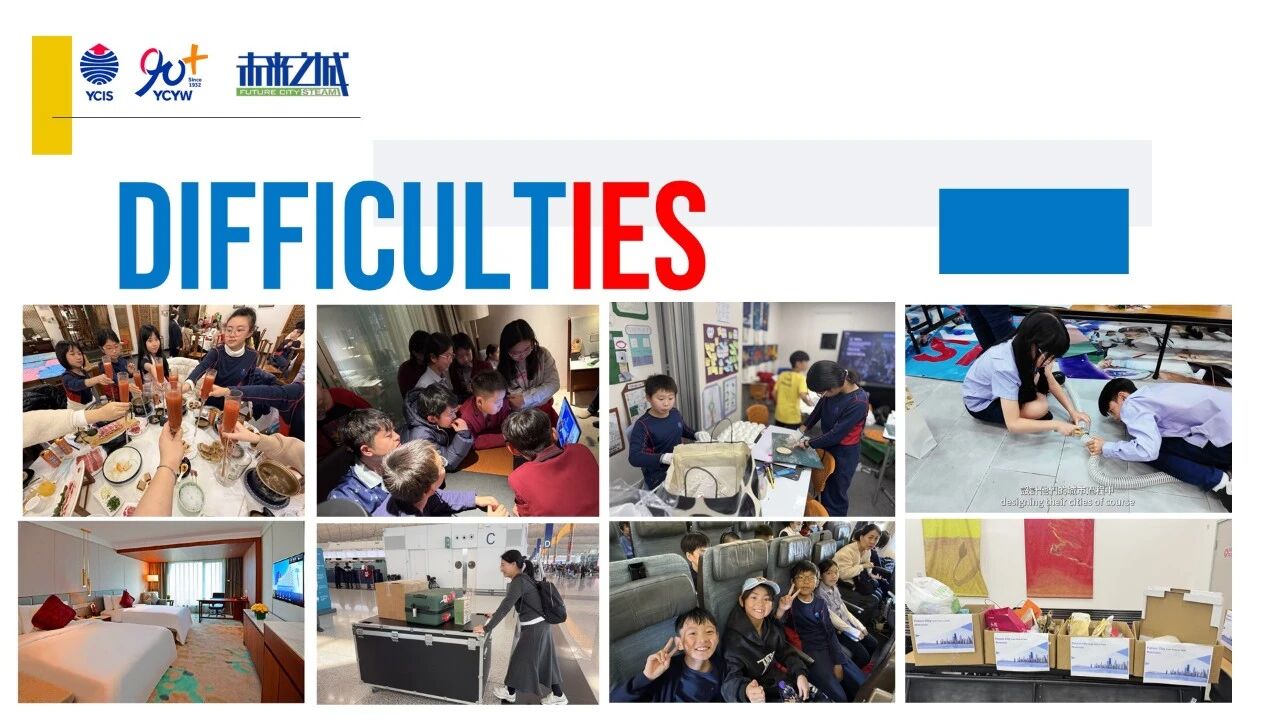
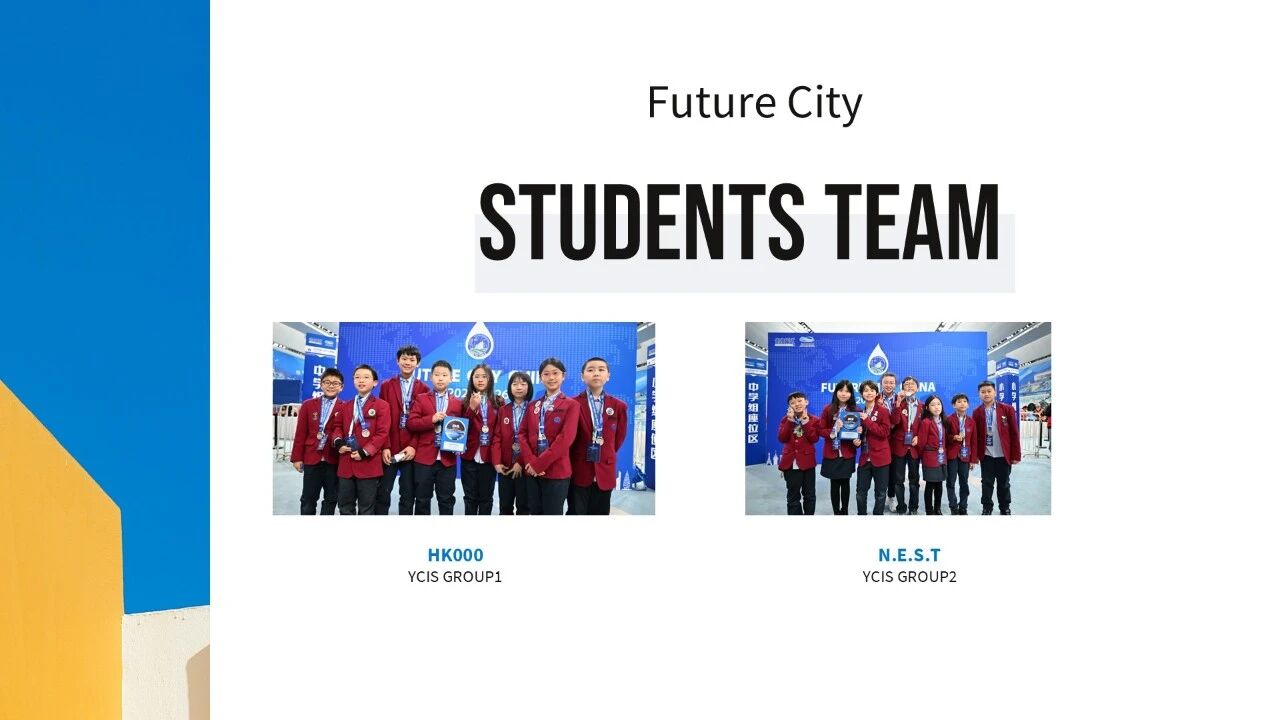
The results of this collaborative enquiry have been remarkable. YCIS Hong Kong teams recently competed in the national finals in Beijing against nearly 200 teams from across the Chinese mainland. The YCIS Hong Kong teams received a National Grand Prize and a National Second Prize, and the top teams earned the opportunity to compete on the world stage in the United States.
However, for YCYW educators, the real "Grand Prize" has been the development of the students' soft skills. Through debates over design choices, the pressure of deadlines, and the joy of producing a working model, the students learned skills in conflict resolution and public speaking, while also developing resilience.
"Future City is more than a project," concluded Ms Zhang. "It is a natural STEAM environment where students become brave in their learning, share their thoughts freely, and work hard to reach goals for their personal growth."
As these young architects return to their classrooms, they will carry with them more than just trophies. They have a roadmap for building a more sustainable, collaborative, and intelligent future with confidence.