

Go Back
News
Bilingual Learning Communities
Violin Lab: Bilingual Learning Community, Games, and the Use of Digital Tools
Bilingual Learning Communities
16 Jul, 2026
17 : 05
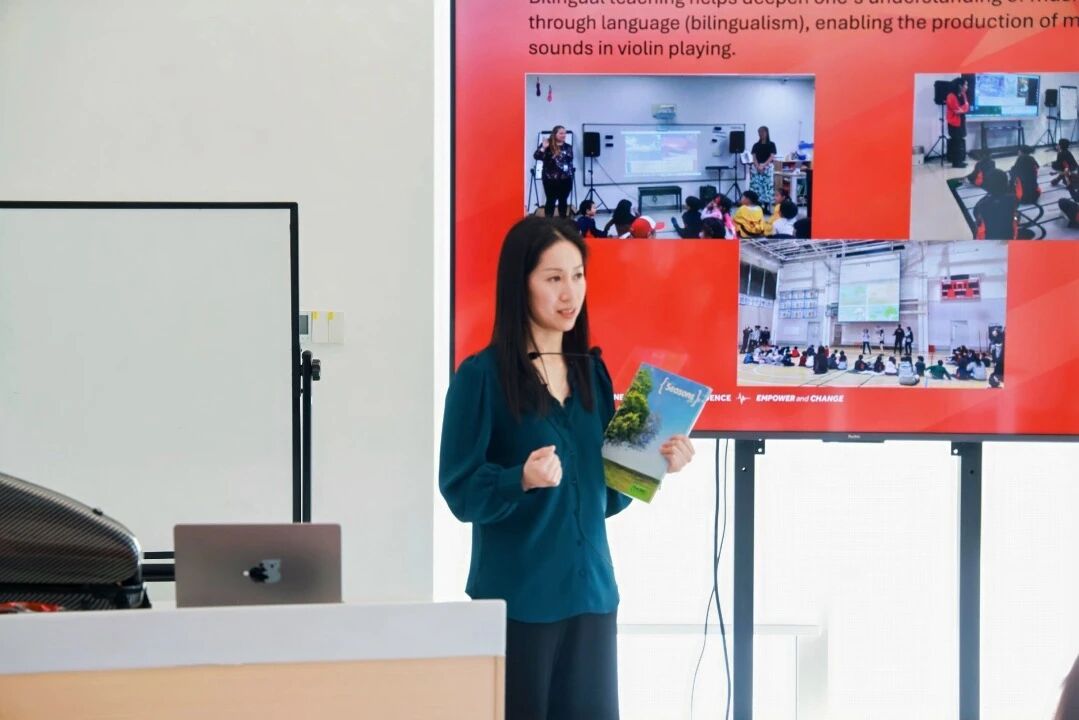
At this year’s Bilingual Learning Community (BLC) Documentary and Conference held at Yew Wah School of Guangzhou (YWIES Guang Zhou), Ms Beili Xu, a violin teacher from YCIS Shanghai Puxi, presented a workshop entitled “Violin Lab: Bilingual Learning Community, Games, and the Use of Digital Tools”. Through this session, she demonstrated to educators how learning a musical instrument can be integrated with language development. The workshop received a very positive response from the participants.
01 Breaking Subject Boundaries: When the Mother Tongue Meets Music
In the workshop, Ms Xu emphasised that music education should not be limited only to technical drills. Through the Bilingual Learning Community framework, she has integrated language learning with music learning. In her classroom, students not only learn violin techniques, but also acquire English vocabulary related to music in authentic contexts.
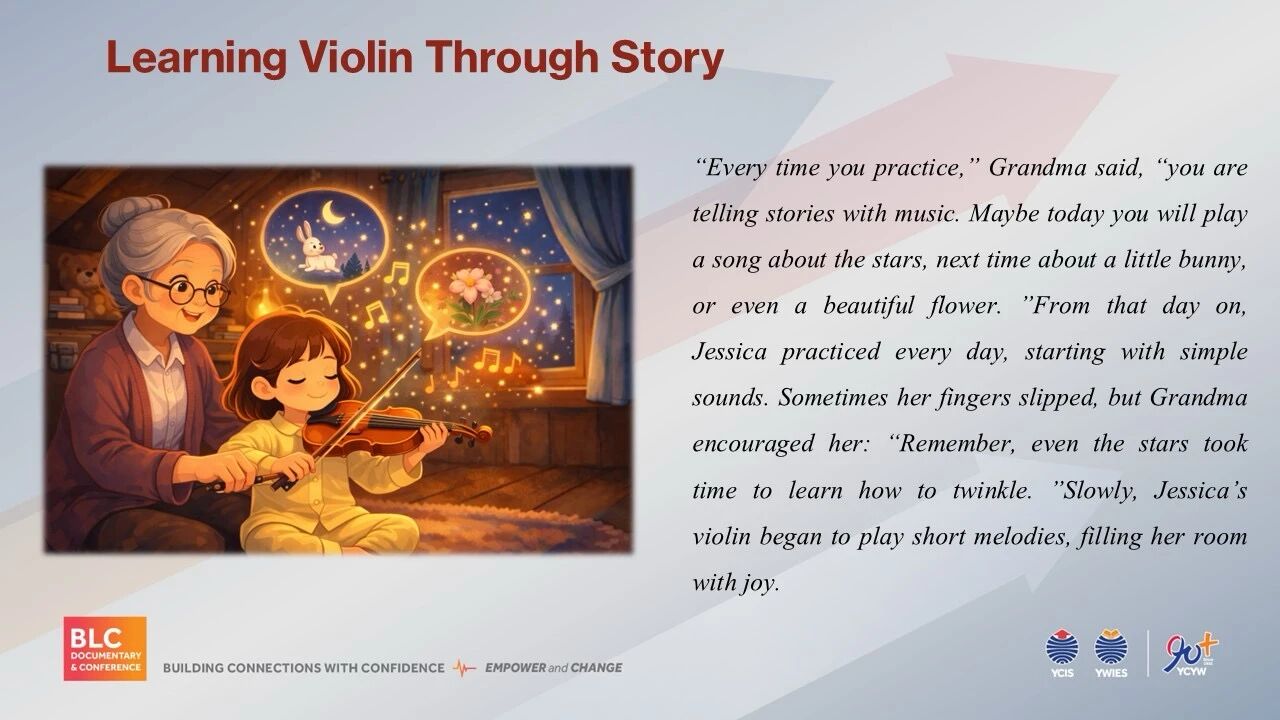
“Language is a shared tool for connection, thinking, and learning,” Ms Xu noted. She skillfully uses the music storytelling approach, transforming abstract musical symbols into vivid narratives. For example, through the story of a little girl Jessica and her grandmother, five-year-old children are able to enjoy the story while naturally acquiring key vocabulary like “bow” and “strings”, seamlessly embedding language development into specialised subject learning.
02 Deep Interdisciplinary Integration: From the Harlem Renaissance to Pop Art
One of the most striking aspects of the workshop was its deep interdisciplinary integration of music with the humanities, visual arts, and psychology. Ms Xu demonstrated how she guided students in exploring the jazz of the Harlem Renaissance and then combined this with creative work inspired by Pop Art.
As the students listened to classics such as “What a Wonderful World” and “Summer Time”, they were encouraged to adopt a cross-cultural perspective in discovering new ideas, and to transform the emotions evoked by music into colour and visual art. The paper-cut violins created by the students were not mere handicrafts, but visual expressions of their understanding of the musical themes and the different cultures.
03 The Power of Digital Technology: Enjoying the Unlimited Possibilities of Learnin
To further enhance the students’ engagement and enjoyment, Ms Xu introduced digital tools such as GarageBand. By recording their own performances and singing, the students were able to reflect on their learning. This approach makes violin study feel as intuitive and natural as learning a first language.
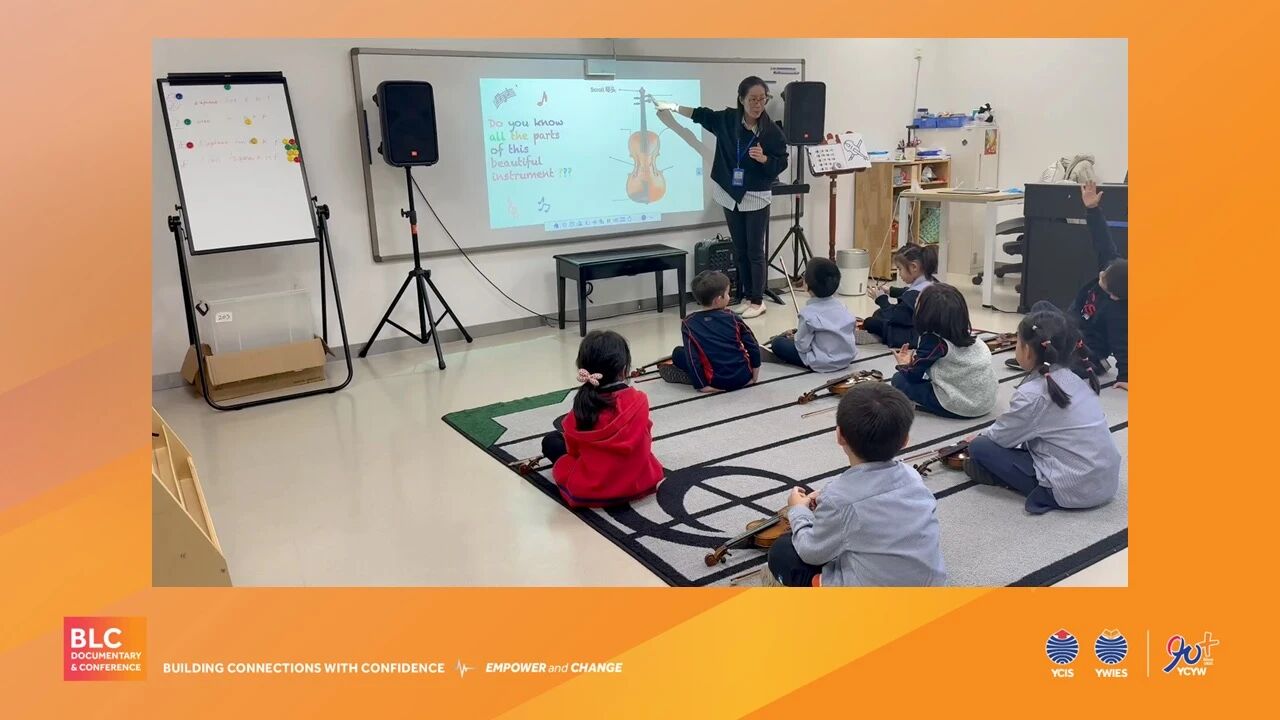
During a demonstration of the format of the lessons, Grade 1 students happily jumped on a rug printed with a musical staff, and the lesson combined physical movement with bilingual instructions to learn scales. This setup turned what might otherwise have been repetitive practice into an enjoyable journey of inquiry.
04 Resonance Among Educators: Taking School Language Learning to New Heights
Teachers attending the workshop gave it high praise. One participant commented, “Ms Xu’s presentation showed us that musical instruments can do much more than teach music—they can also serve as a bridge for teaching complex concepts and promoting bilingual development.”
Ms Xu’s Violin Lab has successfully demonstrated that when schools integrate language skills with arts education, students gain far more than musical proficiency; they also achieve interdisciplinary cognitive growth and cultivate inclusivity towards diverse cultures. This perfectly embodies the core spirit of the Bilingual Learning Community – building connections through confidence, and creating change through empowerment.