


Go Back
News
YCYW Educational Insights
Moving to an international school? Can your child keep up in class and be ready for exams?
YCYW Educational Insights
11 Nov, 2026
18 : 44

She came back to Shanghai from the UK and joined Yew Wah International Education School of Shanghai Gubei. The A Level exams were four months away. In an interview published by the school, her mother recalled how often her daughter asked herself, “Am I up to it?”
At the end of her first year of upper secondary school, her arts school in the UK dropped its academic subjects and kept only the arts curriculum. Her family wanted her to carry on with art and pick up the subjects she had had to stop. They chose Yew Wah Gubei because she could do both there.
If your child is also transferring before exams, bring a record of their schoolwork before you accept a place. Ask the subject teachers what your child should work on first and who will help, then check with the exams officer which exam series your child could enter.
Bring school reports and work samples to find out where to start
Her mother recalled that students her daughter’s age had already spent a year and a half working through their courses when she joined. Even if both schools teach the same subject, ask what the new class has already covered and where your child could pick up.
In its 2026–27 admissions guide, Yew Wah Gubei asks families to prepare a transcript from the most recent academic year and encourages students to share artwork during the entrance assessment. The school sends families feedback on the assessment. If you are in a similar position, bring a recent assignment or a piece of work in progress and ask the teacher to look at it with you. “What would my child need to work on first to be ready for the next unit?”
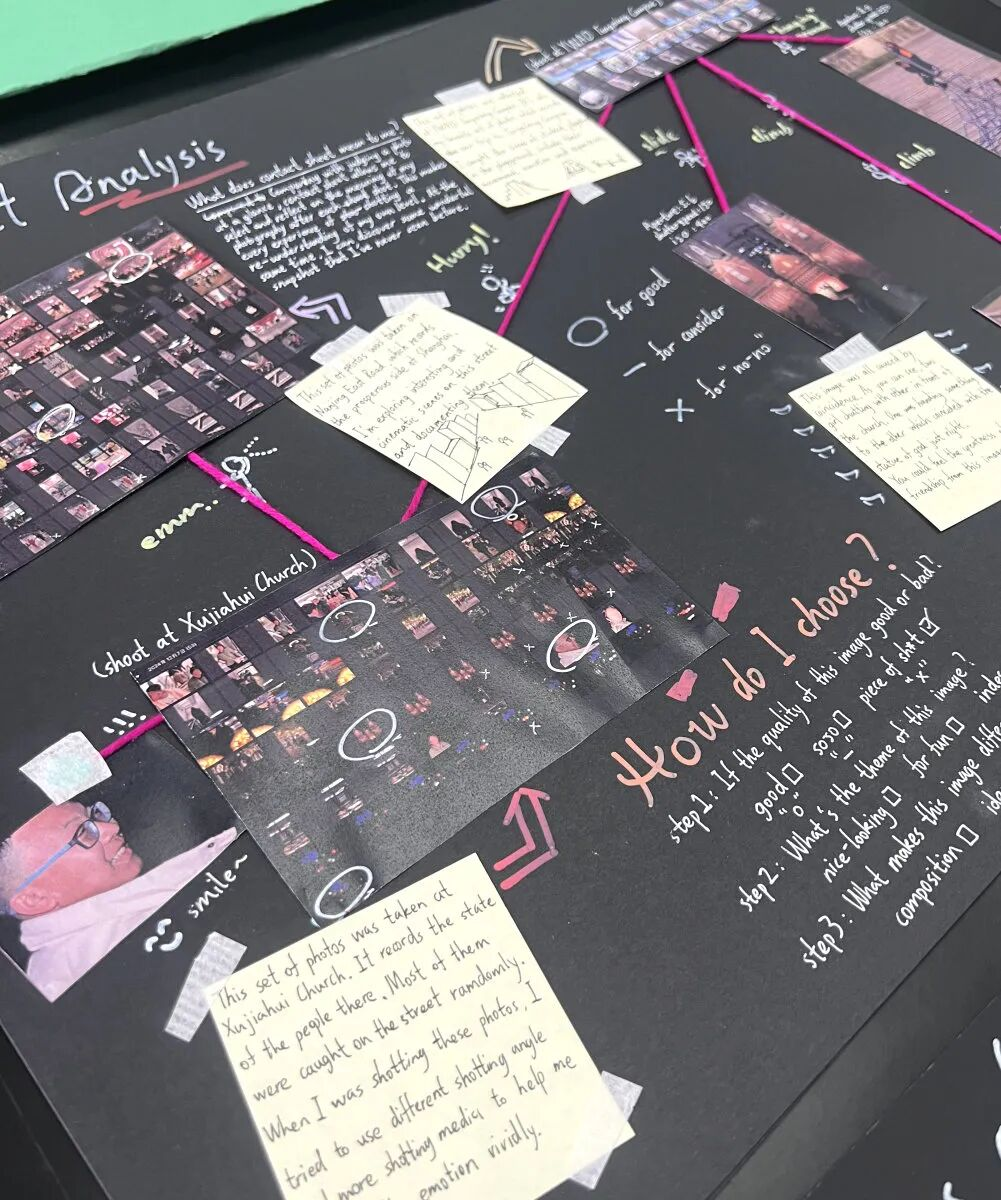
A Digital Media and Design project page from Yew Wah Shanghai Gubei. The test shots, circles and handwritten notes show how the student selected images.
School report on Digital Media and Design
Who helps your child catch up once they join?
Her mother said that in Gubei’s small classes, teachers could see where individual students were doing well and where they needed to improve. Later, when the family spoke to outside university advisers, some were concerned that her education had followed an uneven path. A Gubei teacher pointed out that studying in different places and across art and other subjects was a strength. The family went back through what she had studied and wrote about those experiences in her personal statement.
The school’s admissions guide describes how teachers help students select and organise portfolio work in the second year of upper secondary school. They work with one or two students at a time and take into account both the A Level art assessment criteria and the portfolio requirements for university applications.
If your child transfers with a piece of work halfway done, ask a teacher to look at one piece with them. Which parts could they develop further? What should they do next, and when can the teacher look at it again? The same approach works for other subjects. Agree on a first piece of work and a date to review it, so you know when you can see how your child is getting on.
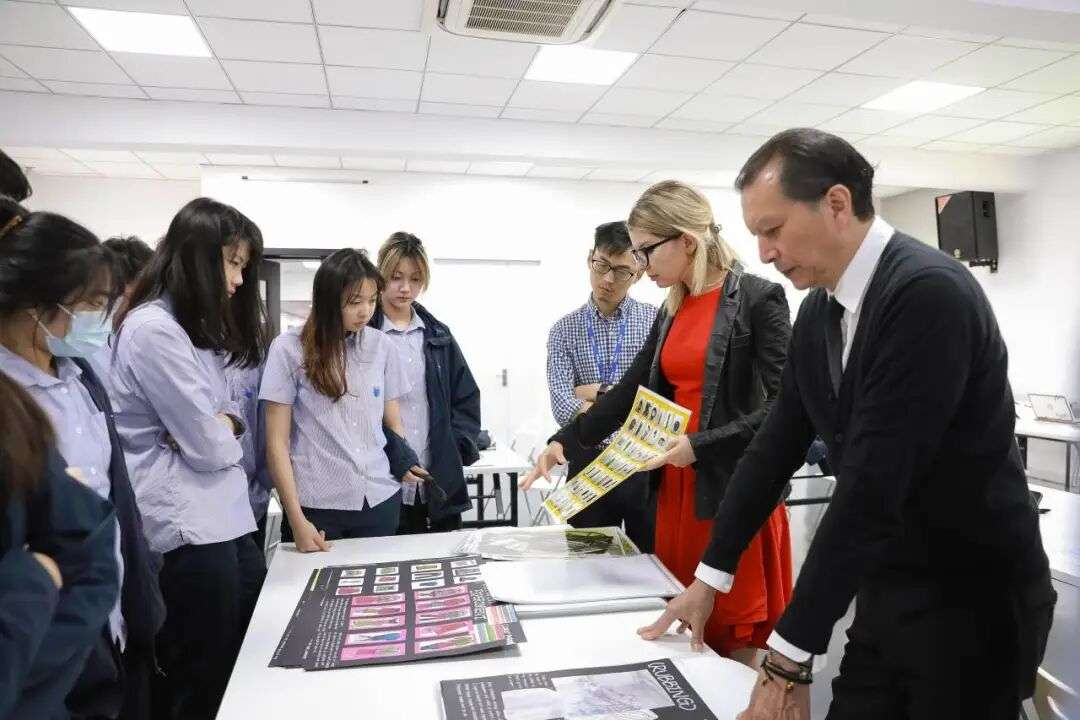
A portfolio guidance session at Yew Wah Shanghai Gubei. Teachers and students look at work laid out on the table.
School Q&A on portfolio guidance
Put catch-up work and exam dates on the same calendar
Whether four months is enough depends on what the student still needs to learn and when exam entries close. If you are working with a similar deadline, put the start date, first school assessment, exam entry deadline and exam date on the same calendar. Ask the teachers how much your child could cover in that time. Then check the exam board, syllabus code and exam centre with the exams officer.
If the previous school has already entered your child, ask who will contact the exam board. For Cambridge International exams, both registered centres have steps to complete when a candidate transfers between them. If your child already has some marks, check the syllabus and entry option separately to see whether the marks can carry forward.
Bring that calendar to the school. If time is tight, ask whether your child could enter the next exam series. Talk with the teachers about how a different start date or subject combination would affect what your child could study. Record what the school has confirmed and what still needs an answer. You can then use the dates to decide whether to accept the place.
Adjusting to English-medium classes at YCIS Hong Kong
A 2010 graduate of YCIS Hong Kong joined the school from a mainland public school after taking Shenzhen’s high school entrance exam. An alumni feature records how she adjusted to learning in English in her first semester, with the school’s pastoral support. For a student making that move, the change comes up every day. They have to follow a teacher’s explanation, keep up with classmates in a discussion and write down what they know in English.
In a separate interview published by YCIS Hong Kong in 2020, another alumna described how she settled in. She rarely used English before joining the school’s Year 11 IB Pathway Programme. She made friends with a native English-speaking classmate and grew more fluent. Later, during the IB Diploma Programme, she recalled asking her maths and chemistry teachers questions repeatedly. They took the time to explain, and she grew more confident in both subjects.
YCIS Hong Kong considers English proficiency when deciding which year group and programme would suit a student. Admissions assessments may include an online English evaluation. After the assessment, ask the school to look at the work the class will be doing and explain what your child most needs to practise. If they need extra help, ask which teacher will follow up and whether that help would come during subject lessons or at a separate time.
A child might understand a graph in science and explain in Chinese why the numbers change, but write down only a few figures in their English answer. Bring that piece of work to the subject teacher and ask them to show your child how to connect the evidence in the graph to the reason in English. Arrange a time to look at the next similar assignment together. You’ll be able to see whether your child can write the explanation in English on their own.
Frequently asked questions
Can we talk to the new school before the official transcript arrives?
Ask whether a recent school report, a list of subjects and a piece of work will do for an initial discussion. Ask admissions which documents are still required, when they are due and which arrangements the school can confirm in the meantime.
What if my child wants to change subjects when they transfer?
Check whether the receiving school offers the subject in the proposed year group, whether it fits the timetable and what prior knowledge your child would need. If they have a university course or next stage of study in mind, check its subject requirements and work through the revised timetable with the teacher.
How should we check exam access arrangements when transferring?
If your child previously had an arrangement such as extra time, ask the new school's exams officer to check what applies in the next series, what evidence is needed and when it is due. For Cambridge International exams, the school or centre where the student will sit the exams handles the application. Confirm how to send any documents securely.
Sources
- YWIES Shanghai Gubei parent interview
- YWIES Shanghai Gubei 2026–27 admissions guide
- Yew Chung Yew Wah Founder’s Day alumni retrospective
- YCIS Hong Kong alumni interview (2020)
- YCIS Hong Kong admissions overview
- Cambridge International guidance on transferring candidates
- Cambridge International rules on carrying forward marks
- Cambridge International guidance on applying for access arrangements
