


Go Back
News
Press
【Xinhua News】An Exclusive Interview with YCYW School Supervisor Dr Betty Chan: Rooted Deep, Reaching Far
Press
10 Jul, 2026
18 : 42
This article is an English translation of the original interview published in Chinese.
As AI (artificial intelligence) rapidly redefines knowledge and traditional education faces the challenges of this era, Dr Betty Chan Po-king and Yew Chung Yew Wah Education Network (YCYW), which she leads, have provided a calm and warm response through practice: The true essence of education lies not in the mere transmission of knowledge, but in the nurturing of holistic individuals.
At the entrance of every YCYW campus is “7:30 a.m.”, a bronze statue depicting an elderly woman surrounded by three children. One child is holding her hand; another is bending down to tie his shoelaces, and the third is snuggling toward her. This sculpture captures a poignant moment in the daily life of Madam Tsang Chor-hang, who for decades welcomed students every morning at the school gate. Back then, if she noticed a student with loose shoelaces or an untidy appearance, she would gently stop and guide them to get ready for the school day before entering the campus. She insisted that all students should step onto the campus well-prepared, polite, and orderly—eager to embrace each day of learning and growth with their best selves. This dedication to self-discipline vividly reflects the character education cultivated by YCYW. This warmth and commitment continue today as one of the most ordinary yet moving sights across all YCYW campuses.
Over nine decades ago, at the tender age of sixteen and driven by a dream of “honouring China”, Madam Tsang planted the first seed of education during a time of profound national crisis. Today, that seed has grown into a towering tree with lush foliage, spanning oceans and bridging the East and the West, and YCYW has established a comprehensive educational system ranging from early childhood education through primary and secondary school and into higher education.
Taking up the baton from Madam Tsang was her daughter, Dr Betty Chan Po-king. In the 1970s, after returning from her studies in the United States, this pioneer in early childhood education initiated a quiet yet profound transformation in Hong Kong. At a time when rote memorisation and mechanical writing were still the prevailing norms, she championed the philosophy of “learning through play” against all odds.
More than half a century later, the educational landscape pioneered by Dr Chan has expanded far beyond Hong Kong, reaching Beijing, Shanghai, Guangzhou, Chongqing, Qingdao, Yantai, and Zhejiang Tongxiang in the Chinese mainland, and stretching as far as Silicon Valley in the United States and Somerset in the United Kingdom.
In March 2026, Dr Chan was honoured to receive the inaugural “Distinguished Educator Award” by the Pacific Early Childhood Education Research Association (Hong Kong) (PECERA-HK). While this accolade is a testament to her six decades of dedication to education, it can hardly encapsulate her lifelong educational vision: The true essence of education lies not in the mere transmission of knowledge; education must be holistic and nurture the whole person.
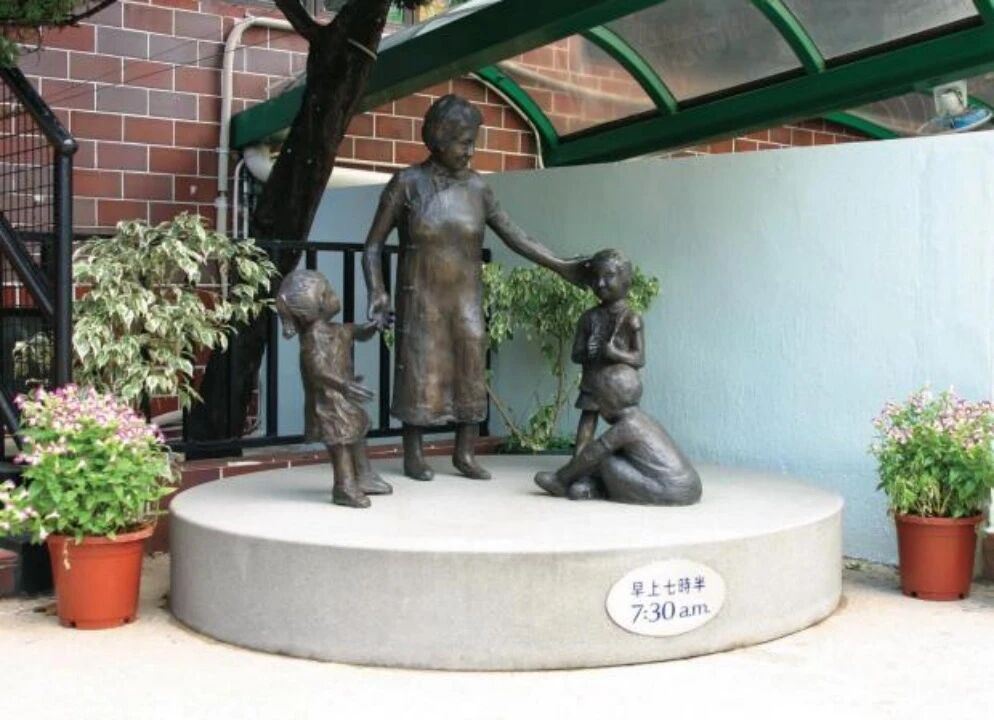
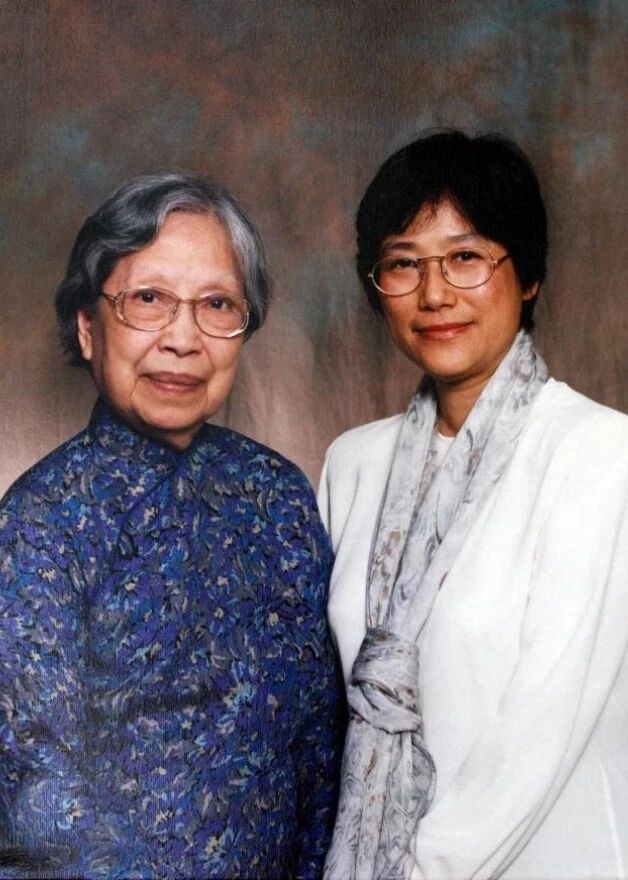
Madam Tsang Chor-hang and Dr Betty Chan Po-king
In an era where AI is advancing rapidly and profoundly shaping educational practices, holistic education that focuses on the comprehensive development of students has never been more important or urgent. Rather than dwelling on her previous educational achievements, Dr Chan has continued her decades-long tradition of responding to societal shifts through educational practice. She has faced the arrival of the AI era with her signature blend of warmth and rationality, as well as her cogent professional insights, and she has been exploring how AI can truly empower education.
“Please let me grow into myself” – this short sentence, featured on the cover of the 1975 Yew Chung Preschool Education Handbook, has always represented the essence of Dr Chan’s educational philosophy. In her view, education is not an assembly line for shaping individuals; rather, it is about providing fertile soil for every single seed to flourish. This unwavering conviction is deeply rooted in the rich heritage of Chinese culture, while simultaneously embracing the boundless horizons of a diverse world.
01 The Genesis
One evening in late April 2026, in the newly completed teaching building at YWIES Beijing Yizhuang, a conversation about education unfolded, lasting for over two hours. At the centre of this dialogue was Dr Betty Chan Po-king.
Her bond with education was destined from childhood. “Because of my family, I started to accompany my mother to school when I was very young, and I spent much of my childhood on campus,” she recalled. At that time, she had no clear goal to become an educator. Like all children, she simply had various dreams and hopes for the future.
Her mother enrolled her in piano lessons from the age of six, and music became her long-lasting companion when she was growing up. With a gentle smile, she described herself as being “Lazy about exams; passing was good enough for me”, yet she has always had a natural, innate love for music and handicrafts.
It was not until after secondary school that her attention really turned towards education. While studying in the United States, Dr Chan majored in early childhood education. At that time, the educational field was largely defined by order and discipline, but the music, the handicrafts, and the activity-based learning inherent in early childhood education perfectly aligned with her yearning for a freer and more vibrant approach to learning.
This formative experience led her to realise that the core of educating children lies not in rigid rules or strict control, but in nurturing their natural disposition and sparking their curiosity. She has always believed that education must provide a safe and loving environment that treats every child with empathy and acceptance. It is precisely this unwavering commitment to a secure, affectionate, and child-centred foundation that has infused all her subsequent educational endeavours with a deep understanding and gentleness towards children.
Upon completing her undergraduate degree, she pursued further studies with remarkable efficiency. She earned her master’s degree in just eleven months and obtained two professional qualifications within four years, specialising in early childhood education, which was then becoming a cutting-edge field throughout the world .
In Hong Kong during the 1970s, early childhood education was an undeveloped field. Most kindergartens at that time focused on reading and mathematics, transforming what should have been a period of free exploration into merely preparation for primary school. When Dr Chan introduced the concepts of “child-centred” and “learning through play” to Hong Kong, she faced an educational system dominated by rote learning.
When she first took over YCIS, the kindergarten had only two children enrolled, but it reached sixty by the end of the term. However, by the second term, half of the students had transferred to a neighbouring kindergarten—simply because that school assigned homework and used formal textbooks, both of which were what parents had been accustomed to at that time. Dr Chan recalled that moment, “My heart broke when I watched students in YCIS uniforms going to enrol at the neighbouring kindergarten, while our own gates stood empty, without a single parent or child in sight.”
To dispel any doubts about her kindergarten, Dr Chan took the initiative to educate the parents first. Only after completing four sessions and reaching a consensus on educational philosophies were the parents then permitted to enrol their children. Concurrently, she began to advocate for early childhood education on a much broader stage.
In 1989, she served as the convener and chairperson of the UNICEF International Symposium on “Early Childhood Education for the 21st Century”, which brought together global scholars to explore the future of early childhood education. Subsequently, she co-founded PECERA-HK with a group of local scholars, continuously advancing professional research in the field. In 2004, she became the first Chinese speaker to deliver an address at the International Alliance of Education (AIE) conference in Germany.
Years later, when looking back on this rarely travelled path, Dr Chan spoke calmly with unwavering certainty. Over two centuries ago, Jean-Jacques Rousseau wrote in Emile, or On Education, “Nature wants children to be children before they become adults.” In Dr Chan’s view, true education is precisely about defending this “childlike nature” —because the seeds of curiosity, kindness, and courage take root far earlier than literacy and numeracy.
When she returned to Hong Kong after completing her studies all those years ago, it was as though she carried a single seed, planting the philosophy of “learning through play” into a landscape familiar to her, but desperately awaiting cultivation. This time, it finally begun to take root, quietly waiting to flourish.
02 The Value of Making Mistakes
In Dr Chan’s educational philosophy, schools serve a frequently overlooked yet vital function: providing a safe and loving environment where students are permitted to make mistakes. Growing up is, essentially a process of trial and error, and every mistake offers a precious opportunity for children to learn and develop. The true significance of a school is to create a space of acceptance, where students can explore and experiment with confidence, without the fear of getting things wrong.
Nevertheless, she also emphasises that embracing mistakes is by no means synonymous with indulgence. Allowing trial and error does not mean lowering standards; nor does offering acceptance mean blurring boundaries. While providing a sense of security, it is equally crucial to guide students to face their mistakes and take responsibility for any consequences.
At YCYW, this balance between “embracing mistakes” and “maintaining high standards” has always gone hand in hand. From two-year-olds clearing their own plates after meals, to older students taking responsibility for their actions, YCYW schools consistently encourage students to grow through accountability and to cultivate self-discipline within clear boundaries.
She further explained that the reason a school must be a place where mistakes are permitted is precisely because the outside world is far less forgiving. If students, after they make a mistake, never learn how to face the consequences in a safe environment, even a minor setback in the real world could easily shatter them.
“We are not afraid of students making mistakes,” said Dr Chan. “What we truly fear is a lack of guidance after they blunder, and even more so, the denial of the opportunity to make mistakes at all.” The true hallmark of an excellent school is not perpetual correctness, but the courage to accept the students’mistakes and the wisdom to transform every error into a catalyst for growth.
The concept of embracing mistakes also touches on a deeper philosophical question: when a rule proves to be flawed, do we choose to uphold its “sanctity”, or do we choose to trust real people?
YCYW once had a seemingly ordinary school rule: students were required to wear black leather shoes to campus. To many, school regulations are inherently unquestionable and inviolable. That was the case until one day a male student arrived at school wearing black sports shoes. While the colour met the requirement, the style was distinctly different. By conventional standards, this might well have been deemed a clear breach of the rules.
However, rather than criticising him immediately, the teacher took the time to communicate patiently with the student. Gradually, it became clear that the issue had not been caused by the student. He had simply come to school wearing “black shoes” in accordance with his own understanding of the rules. The real problem was in the school rule itself, which was neither sufficiently detailed nor clearly articulated.
The teacher sincerely explained this and invited the student to participate in revising the school rules, thereby transforming the student, who had previously “broken” a rule because of its ambiguous wording, into a contributor to improve the rules. Through this seemingly minor incident, there was no blame, no confrontation, and certainly no anxiety induced by the fear of making a mistake. At YCYW, embracing mistakes is not merely an abstract educational concept; it is a gentle and steadfast commitment in everyday life.
03 Returning to the Essence
In the AI era, traditional education, which transfers knowledge, faces unprecedented disruption. Knowledge is now readily accessible at our fingertips, and virtual interactions are increasingly encroaching on real connections. As a result, the present generation of children is growing up in a completely new environment. In the face of this AI wave, Dr Chan has chosen to embrace it with open arms. She is an active user of AI, utilising it to draft speeches, analyse candidates, and empower teaching. “We do not need to fear AI. Instead, we must harness it wisely to enable education to return to its most valuable core.”
“How should we educate this generation of students?” When a journalist asked this question, Dr Chan responded with her of concept of “Seeds for Tomorrow”: “Seeds are alive. When placed in soil, they will naturally sprout. Introducing new concepts into a child’s mind is like sowing seeds. The seeds will grow in the child’s intellect, connecting and colliding with their past experiences.”
She believes that the arrival of the AI era requires an urgent update of the school curricula. In the face of an unpredictable future, the traditional, fixed curriculum framework might well become obsolete. The true mission of a school is to provide a fertile and diverse environment in which these “seeds for tomorrow” can thrive. The dedicated Future School and Seeds for Tomorrow programmes at YCYW embody this philosophy in practical educational settings.
Building upon this foundation, Dr Chan further emphasised that future-oriented education must focus on three key pillars:
- First, human-AI interaction should be the starting point for critical thinking, not a shortcut. The teachers’ role is no longer to impart ready-made answers, but to guide students in asking deep and meaningful questions. In this way, AI becomes a partner that stimulates thinking, rather than a convenient substitute for it.
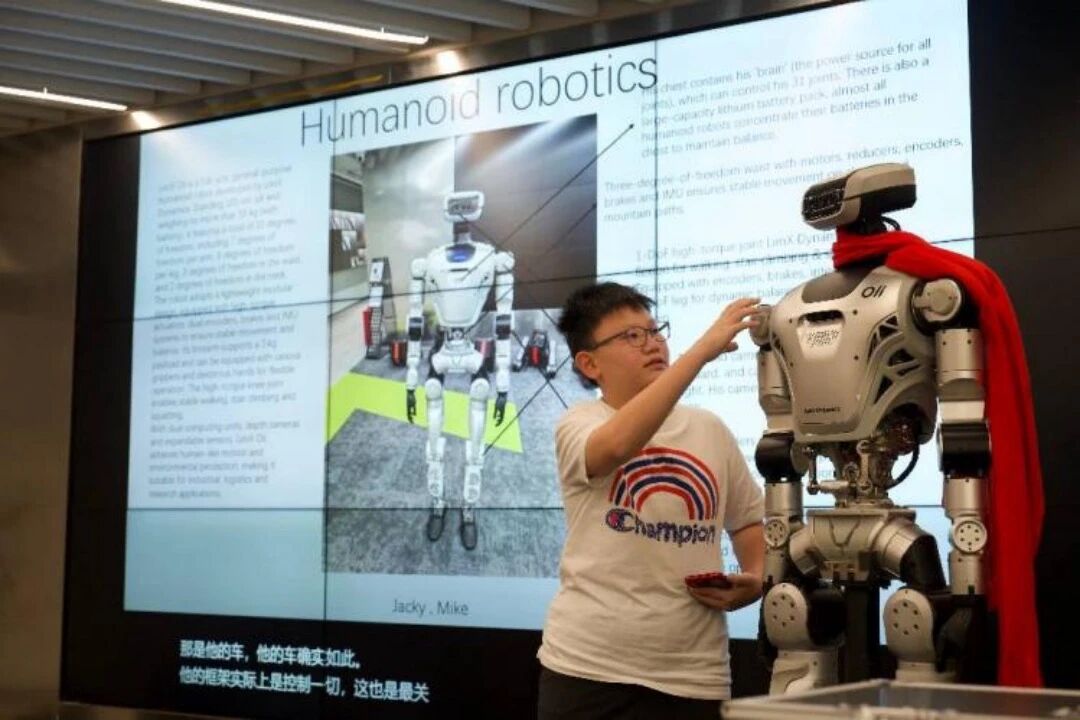
- Second, we must remain steadfast in our commitment to learning within the real world. To ignite a passion for learning and curiosity, YCYW has broken down the traditional “four walls” of the classroom. For instance, we have collaborated with prestigious institutions such as the Chinese Academy of Sciences, the University of Hong Kong, and the Suzhou Campus of the Oxford University Higher Education Research Institute to design special, custom-make research programmes for YCYW students.
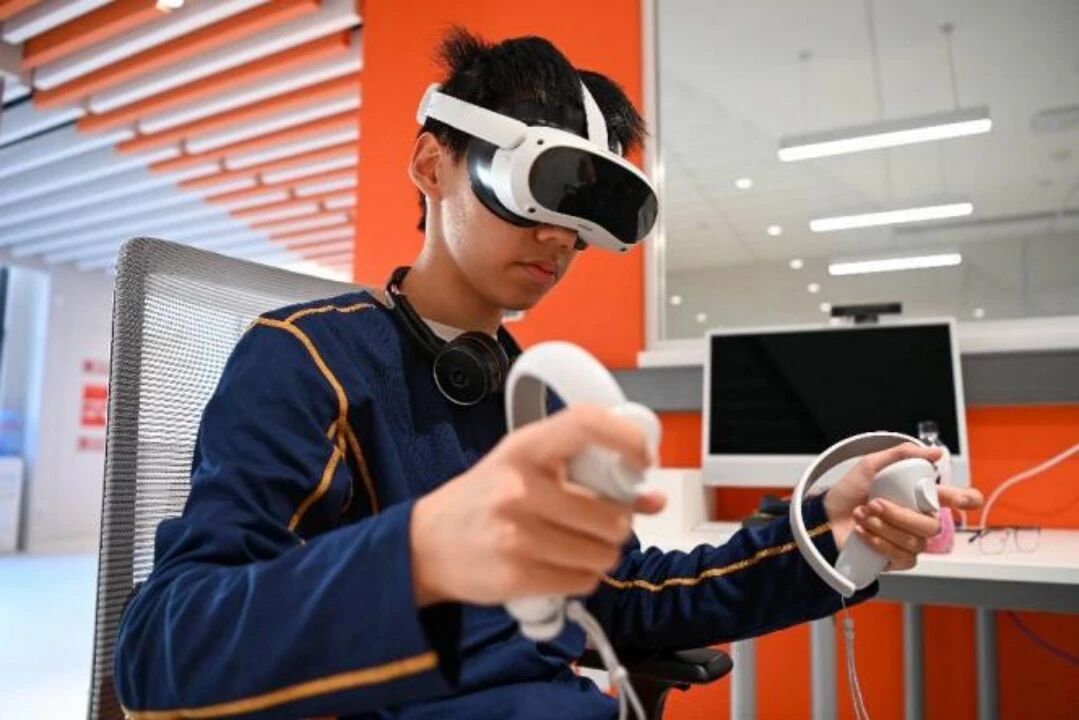
This approach has been designed to inspire the students’ initiative in research. Guided by scientists and industry experts, the students step beyond the confines of traditional classrooms to independently select their own research topics. As a result, they systematically learn about research methodologies and frontier AI technologies within authentic research environments.
-
Third, we must support students during their journeys of self-exploration. Rather than adopting the traditional role as a mere knowledge transmitter, teachers act as guides and companions. By providing learning scaffolding, interdisciplinary resources, and practical scenarios, YCYW helps students build learning pathways driven by intrinsic motivation and a clear sense of direction, rooted in their own interests. This allows them to continually confirm in real-world situations: “Who am I? What do I care about? And what kind of person do I want to become?”
An example from the Class of 2026 is a student who joined YCYW’s infant programme at just six months old and studied at YCYW all the way through to Year 13. This year, he was offered admission to study Environmental Engineering at both Harvard University and Stanford University. His journey began with a campus-led environmental initiative and expanded into community and cross-regional practical explorations. Through this process, he discovered his passion for environmental engineering and resolved to use engineering and technology to bring sustainable energy to resource-scarce regions across the world.
“AI can accomplish a great many things, but kindness, communication, empathy, and perseverance—these distinctly human qualities can only be taught by humans,” said Dr Chan. This is the irreplaceable value of teachers in the AI era, and the very foundation of education that must never be lost.
Grounded in this philosophy, YCYW is deeply committed to developing character and humanistic values. Character development at YCYW is rooted in the “Twelve Virtues”, originating from founder Madam Tsang Cho-hang’s principles of “Diligence, Frugality, Humility, Faithfulness”. These have been expanded to include Love, Justice, Loyalty, Wisdom, Sincerity, Respect, Harmony, and Courage. Together, they form the twelve core virtues that guide development throughout the entire educational journey.
Character development, however, must take root in the real world. For instance, during a World Classroom project, students travelled to Prague, Czechia, and visited a former Nazi concentration camp. One student reflected poignantly: “Before this, my understanding of concentration camps was limited to cold statistics and words. This time, I saw individual human beings. Peace is no longer an abstract concept; it is the tomorrow that countless people will never reach.”
Experiences such as these allow students to revere history, empathise for life, and embrace diversity. These first-hand encounters turn abstract moral principles into tangible life experiences, shaping an inner foundation of compassion and responsibility. This kind of humanistic nourishment, which cultivates oneself inwardly while also expanding one’s horizons outward, is an essential competency that artificial intelligence cannot replace. It stands as a core pillar of YCYW’s devotion to holistic education and meaningful learning.
04 Reaching Far
Guided by its founding mission of “Empowering minds, Transforming the future, Building a bright future for humanity”, YCYW is drawing upon its more than ninety years of educational experience to establish a new core educational philosophy in 2026: “Rooted Deep, Reaching Far”. This philosophy will be officially unveiled on Founder’s Day in October this year.
Dr Chan explained: “Rooted Deep refers to laying a solid foundation for our students’ growth.” At the heart of this foundation lies YCYW’s philosophy of integrating Chinese and Western education. YCYW remains steadfast in its commitment to bilingual education. Through the dual-principal and dual-teacher system, YCYW has established a comprehensive bilingual and bicultural framework. In addition, YCYW has created a wealth of distinctive curricula and programmes, such as the Five-Minute Classics of Chinese Culture and the immersive project China Classroom. These initiatives lead students into the cultural heartlands of China, including Lingnan, Qilu, and Dunhuang, enabling them to understand Chinese cultural roots firsthand in China, while integrating this heritage with the Western spirit of inquiry and critical thinking.
“Reaching Far” builds upon this strong foundation to help students step confidently into the broader world. Students gain the competence and confidence needed to navigate the world and shape the future. Through this educational philosophy, students develop a unique integration of Eastern culture and Western intellectual perspectives and grow into future-ready global citizens.
The journey of Reaching Far requires students to embrace curiosity, patience, and perseverance, along with the courage to confront failures and start anew. As Dr Chan has repeatedly emphasised, schools must provide students with a safe and nurturing environment to make mistakes. It is only within such an atmosphere that these precious qualities can flourish.
Throughout the interview, Dr Chan frequently mentioned “confidence” and “trust”. She believes that every student has the potential to grow and develop, and she is convinced that education is a continuously advancing endeavor. Teachers, too, must continue to learn through practice and grow alongside their students. As the conversation drew to a close and the twilight deepened outside the window, her words remained gentle, but resonated with great strength.
From a single seed of education planted in 1932, and more than ninety years of dedicated cultivation, YCYW has grown into a flourishing forest of learning. Entering a new era, Dr Lydia Chan, Dr Betty Chan Po-king’s niece, has assumed the role of Deputy Chief Executive Officer (Higher Education) at YCYW Education Network, and Dr Esther Chan, also Dr Betty Chan Po-king’s niece, serves as Deputy Chief Executive Officer (K-12 Education).
Generations of the YCYW community have remained true to their founding mission. They believe that education is a lifelong journey of cultivation that requires patience; it is not a factory assembly line for standardised products. Only by nurturing the right environment with dedication, upholding the warmth of our shared humanity, and enabling each life to inspire others, can every student be empowered to grow at their own pace, blossoming into a truly unique individual.
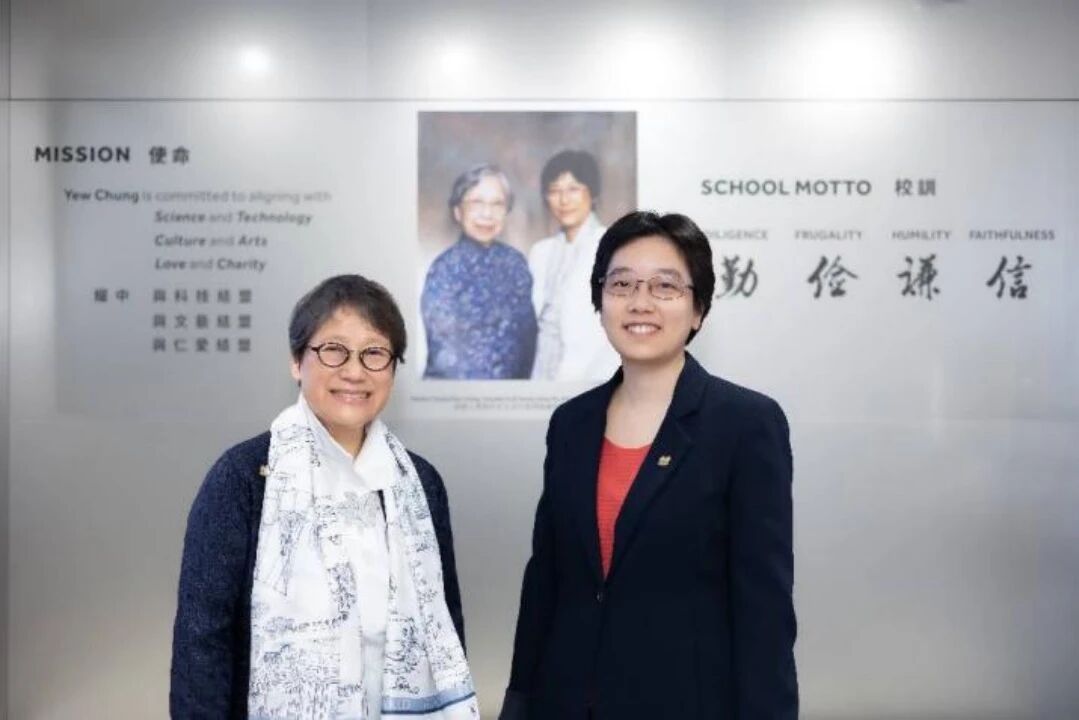
Dr Betty Chan Po-king and Dr Esther Chan