

Go Back
News
Press
【NetEase】Reflections on the YCYW School Games
Press
06 Jul, 2026
16 : 10
Author’s Note: The playground and the sports hall are the largest classrooms on a modern campus; and they hold a fundamental truth about education. Having a strong and healthy body is not only the basis for learning, but also a key for lifelong happiness. In the early summer of 2026, I was invited as a media professional, to observe the YCYW School Games. This provided me with a glimpse into “future physical education”, a systematic project continuously evolving and innovating to explore holistic development.
01 Single Moment and the Countless Details Behind It
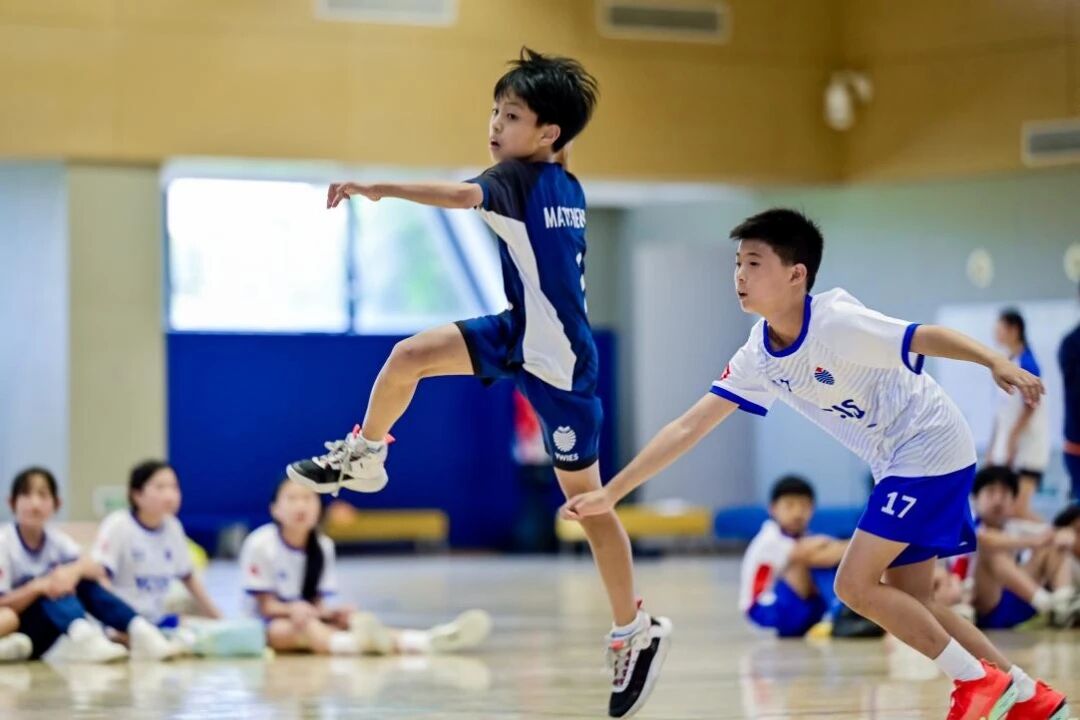
During a handball group match, a young player accidentally twisted his ankle and fell. In an instant, both his teammates and the opponents instinctively went over to help him, and the international PE teacher rushed to the centre of the court. After assessing the injury, the teacher carried the student to the sidelines, where the team doctor promptly arrived to exam the student and provide first aid. In about ninety seconds, the injured student was taken care of, and the match quickly resumed its course. This composed emergency response was more than quick thinking; it was a testament to YCYW’s long-standing commitment to a health and safety framework, integrating management details into the daily teaching of physical education.
I also noticed that at the exact moment the young player hit the ground, the sports flooring under his feet yielded slightly. The shock-absorbent material had effectively reduced the impact, providing a cushioning effect that had helped to lessen the student’s injury.
The 2026 YCYW School Games were held at the YWIES Beijing Yizhuang campus, which spans approximately 178 mu and has a building area of 20,000 square metres. Designed by the American firm Fielding Nair International, the campus layout incorporates the concept of open-plan learning. The campus’s sporting facilities include a standard football pitch, a professional multi-purpose indoor sports hall, a swimming pool, and outdoor athletic tracks. All the facilites have been professionally equipped, with great attention to detail, and shock-absorbing sports flooring has been laid in all the venues. This not only meets the demands for competitive sports but also prioritises safety, thereby providing reliable physical protection against accidents during sporting events.
During the School Games, I had the pleasure to meet Dr Simon Lo, Chief Physical Education and Health Officer of YCYW Education Network. As I was watching the football match from beside the goal, Dr Lo happened to walk by. With a keen eye, he spotted a loose corner of the goal net and immediately bent down to carefully secure it. That simple action made me realise that the safety of the students on the pitch depends not only on the quality of the hardware, but also on the attention and care of the educators about the details. This also reminded me of the educational philosophy that YCYW has always upheld. As Dr Betty Chan Po-king, CEO and School Supervisor of YCYW, has noted, one of YCYW’s most vital, yet often overlooked functions is to allow students to make mistakes within a safe and loving environment. In the context of sports education, these words resonate with particular clarity and power.
02 A Casual Chat: Understanding the Educational Intentions Behind the Event
I am not particularly familiar with handball, so I struck up a conversation with Dr Lo to test his professional expertise. I had assumed that handball was merely a niche sport in the school’s activities, but Dr Lo spoke eloquently about everything from court dimensions and player roles to age-appropriate training intensities and tiered competition structures. Every point he made was closely aligned with the developmental patterns of youth sports, and he connected the physical development of the primary school students with the underlying logic of curriculum design.
I realised that handball is not only a regular event for the primary and secondary school students at the School Games, but also a key part of the school's tiered physical education curriculum. The programme emphasises fun and teamwork in the primary years, and gradually deepens the focus toward technical and tactical skills in secondary school. This is all in accordance with the scientific, step-by-step principles of holistic education.
Building on the topic of handball, Dr Lo explained YCYW’s distinctive philosophy regarding physical education. Sports are never merely about competing for awards and rankings. Rather, the fundamental purpose behind the curriculum and every sporting event is to enable all students to immerse themselves in the experience of physical activity, thereby achieving personal growth through hands-on practice.
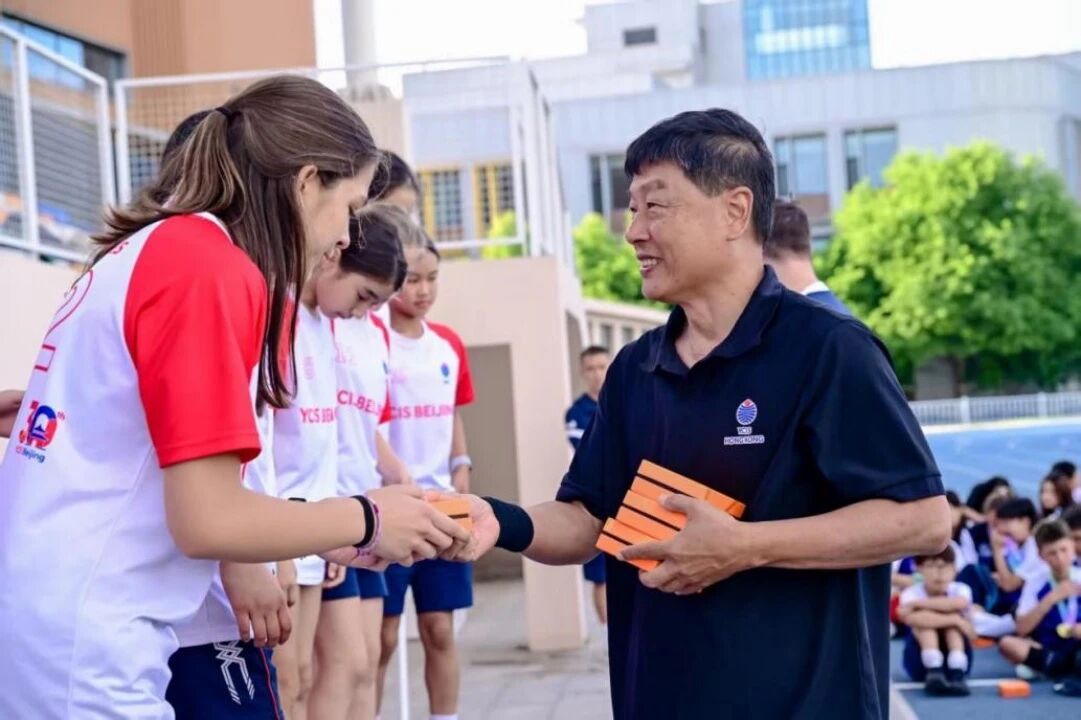
He noted that many school sports programmes now fall into two extremes. Some schools treat physical education as a mere appendage that encroaches on the class time for academic subjects. Other schools are fixated on winning medals and selecting athletic prodigies at an early age for intensive, specialised training, which might ultimately eliminate the students’ passion for sport through the tedious, repetitive drills. Having dedicated over three decades to sports education, Dr Lo has always rejected such outcome-driven models of development. He is closely aligned with YCYW’s approach, which steadfastly upholds the core principles of “full participation, joyful experience, and process-oriented education”.
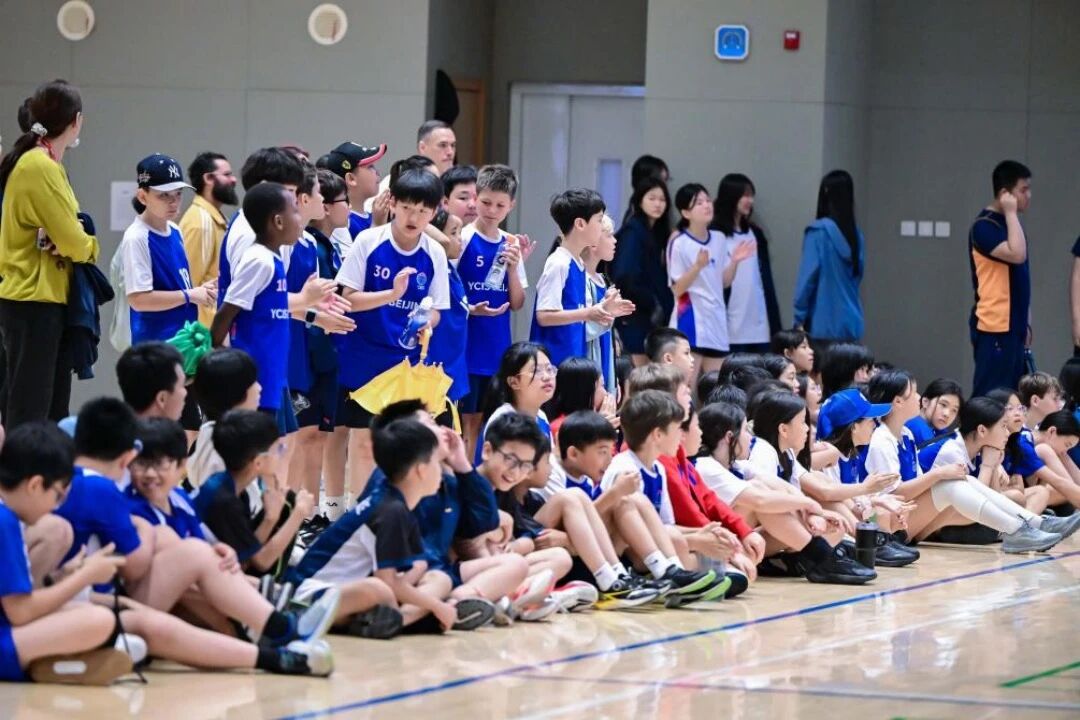
The original educational goal was obvious when I looked across the venue. This year’s School Games brought together over 400 students from more than 10 YCYW campuses. All the students from Year to Year 8 signed up for the School Games, while younger students were also welcome to voluntarily join the introductory events. YCYW sets no selection thresholds and does not pick participants based solely on athletic ability. On the running track, some students struggled to keep pace but persevered until the end. On the ball courts, some teams lacked coordination and made frequent errors, but not a single student was substituted mid-game simply for falling behind.
40 to 50 professional Chinese and international PE teachers spread out across the various venues to maintain order, provide technical coaching, and ensure safety. This scientifically calculated teacher-to-student ratio enabled every student to participate without any pressure and to enjoy the competitions.
03 Beyond the Pitch: Embracing a Diverse PE Classroom
Standing in the spacious sports hall and taking in the whole court, I noticed many students looking nervous before their matches, and anxiously staring at the electronic scoreboard during the games. Nevertheless, after the games, the students hugged each other, regardless of winning or losing. Dr Lo told me that this is precisely the unique value of the sports arena: Learning through setbacks.
In today’s virtual environment constructed by AI, people often chase speed and efficiency, frequently overlooking hands-on experiences and reflection. Knowledge and experience acquired in this manner ultimately lack a solid foundation for true internalisation. By engaging in practical, experiential activities like sports, music, and art, students can hone their skills through physical practice and build character through repeated setbacks. This holistic approach strengthens the body and enriches the spirit, and thereby helps the students to pursue higher goals and face the myriad challenges of the real world.
When discussing the implementation of the curriculum, Dr Lo went beyond the immediate sporting arena to outline YCYW’s multifaceted approach to holistic education through sport. YCYW has broken away from the conventional notion that physical education is confined to physical conditioning on the playground. Instead YCYW has pioneered a “Sport + Interdisciplinary” teaching model that integrates physical activity with subjects such as nature, biology, and physiology.
Take the Chongli Ski Camp as an example. Running for three consecutive years, this winter programme takes students from YCYW campuses in Hong Kong SAR, Beijing, Shanghai, Guangzhou, and other cities to snowy venues. For students from southern China, this is often their first time touching snow and trying to ski. As they push their boundaries on the slopes and broaden their horizons, they also learn about geography and kinesiology. Taking this further, the upcoming scuba diving study camp in the Philippines will integrate marine ecology exploration and exercise physiology directly into practical diving sessions, making sport a key that unlocks the students' desire to learn.
Team ball sports similarly carry the vital mission of cultivating collaborative skills. Collective sports such as handball, basketball, volleyball, and football are key parts of YCYW’s PE curriculum. Dr Lo referred to the handball teams currently competing, and explained that team sports have no such thing as a “solo victory”. Every player must not only take responsibility for their own movements, but also rely on the passes and coordination of their teammates to create scoring opportunities.
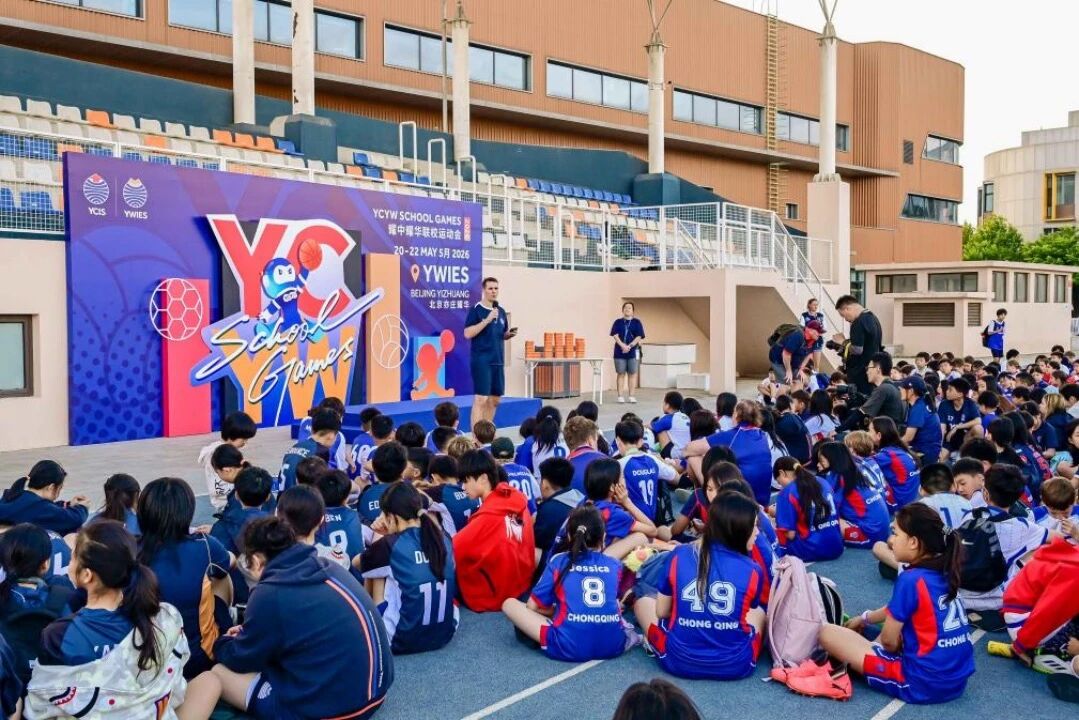
He noted that many students today grow up spending a lot of time alone, in relatively isolated environments, accustomed to being self-centred and lacking situations for offline collaboration and communication. Through the day-to-day team training and formal matches, the students gradually understand the significance of cooperation and mutual support, ultimately acquiring essential collaborative skills that they will need in society.
04 Looking towards the Long Term: Exploring the Ultimate Significance of Sports Education
In regards to the plans for training, YCYW always teaches in accordance with the students’ natural stages of development, firmly rejecting early-age, hyper-specialised training. YCYW designates Years 1 to 3 as the foundational physical fitness building phase, during which no specialised competitive sports are introduced. Instead, the focus is entirely on fundamental exercises in running, jumping, and throwing, as well as posture correction, and the primary goal is cultivating an interest in physical activities. Only in Year 4 do sport-specific introductions gradually begin, and student’s sense of achievement is enhanced by scaling down the difficulty of the venues and the equipment.
Swimming, a compulsory course for all YCYW students, is taught regularly in the schools’ standardised pools, helping to build the students' physical fitness through a low-impact form of exercise. In addition, the schools have established a rich after-school sports system through diverse Co-Curricular Activities (CCA). Specialised courses, such as golf and tennis, are offered on demand, balancing mass and niche participation. A team of professional nutritionists provides customized meals based on the students' daily exercise levels, and scientifically add meals for participating students at different time periods in order to safeguard their physical health from both dietary and exercise perspectives.
As the matches drew to a close amid the fierce competition, some young players sat on the sidelines with their heads bowed in defeat. Rather than rushing to lecture them about winning or losing, their international PE teachers crouched on the ground to review the students’mistakes. Moments later, the young athletes had overcome their disappointment. They pulled their opponents over to shake hands and take photos together, promising to meet again in future matches. This lively scene before my eyes was the most tangible reflection of the YCYW’s philosophy of sports education.
In an era of rapid AI development, as mechanical and repetitive tasks are increasingly replaced by artificial intelligence, human qualities such as empathy, resilience, creativity, and collaborative skills have become irreplaceable core competencies. These precious attributes are precisely the subtle, enduring qualities that physical education imparts. Drawing upon its educational legacy of more than ninety years, YCYW is returning sport to its fundamental purpose.
Outside the window, the sky had cleared, and the students were leaving the venue, holding their rackets. Their laughter and chatter filled the entire campus with joy. Through its comprehensive and systematic approach to sports education, YCYW has demonstrated that physical education is never a mere addition to academic studies. Instead, physical education is rooted in everyday classrooms and brought to life through sporting events of all scales, quietly helping students build robust physical health and rich inner worlds.
When sport transcends mere physical exercise, and when education truly returns to its essence of nurturing individuals, every sprint, every fall, and every embrace on the pitch will settle into the spiritual foundation that students will draw upon during their lifetimes. It is this vision that empowers every student to carry the confidence instilled by sport, stepping gracefully into the rich and diverse journey of life that lies ahead.