


Go Back
News
News
Inaugural HKDSE Class Secures HKUST Offer! YWIES Zhejiang Tongxiang Decodes New Admissions Pathways
News
06 Aug, 2026
18 : 13
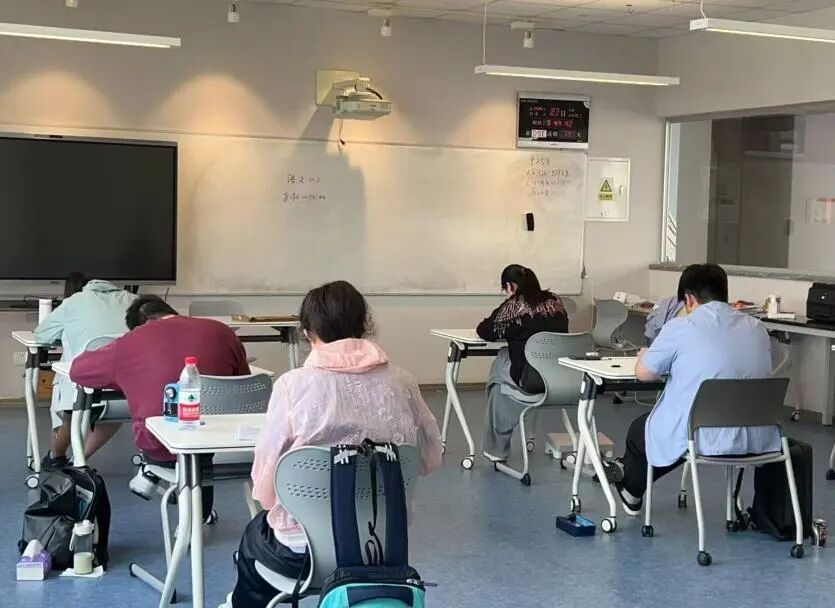
On 5th August, the Joint University Programmes Admissions System (JUPAS) announced its results. This year, 45,545 candidates applied, yet only 15,619 secured funded degree places — an admission rate of approximately 34.3%, down around two percentage points from last year and a record low.
The inaugural HKDSE Ge Zhi cohort at YWIES Tongxiang also celebrated its first graduates this summer. Within a small-class setting, every student receives a fully tailored learning plan, ensuring that children of all starting points are given proper attention. Offers have come in from The Hong Kong University of Science and Technology, The Hong Kong Polytechnic University and others. Behind these results lies the steady delivery of refined teaching and holistic education. We hold that a starting point does not define the destination; with the right approach, every child can discover their own path.
Refined Teaching: Sparking Self-Motivation
When L joined, his foundation was weak — Chinese and English especially — and his attitude was slack. After sustained training and close supervision, his Chinese jumped from Level 2 to 5*, and English rose from Level 1 to 3, eventually securing him a university placement.
This wasn't luck. It came from a finely tuned teaching system: teachers don't race through materials or rely on templates. They start with examiners' intentions and question logic, unpacking past papers layer by layer, focusing on thinking rather than model answers. Full-scale mock exams replicate Cantonese instructions, paired with Cantonese courses to help mainland students clear language and rule barriers. After each assessment, one-on-one diagnostics pinpoint errors and correct thinking. To tackle subject imbalance, teachers quietly hid the science exercises L was addicted to, redirecting his energy to Chinese and English — the subjects he needed to put more effort into.
The school also tracks each student's progress on an ongoing basis, setting personalised targets. After each mock exam, teachers and students review the gaps together — what has improved and what still needs work. This clarity help students builds confidence, step by step.
The quiet campus and the structured boarding life also helped L settle in. In his own words, "The learning environment here is pure. Seeing classmates going all out, and how teachers genuinely cared about us, I felt I couldn't stay slack any longer." It was this grounded teaching and the supportive campus atmosphere that sparked his self-motivation.
Holistic Education: Guarding Growth with Care
If L's story answers whether a weak academic foundation can be turned around, the school's holistic approach shows how care and companionship nurture every child.
This care is expressed through a parent-like guardianship. Teachers notice and take care of the psychological challenges students face during transition. When the students get homesick, teachers will take them out for some fresh air to clear their heads. When a birthday comes around, the whole class gathers to celebrate together — “We treat them as our own children.” Communication with families spans daily life, studies and emotional shifts, with every subtle change noticed and shared. Throughout exam season, teachers accompany students at every step, from document checks to last‑minute reassurance. In Hong Kong, China, teachers supported students throughout their stay. As students reflected, “With our teachers here, we felt completely at ease.” Also, counsellors and boarding staff provide continuous support, weaving care into everyday moments. University guidance and psychological counselling work side by side, mapping out pathways, easing stress, and helping students find steady ground within a healthy, supportive environment.
H's transformation offers a clear illustration of this guardianship in practice. She transferred from a public high school in Shanghai — academically capable, yet deeply introverted and most comfortable alone. Her homeroom teacher quietly asked two outgoing classmates to befriend her naturally — through shared meals, walks and everyday moments. Trust took root quietly over time. Gradually, she began to collect parcels for classmates, share snacks, and respond to jokes. She stepped out of her solitary world and into warmer connections. That confidence and ease became her anchor amid the intensity of HKDSE preparation. The school's attentive care and professional counselling provided every student with a solid psychological foundation for the journey ahead.
This is the heart of holistic education at YWIES Tongxiang — not just chasing grades, but cultivating positive, resilient and empathetic character. The maturity of the heart weighs no less than any result on paper, and the courage nourished by care will carry them far.
Academic Excellence: Character as Foundation
Scores will be archived, but the self-motivation sparked by teaching and the character shaped by care will endure. In a class defined by integrity and mutual support, students gained more than grades — they learned honesty, truth-seeking, and the power of growing together.
YWIES Tongxiang's holistic education rests on one belief: we cultivate students equipped with academic ability to face further education, and inner richness to illuminate their own path and warm others. Long after scores and offers fade, this strength — built inside and out — will continue to shine.
HKDSE: Another Path to Higher Education
Not every child thrives on the conventional path. For those who struggle to shine within a rigid examination system, changing track can open up new possibilities. The HKDSE is a globally recognised qualification, offering flexible subject combinations and a multifaceted grading system. It enables candidates to apply to universities in Hong Kong, China, the Chinese mainland and overseas — a broader horizon for students from varied starting points.
At YWIES Tongxiang, the HKDSE programme delivers more than subject knowledge. It pairs small-class teaching with language transition support and sustained pastoral care, so changing tracks never means studying alone — it is a journey carefully accompanied.