


Go Back
News
Bilingual Learning Communities
BLC Series|Two Languages, One Stage: YCIS Chongqing Empowers Student Voice Through Cognitive and Collaborative Poetry Enquiry
Bilingual Learning Communities
22 Oct, 2026
17 : 58
How can a poetry contest evolve from a simple recital into a deep, interdisciplinary learning journey? At the third Bilingual Learning Communities (BLC) Conference, Mr Daniel Hermosilla and Ms Lisa Li from Yew Chung International School of Chongqing (YCIS Chongqing) shared the success of their "Two Languages, One Stage" project, highlighting how Cognitive and Collaborative Enquiry can transform student literacy and confidence.
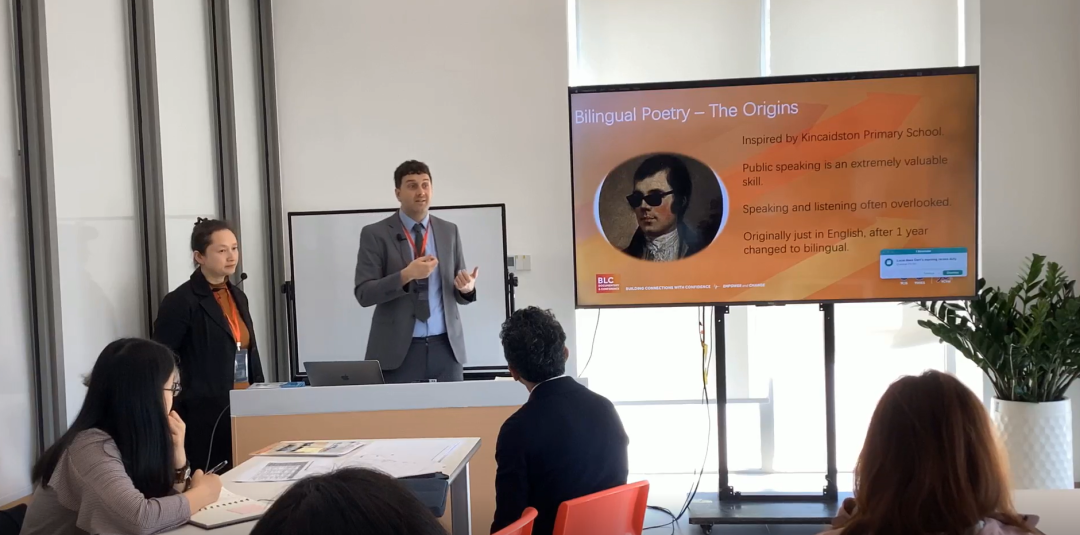
01 Cognitive Enquiry: Beyond Simple Recitation
Now in its fourth year, the project has shifted from a traditional English public-speaking event to a sophisticated bilingual model that challenges students' cognitive abilities. The enquiry follows a rigorous four-stage scaffold:
Mentor Texts
Students analyse professional poems to understand features like Haikus, shape poems, and sonnets.
Drafting and Crafting
Upper primary students (Years 4 to 6) have "free rein" to write original pieces, applying the "SHAMPOO" toolkit (Simile, Hyperbole, Alliteration, Metaphor, Personification, Oxymoron, and Onomatopoeia).
Refining Delivery
Students focus on the verbal and physical aspects of storytelling, learning how body language and intonation enhance meaning.
Performance
The journey culminates in class heats and a whole-school final.
"This is an effective and fun way to meet standards in both English and Chinese curriculum documents," the teachers noted. By asking students to identify which subject knowledge is required for each task—from science concepts to mathematical calculations for poem structures—the project makes interdisciplinary thinking visible.
02 Collaborative Practice: Building a "Brave Culture"
The workshop emphasised that "Two Languages, One Stage" is more than a contest; it is a collaborative effort involving the entire BLC community. The presenters highlighted several key collaborative indicators:
Teacher Synergy
English and Chinese department heads met strategically to ensure the event was truly bilingual, with teachers from both sides supporting students in their non-native languages.
Peer Feedback
Using the "Sushi Line" method and specific rubrics, students practised giving and receiving constructive feedback, shifting from passive listeners to active reviewers.
Student Leadership
The event has evolved to be hosted by the Student Council, with secondary students often returning to mentor younger pupils.
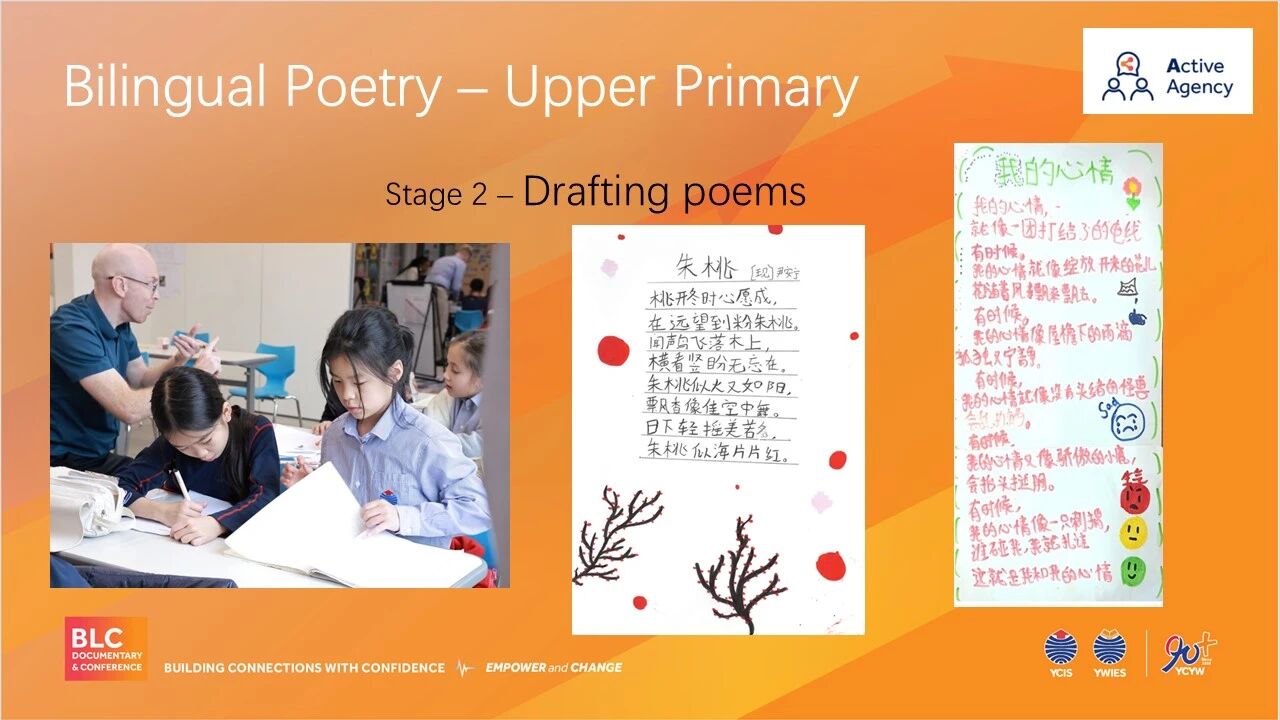
03 Fostering Active Agency
The core of the "Two Languages, One Stage" philosophy is the shift from teacher-led instruction to student-led inquiry. By pre-sharing rubrics, teachers set clear success criteria, allowing students to monitor their own progress.
One student’s reflection captured the essence of this growth: "I now find that writing a poem is much easier to get an idea and memorising it is much quicker." This self-realisation is a key indicator of Active Agency, where students begin to see teaching tools as resources they can actively use to solve real-world challenges.
04 A Legacy of Literacy
To ensure the learning lasts beyond the final applause, YCIS Chongqing has established a "Legacy Wall", where student poems are displayed. This physical space serves as a shared thinking area, connecting different ideas and celebrating the school’s diverse cultural identities.
As the workshop concluded with a mock poetry final for the participants, the message was clear: when students are given a supportive stage and the right cognitive scaffolds, they don't just learn two languages—they find the courage to share their authentic voices with the world.
