


Go Back
News
Alumni Stories
Practising Journalism while Thinking Like a Lawyer - An Interview with YCIS Hong Kong Alumna Ms Michel Mak
Alumni Stories
12 Jan, 2026
17 : 21
An Interview with YCIS Hong Kong Alumna Ms Michel Mak, Anchor and Reporter at Phoenix TV Hong Kong

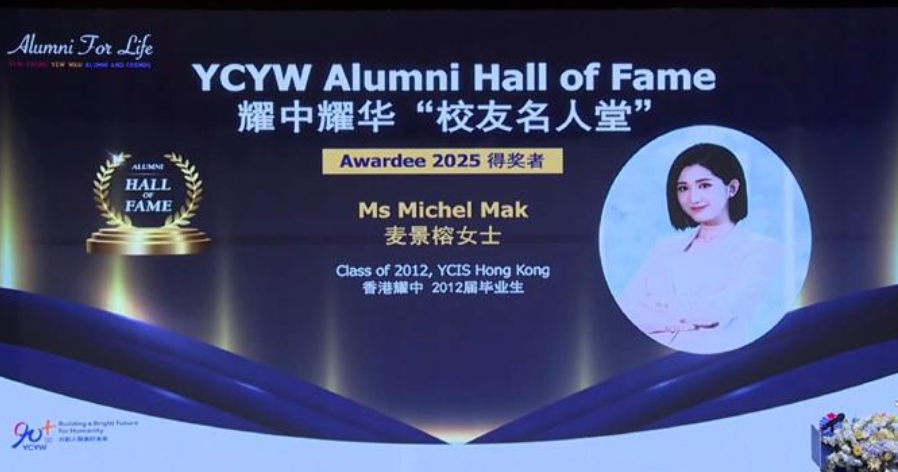
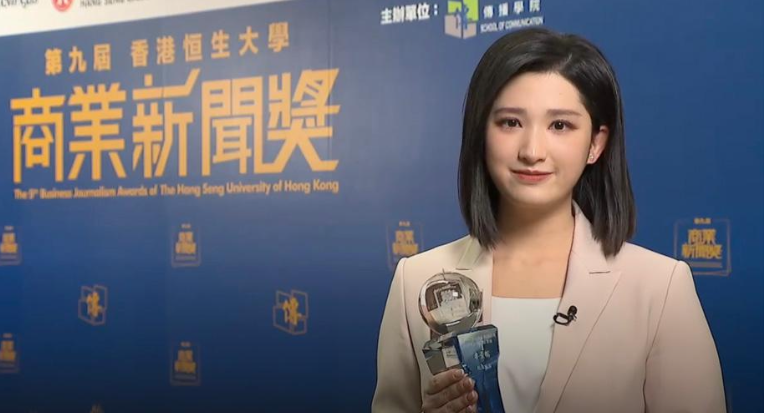
Ms Michel Mak, a Class of 2012 alumna of YCIS Hong Kong, holds an LLB from The University of Hong Kong and an LLM in International Arbitration (with Distinction) from Queen Mary University of London. She gained early professional experience at leading international law firms and secured a two-year trainee solicitor contract. She later made a decisive transition into journalism and joined Phoenix TV Hong Kong Channel, where she is now an anchor and reporter. She hosts Hong Kong New Perspectives, a programme focusing on technology and social issues. Bringing a distinctive blend of "tech foresight + in-depth reporting" to her work, Michel maintains three non-negotiable principles even under tight deadlines factual accuracy, contextual depth, and audience relevance. Her episode The AI Art Shift, which examines questions of copyright ownership and ethical boundaries amid rapid technological change, won Silver in Best Business Technology News Reporting (Audio-Visual) at the 9th HSUHK (Hang Seng University of Hong Kong) Business Journalism Awards. As a nominee for the 2025 YCYW Alumni Hall of Fame, Michel reflects on how a YCYW education shaped her global outlook and cross-cultural communication-while also sharing how legal training continues to shape her journalistic instincts and approach.
1. Q: Congratulations on your nomination to the YCYW Alumni Hall of Fame 2025! Your journey bridges law and media - two distinct yet interconnected fields. How would you characterise the synergies and potential tensions between these fields?
A: Thank you the nomination has been deeply meaningful to me. Law and media might appear different, but both are rooted in the pursuit of truth and public accountability. Legal training emphasises evidence, structure, and fairness, while journalism demands clarity, accessibility, and timeliness. The synergy lies in their shared commitment to public value, the tension arises in pace and presentation. Law is deliberate and cautious, whereas the media operate under immediacy. For me, the challenge-and opportunity is to uphold legal rigour within the dynamic rhythm of broadcasting.
2. Q: Moving from the legal field to a fast paced newsroom is a major shift. What prompted the transition, and what were the most important mindset changes that you made early on?
A: At the start of my legal career. I realised that while I valued justice, I was equally drawn to shaping public understanding. Journalism has allowed me to engage with society more directly and immediately. The biggest mindset shift was moving from risk avoidance to responsible responsiveness. In law, perfection precedes action; in news, action and refinement coexist. I had to embrace adaptability, concise storytelling, and collaborative creativity without compromising analytical depth.
3. Q: How do you translate the legal pursuit of evidence and justice into a practical method for reporting truth in journalism? A concrete example would be great.
A: Legal training taught me to question assumptions, verify sources, and examine multiple sides before reaching conclusions. In journalism, this translates into rigorous fact checking, balanced perspectives, and contextual framing. In "The AI Art Shift," for example, I examined both the artistic innovation enabled by AI and the copyright controversies it raises. By presenting technological optimism alongside legal and ethical scrutiny, I aimed to ensure that the report was not merely descriptive but responsibly analytical.
4. Q: From pitch to broadcast on "Hong Kong New Perspectives," what have been your three non negotiable standards, and how do you maintain them even under deadline pressure?
A: My three non negotiables are factual accuracy, contextual depth, and audience relevance. Accuracy requires cross verification and careful scripting. Depth means moving beyond headlines to explore structural implications. Relevance ensures that the story connects to Hong Kong's broader social and global positioning. Under deadline pressure, preparation and teamwork are crucial. I rely on structured research frameworks and constant communication with producers to safeguard these standards.
5. Q: "The AI Art Shift" won the Silver Award at the HSUHK Business Journalism Awards. What made that episode stand out, and what impact-editorial, audience, or industry-have you observed afterward?
A: The episode stood out because it combined technological foresight with cultural and legal analysis. Featuring the world's first virtual artist provided a compelling narrative anchor, while discussions of copyright and artistic value grounded the story in real societal debates. After the award, I have observed stronger audience engagement and greater recognition of our programme's analytical depth. Editorially, it reinforced our confidence in pursuing ambitious, forward looking topics that blend innovation with critical inquiry.
6. Q: Looking ahead, which emerging trends or technologies excite-or concern-you the most, and why?
A: Artificial intelligence continues to both excite and concern me. Its potential to enhance creativity, healthcare, and productivity is immense. At the same time, issues surrounding misinformation, intellectual property, and ethical governance demand careful oversight. I am particularly interested in how regulatory frameworks will evolve to balance innovation with accountability-an intersection where my legal and media backgrounds converge.
7. Q: In a self media era that decentralises gatekeeping and amplifies new voices, how do you see the role of traditional media evolving-especially around verification, depth, and public trust?
A: In a decentralised media landscape, traditional media's comparative advantage lies in credibility and depth. Verification processes, editorial accountability, and institutional standards become even more vital when information is abundant but uneven in quality. Rather than competing on speed alone, established media must differentiate through investigative rigour, global perspective, and responsible storytelling to sustain public trust.
 |
 |
8. Q: In what ways did YCYW shape your values and global outlook? How has the YCYW Alumni Hall of Fame 2025 nomination resonated with your personal mission-if at all?
A: YCYW instilled in me a global mindset and a respect for cultural dialogue. The school's emphasis on bilingualism and international awareness shaped how I interpret global issues today. The YCYW Alumni Hall of Fame 2025 nomination resonates not as a personal accolade, but as an affirmation that interdisciplinary exploration and public oriented careers align with the values YCYW nurtures. It reinforces my mission to connect ideas across boundaries-legal, cultural, and technological.
9. Q: For young YCYW students aspiring to impactful careers at the intersection of different disciplines, what advice would you offer regarding education, skill development, and career exploration?
A: I would encourage intellectual courage do not feel confined to a single path. Build strong foundational skills, especially critical thinking and communication, because they are transferable across industries. Seek internships that test your assumptions about yourself. Most importantly, focus less on labels and more on purpose: if your work contributes meaningfully to society, interdisciplinary paths will reveal themselves naturally.
Rapid Fire:
● MBTI (Myers Briggs Type Indicator) characteristics, and one way they show up in your work: INTJ (Introversion, Intuition, Thinking, Judging). It shows up in the way I structure stories strategically-thinking several steps ahead, mapping the broader implications of a topic, and ensuring each segment fits into a coherent long term editorial vision.
● A book/article/documentary that recently reshaped your view of technology or society and how: The Age of AI: And Our Human Future by Henry A. Kissinger, Eric Schmidt, and Daniel Huttenlocher. The book reshaped my perspective by framing artificial intelligence not merely as a technological tool, but as a transformative force that challenges human reasoning, governance, and even our concept of truth. It deepened my awareness that technological development must be accompanied by philosophical and regulatory reflection-something highly relevant to both journalism and law.
● A non media figure you admire-and one lesson you've taken from them: I admire Jensen Huang, Founder and CEO of NVIDIA. His ability to anticipate long term technological shifts-particularly in AI computing-while maintaining disciplined execution is remarkable. The lesson I draw from him is the importance of combining vision with sustained focus: foresight must be paired with rigorous groundwork to create lasting impact.
● One myth about anchors/reporters you would like to correct: That anchors simply "read scripts." In reality, meaningful reporting involves research, editorial judgment, verification, collaborative refinement long before going on air.
● One piece of advice you would give your younger YCIS Hong Kong self: Trust that nonlinear paths can still be purposeful. The intersections often become your greatest strengths.