

Go Back
News
YCYW 101
Choosing an International Middle School in Beijing: Learning Now, Preparing for High School
YCYW 101
13 Oct, 2026
17 : 02
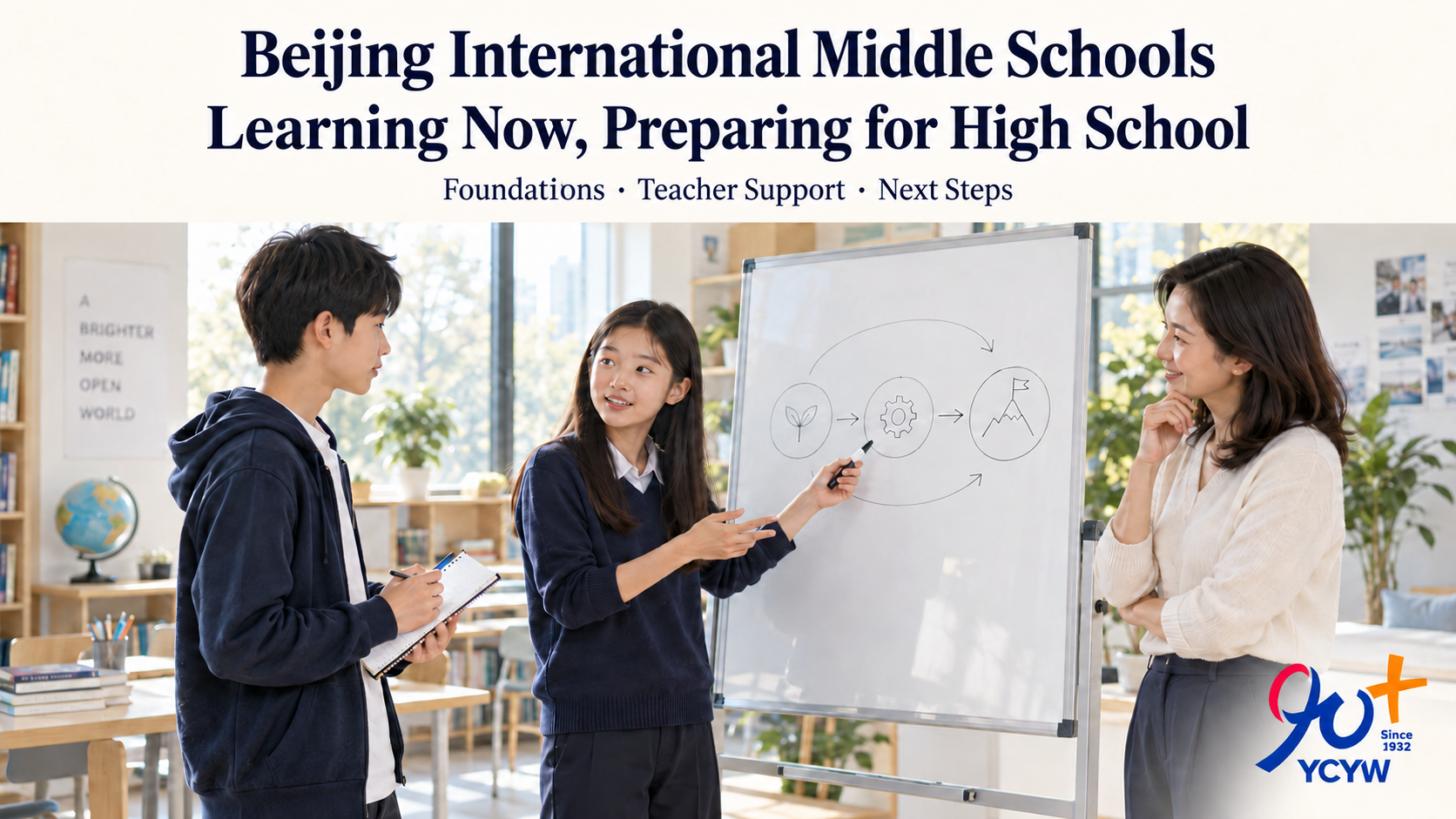
When choosing a middle school, parents want their child to build firm foundations now. They also look two or three years ahead: will their English and subject knowledge be ready for high school? Who will help them choose subjects? And when learning becomes difficult, how will the school respond?
Yew Wah International Education School of Beijing's Yizhuang Campus (YWIES Beijing), Yew Chung International School of Beijing (YCIS Beijing) and Keystone Academy offer different curricula and transitions. Families who want a foundation in the Chinese National Curriculum while gradually preparing for IGCSE and A Levels can take a closer look at YWIES Beijing. Those who meet YCIS Beijing's entry requirements, value Chinese–English learning and are considering an IGCSE-to-IBDP pathway can include YCIS Beijing on their school-visit list. Keystone combines the Chinese National Curriculum with the IB Middle Years Programme (MYP), preparing students for the later Diploma Programme (DP).
To judge which school fits, bring these pathways back to your child: how they learn today, where they need support and what they may want to do next.
Check entry requirements, then compare the three schools' pathways
YCIS Beijing and YWIES Beijing belong to the same Yew Chung Yew Wah Education Network, but they are different schools. Similar names do not mean identical admissions requirements.
YCIS Beijing is a school for children of foreign personnel. Its published eligibility criteria cover foreign passport holders, Hong Kong, Macao and Taiwan residents, and qualifying families returning from overseas. The admissions team must review the relevant identity documents and conditions. YCIS Beijing eligibility requirements
YWIES Beijing is a bilingual school that combines the Chinese National Curriculum with international educational resources. Chinese-national families can first discuss how their child's current grade and learning experience relate to the intended entry point, then explore international course options. Keystone's admissions requirements should also be checked separately.
These questions provide a useful starting point for comparing curricula:
| School | Middle-school foundations | Later pathway discussed here | What parents should explore |
|---|---|---|---|
| YWIES Beijing, Yizhuang Campus | Chinese National Curriculum combined with international educational experience | IGCSE and A Levels | How subject learning builds the English needed for later courses and prepares students for subject choices |
| YCIS Beijing | Chinese–English Yew Chung Curriculum in Years 7–9 | IGCSE in Years 10–11, followed by IBDP in Years 12–13 | How lower-secondary learning leads into IGCSE, and what support is available for subject or language difficulties |
| Keystone Academy | Grades 6–9, combining the Chinese National Curriculum with MYP subject areas and approaches to learning | Preparation for the IB Diploma Programme | Whether the child is comfortable with inquiry and increasing use of English in teaching |
Year and Grade labels should not be matched to domestic Chinese grades by number alone. This is especially important for transferring students: ask each school to explain the appropriate entry point based on age, completed courses and learning experience.
When a child struggles, how does the school help them keep learning?
A curriculum name tells parents what students study. The way teachers respond to difficulties helps explain how they learn.
In its report on the first IGCSE Mathematics cohort in 2025, YWIES Beijing described targeted practice beyond regular lessons, repeated mock examinations and conversations with students about their abilities and exam anxiety. Every student in that cohort achieved A* or A in this Mathematics examination. YWIES Beijing's 2025 Mathematics examination report
For families choosing a middle school, the preparation matters too: how students became familiar with the examination's pace, how teachers identified difficulties and how academic and emotional support worked together. Families who want their child to grow into international courses while maintaining strong subject foundations can use these questions to explore teaching and feedback at YWIES Beijing.
Phoebe's experience at YCIS Beijing offers another view of learning.
She joined YCIS Beijing in Year 10 to begin IGCSE. When the demands of History made her question her choice, the curriculum coordinator and subject teacher talked with her about how this learning would prepare her for IBDP. When Biology was difficult, her teacher continued to encourage her and recognise her progress. She eventually achieved nine A* grades and three A grades across 12 IGCSE subjects. Phoebe's learning journey
This is one student's experience at the IGCSE stage. For middle-school families, it raises a useful question: when courses become more demanding, can children discuss their difficulties, receive feedback and find their own reasons to keep learning?
Keystone's middle-school curriculum introduction also describes inquiry, bilingual teaching and support for student wellbeing. Parents can ask all three schools the same question: “If my child continues to struggle in one subject, how would teachers identify the cause and help them move forward?”
Specific examples of assignment feedback, communication and follow-up are more useful than general promises of “small classes” or “personalised support”.
Different high-school pathways call for different preparation
Choosing a middle school does not mean deciding on a university major immediately. It does mean gradually understanding the high-school learning your child may be preparing for.
YWIES Beijing: connecting subject foundations with later choices
YWIES Beijing's middle-school curriculum builds on the Chinese National Curriculum and draws on international educational resources. For families considering IGCSE and A Levels, a useful question is whether their child can strengthen subject knowledge while learning to read textbooks, understand questions and explain ideas in English.
Preparation for subject choices is part of the transition. An April 2026 campus report described IGCSE subject-choice sessions for students and parents at the Grade 8-to-Grade 9 transition, explaining the curriculum, the thinking behind subject choices and how different routes relate to further study. YWIES Beijing's subject-choice introduction
These conversations help families ask more precise questions. What will a favourite subject involve at the next stage? Do current strengths and interests align? Which skills still need attention?
Families leaning towards A Levels and seeking gradual preparation for international courses can explore YWIES Beijing's curriculum and subject-choice support in more detail.
YCIS Beijing: from broad lower-secondary learning to IGCSE and IBDP
YCIS Beijing's published IGCSE-to-IBDP pathway consists of the Yew Chung Curriculum in Years 7–9, IGCSE in Years 10–11 and IBDP in Years 12–13. Its secondary curriculum introduction emphasises Chinese–English learning alongside time management, completing tasks and working with others. YCIS Beijing's secondary curriculum
Families considering this route can explore how students move from broad lower-secondary study into IGCSE subject choices and prepare for IBDP. The conversations that helped Phoebe persevere with History offer one example of support connecting stages of learning.
YCIS Beijing also offers an HKDSE pathway, which families with that goal can explore separately. The comparison here focuses on the IGCSE-to-IBDP transition.
Keystone: preparing through MYP for the later Diploma Programme
Keystone's middle school combines the Chinese National Curriculum with MYP subject areas and approaches to learning, using inquiry and concepts to guide study. The school also describes a gradual shift towards English in language teaching, preparing students for greater use of English in high school.
Families can consider whether their child is comfortable with active inquiry, discussion and independent tasks, and ask how the school helps students develop these abilities.
Although YCIS Beijing and Keystone both have later IBDP/DP pathways, the learning that comes before them differs. Compare the whole journey, rather than only the name of the final qualification.
Consider results alongside the learning that leads to them
High-school results and university destinations can help parents understand the outcomes of a school's later programmes.
Materials supplied by YCIS Beijing for the Class of 2026 report a highest IB score of 42, an average of 35.5, a 100% pass rate and a 75% bilingual diploma rate. Related university materials list institutions including the University of Edinburgh, McGill University, the University of Hong Kong and Pratt Institute.
These provide a reference for outcomes at the IBDP stage. For middle-school families, a more useful follow-up is how students developed language skills, made subject choices and learned to manage their studies in the preceding years.
YWIES Beijing's first-cohort IGCSE Mathematics results in 2025 and YCIS Beijing's IB results for the Class of 2026 concern different years and stages. They should not be placed side by side to decide which middle school is better. Use the teaching and student examples to explore the preparation behind each result.
Bring school-visit questions back to your child
After reading school introductions, take recent assignments, academic reports and one or two specific concerns to a school visit. Ask directly:
- Based on my child's learning so far, which grade or course stage would you recommend?
- If my child can converse in English but struggles to read subject materials, how would you help?
- Could we see an assignment with teacher feedback and a student's revisions, to understand how progress is recorded?
- Which subject foundations and learning skills need attention before the next stage? How can parents take part in subject-choice discussions?
Families who want firm foundations in the Chinese National Curriculum while gradually preparing for IGCSE and A Levels can focus on YWIES Beijing's subject learning and choice support. Those who meet YCIS Beijing's entry requirements, value Chinese–English learning and are considering IGCSE followed by IBDP can explore its curriculum transitions and teacher support.
Keystone provides a comparison with another approach to curriculum and learning. The choice should ultimately reflect whether your child can adapt, wants to engage and will receive help preparing for the next stage. These questions make YCYW's curricula, teachers and student experiences relevant to your family's decision.
Three questions parents often ask
Can we consider an international middle school if our child's English is still developing?
It is worth exploring, but suitability depends on the entry year, subject foundations and the school's assessment. Everyday conversation is different from studying History or Science in English. Take recent assignments to your visit and ask how the school identifies language difficulties, what support is available and how your child should prepare. Bilingual teaching does not mean students can enter with any level of English.
How should we choose a middle school if we have not decided between A Levels and IBDP?
Start with whether your child can learn well in the current curriculum, then explore how the school helps them develop interests and prepare for subject choices. YWIES Beijing builds on the Chinese National Curriculum towards IGCSE and A Levels. YCIS Beijing's relevant pathway moves from the lower-secondary Yew Chung Curriculum to IGCSE and then IBDP. Compare course demands, teacher feedback and subject-choice support as the high-school direction becomes clearer.
How do YCIS Beijing and YWIES Beijing differ, and which might suit our child?
Check entry requirements first. YCIS Beijing is a school for children of foreign personnel; this article focuses on its IGCSE-to-IBDP pathway. YWIES Beijing's Yizhuang Campus is a bilingual school rooted in the Chinese National Curriculum, with IGCSE and A Level pathways. Families prioritising that national-curriculum foundation and considering A Levels can take a closer look at YWIES Beijing. Eligible families considering IBDP can explore YCIS Beijing further.