

Go Back
News
YCYW Educational Insights
When AI enters schools, parents should look past the tools
YCYW Educational Insights
22 Jun, 2026
14 : 29
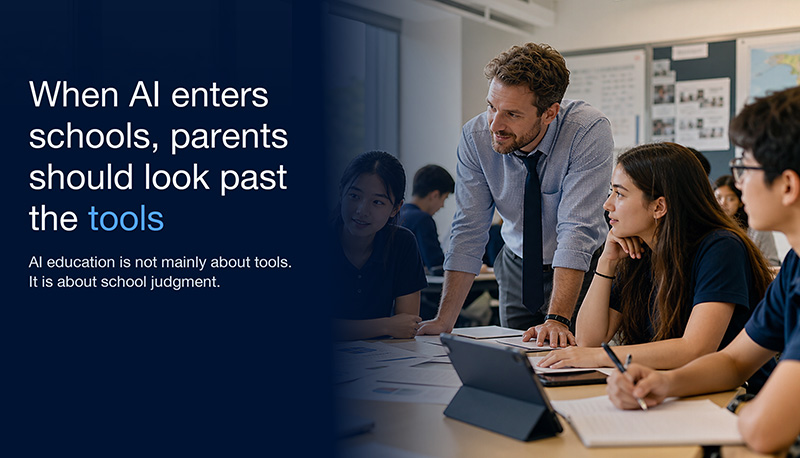
AI education is not mainly about tools. It is about how a school helps teachers, curriculum and students make better judgments together.
AI Trust in Schools series: This article opens the series by asking how parents can judge AI education beyond the tools. The companion article, From AI Tools to AI Trust, looks at how schools turn AI use into governance, training and daily classroom trust.
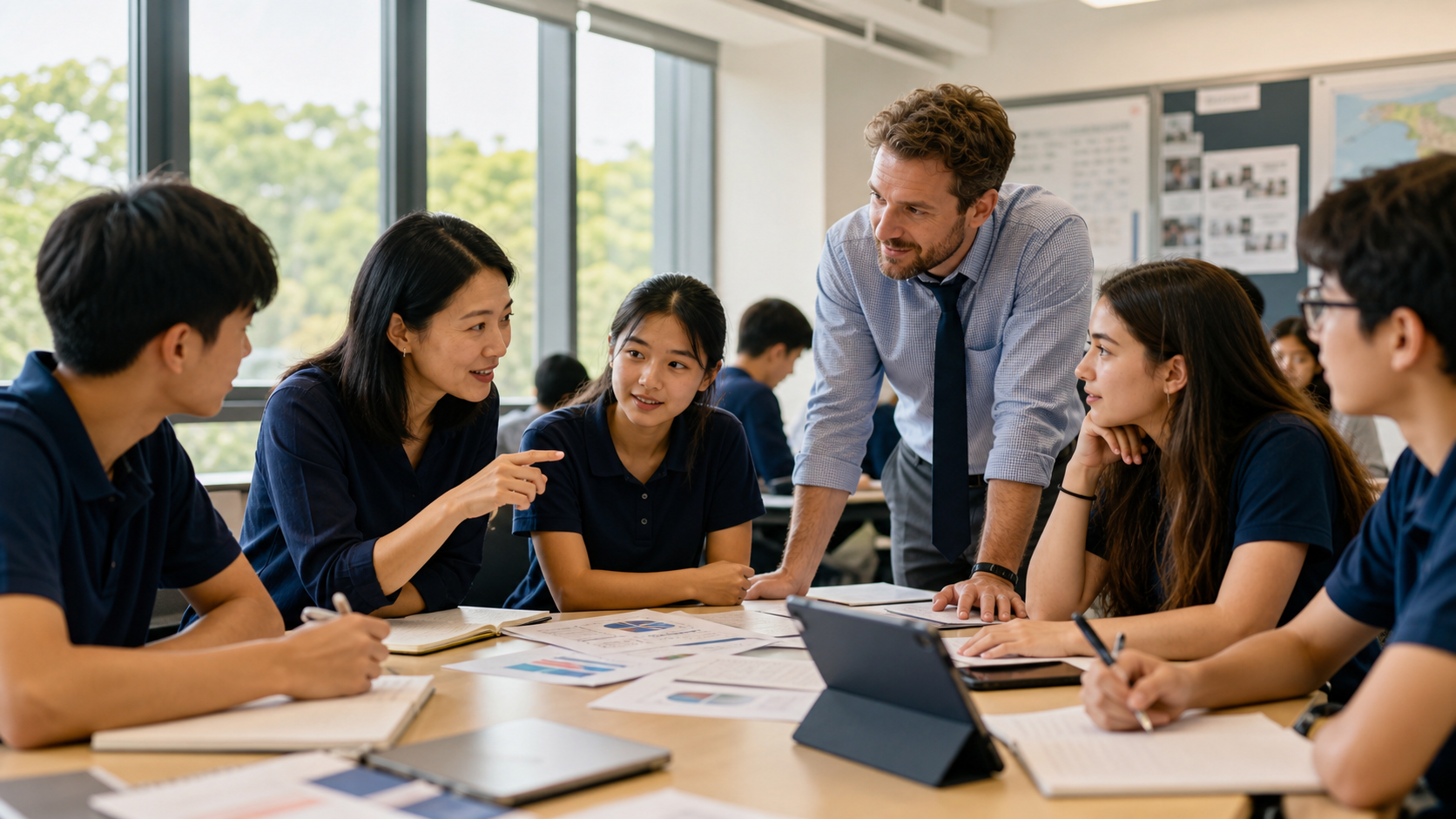
As more schools talk about AI, parents are often drawn to the same set of questions: Does the school have AI tools? Will my child learn how to write prompts? Is the classroom using the latest platform?
Those questions are understandable, but they do not go far enough. Parents also need to ask how a school decides when AI should be used, when it should be set aside, how teachers check AI-generated content, and whether students are learning to verify, compare and revise instead of accepting the fastest answer.
By mid-2026, education systems in several regions were pointing in a similar direction. AI education is moving from tool use to school judgment.
Hong Kong's digital education direction for primary and secondary schools connects AI literacy with teacher development and school planning. Australia's framework for generative AI in schools places school leaders, teachers, support staff, parents, students, service providers and policymakers within the same responsibility framework. In the Philippines, controlled AI use is being discussed alongside teacher support and curriculum reform. In Thailand, education reform discussions are also linking AI, curriculum, school autonomy and system capacity.
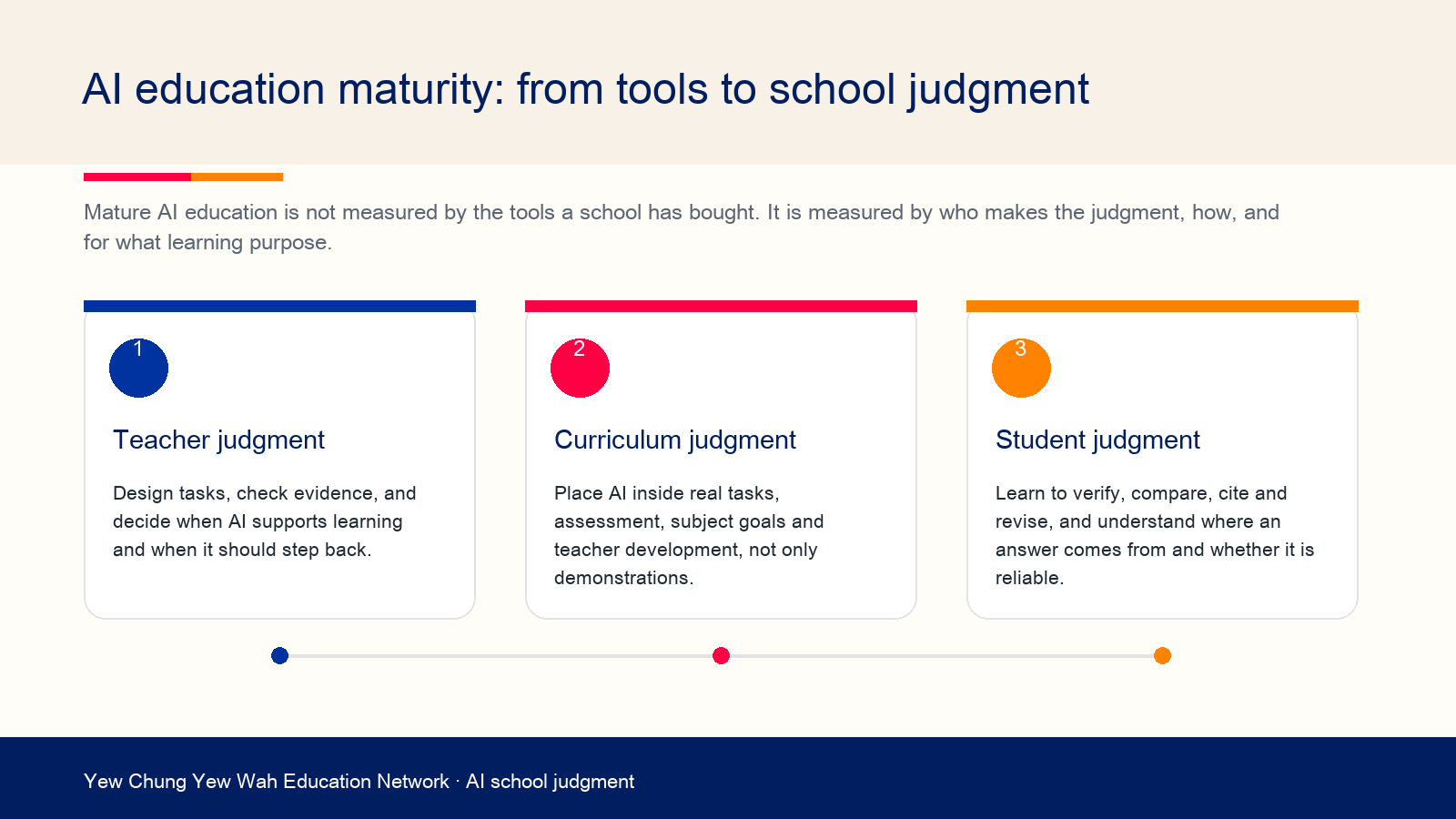
The message is fairly clear. Mature AI education is not measured by how many platforms a school has bought. It is measured by whether AI has entered curriculum planning, teacher training, assessment, student support and parent communication.
The US Senate hearing on AI in education also focused on boundaries, teacher training and the judgment needed for AI use. The UK discussion shows a different tension: AI tutoring tools may widen access to learning support, but teachers are also worried that unstructured reliance on AI can weaken students' critical thinking, writing and conversation skills.
This is not a simple question of whether AI is good or bad. The harder question is who makes the judgment, on what evidence, and for what learning purpose.
The more common AI becomes, the more teacher judgment matters. AI can help students organize information, but it can also let them skip the thinking. It can support individualized practice, but it can also amplify inaccurate information. It can reduce some repetitive work, but it may push new burdens back onto teachers. Whether it improves learning depends on how teachers design the task, check the evidence and guide students to revise their own thinking.
Within the Yew Chung Yew Wah Education Network, this is where the Co-Teaching Model matters. Co-Teaching is not simply a division of Chinese and English between two teachers. It places one Chinese national teacher and one international teacher in the same classroom, with equal responsibility for teaching, observing, planning and adjusting learning.
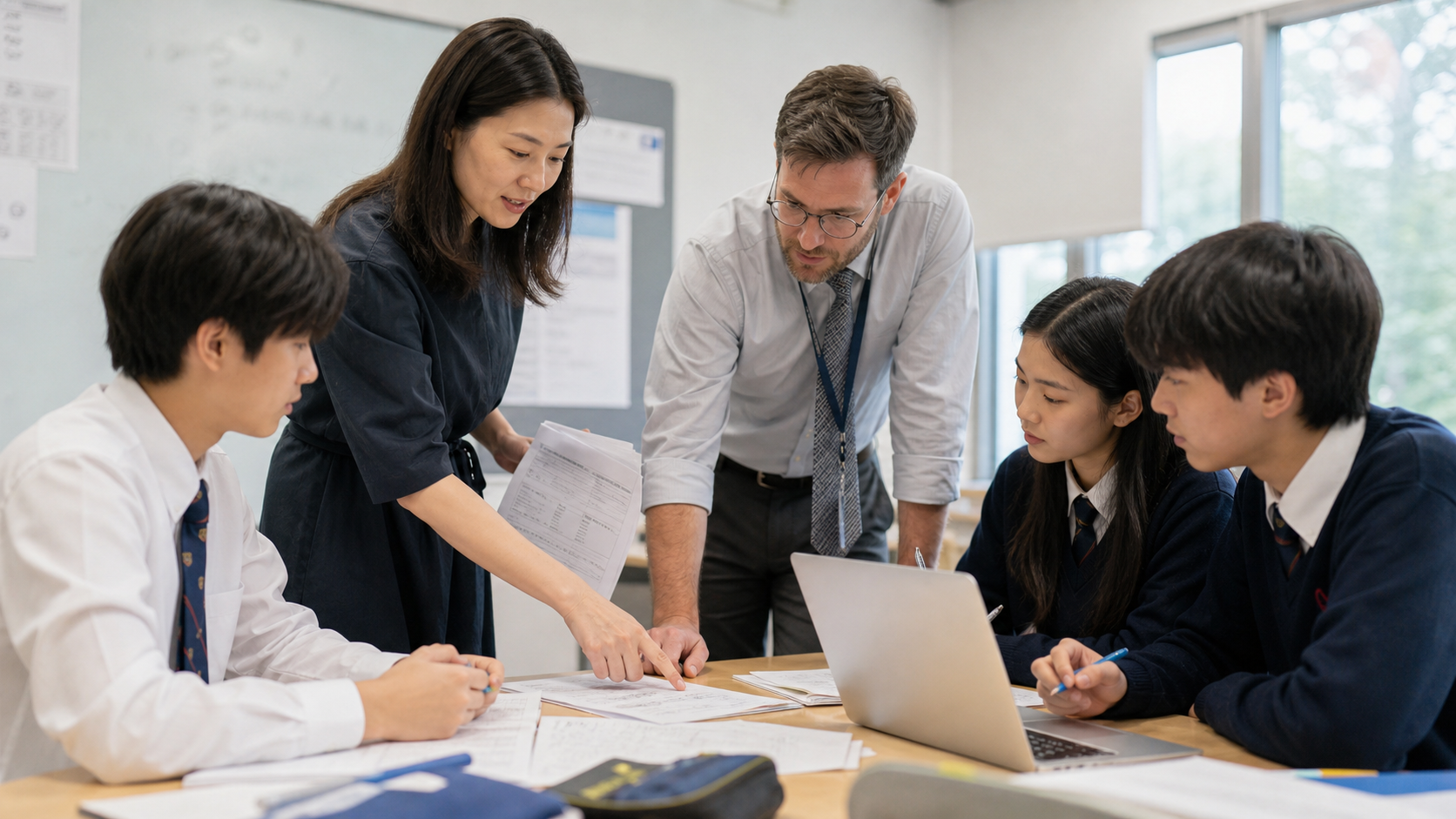
That structure becomes more important in an AI-rich classroom. Teachers need to notice whether understanding is actually taking place, whether AI is only producing a surface-level answer for the student, and whether the class still has enough human interaction and cultural perspective. Those judgments are stronger when teachers can calibrate them together.
AI education cannot stop at usage. For students, AI literacy is not about getting answers faster. It is about knowing where an answer comes from, whether it is reliable, and how it should be checked.
This is also visible in China's discussion of AI implementation in education. Once AI enters the classroom, marking, evaluation and task generation are only part of the issue. Students need to understand the tool's limits. Teachers need to judge whether the tool fits the learning goal. Schools need ways to handle resource gaps and academic integrity.
Some recent Yew Chung Yew Wah learning examples show how AI can be placed inside real inquiry rather than added as extra screen time. In the Planetary Science Research Project, students explored neural networks and generative adversarial networks, used raw data to train AI models, applied those models to planetary geology data analysis, and compared results to test the reliability of the training process.
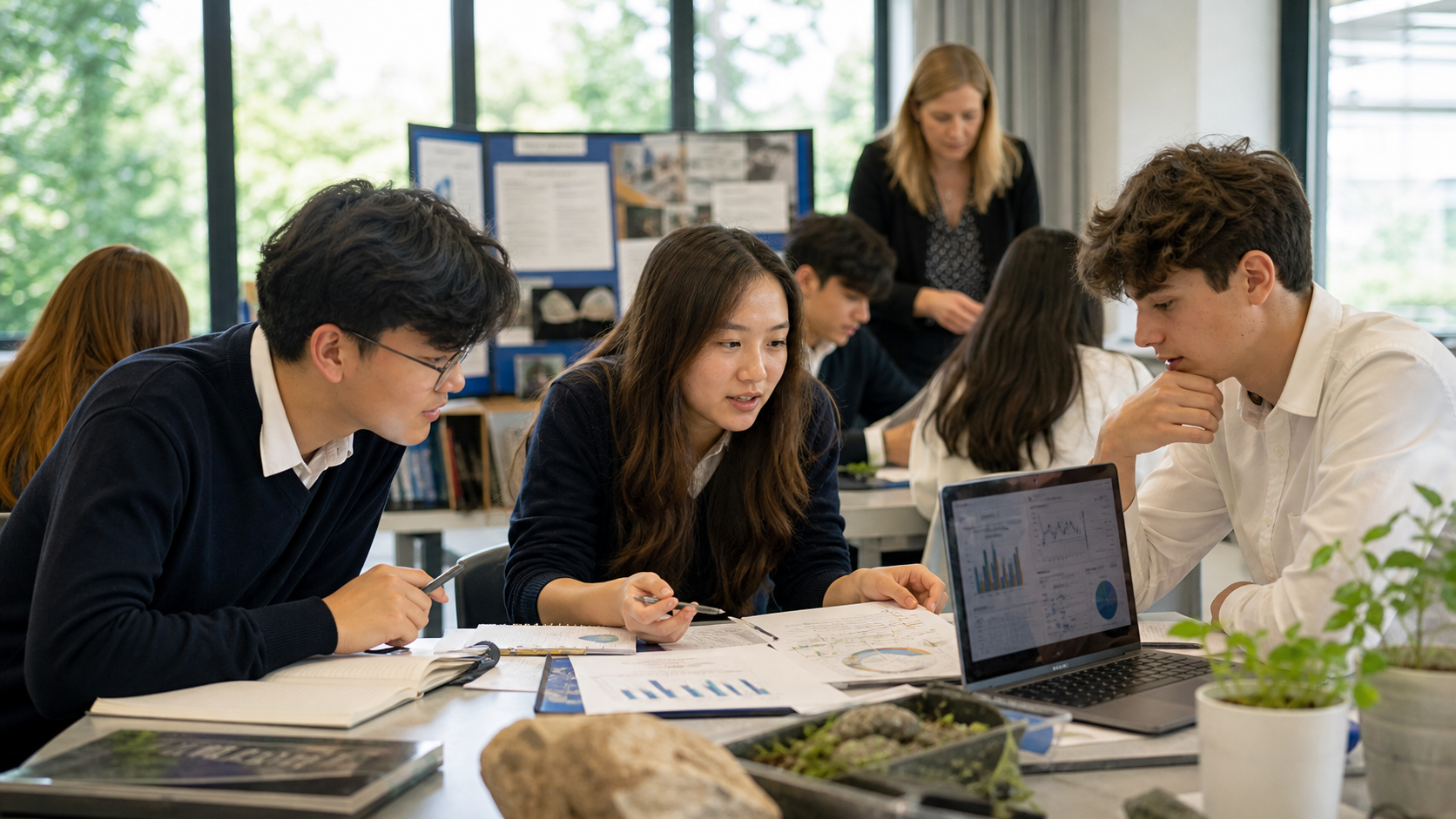
The point was not that students used AI. The point was that they moved through questioning, modelling, comparison, verification and revision.
Another example is the smart farm learning project developed by the YCYW EdFutures team with teachers from YWIES Guangzhou. Students were not watching a technology display. They worked with data collection, system design, software work and agricultural research in a real task. AI and technology were used to connect learning with a real-world problem, not to replace students' observation, reasoning or expression.
This is why curriculum judgment matters. The YCYW EdFutures team supports education innovation and research across the network, including the appropriate adoption of AI, coding, immersive technologies and other emerging tools in YCIS and YWIES schools. But in each classroom, subject teachers, curriculum leaders and campus teams still need to decide which technologies serve the learning goal, when the pace should slow down, and when students need discussion, reading, experimentation, handwriting, observation or peer exchange first.
Victoria's move in Australia to limit classroom screen time is not specifically about AI, but it points to the same issue. Mature technology governance includes knowing when screens should step back. For schools, the difficult part is not keeping up with every new tool. It is preserving attention, deep reading, physical experience, peer conversation and teacher guidance while technology keeps accelerating.
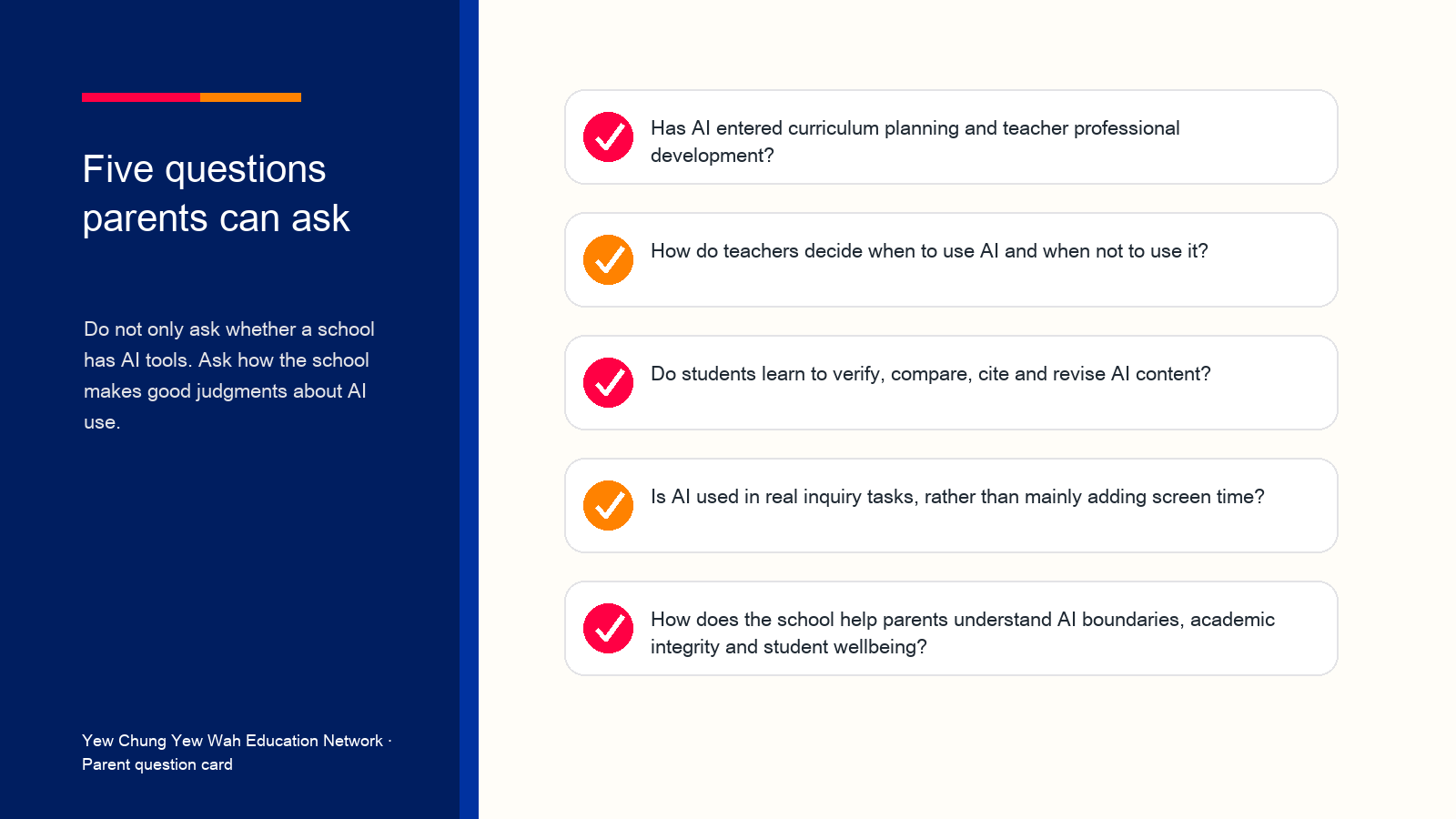
When parents look at a school's AI education, they may want to ask fewer questions about which tools are available and more questions like these:
- Has AI entered curriculum planning and teacher professional development, or is it mainly used in demonstrations?
- How do teachers decide when to use AI and when not to use it?
- Do students learn to verify, compare, cite and revise AI-generated content?
- Is AI used in real inquiry tasks, or does it mainly add screen time?
- How does the school help parents understand AI boundaries, academic integrity and student wellbeing?
The point of education in the AI age is not to make children depend on tools earlier. It is to help them seek truth, make judgments, work with others and take responsibility for their own learning in a more complex information environment.
That is also why holistic education still matters. In Yew Chung Yew Wah schools, holistic education is structured around the Three Alignments, bringing science and technology together with cultural understanding, character, service, wellbeing and relationships. As technology becomes stronger, schools need that wider view. Without it, AI is just another tool. With mature school judgment, it can become part of how students learn to think and grow.
What parents should look for is not whether a school has adopted the latest tool. It is whether the school has a system that helps teachers, curriculum and students make better judgments together.
Frequently asked questions
Responsible AI use requires more than installing or restricting tools. It requires clear school judgment. Teachers need to know when to use AI, students need to know how to verify AI content, and schools need to address academic integrity, data safety, parent communication and student wellbeing.
Parents can look at three things: whether AI is connected to curriculum and teacher training, whether students learn verification and revision, and whether the school can clearly explain its boundaries for AI use. A mature school usually explains the learning purpose behind the tool, rather than only showing the tool.
The Co-Teaching Model brings different educational and cultural perspectives into the same classroom. In the context of AI, that shared judgment helps teachers notice whether students truly understand the work, whether they are over-relying on generated answers, and whether the class still protects dialogue, inquiry and human interaction.
The YCYW EdFutures team supports education innovation and research across the network. It helps guide the appropriate adoption of AI, coding, immersive technologies and other emerging tools in Yew Chung and Yew Wah schools. It provides direction and support, while specific classroom decisions still sit with teachers, curriculum leaders and campus teams.
AI can improve information processing, but it cannot replace truth-seeking, empathy, responsibility, intercultural understanding or real human interaction. Holistic education helps students keep human judgment and character at the centre of technology use.
Parents can ask how teachers are trained to use AI, how students learn to verify AI content, whether AI is used in assessment or homework, how the school handles academic integrity, and which learning activities deliberately avoid screens or AI. These questions reveal more about a school's educational judgment than simply asking whether it has AI tools.