


Go Back
News
News
YCYW Discusses Innovations in Education
News
19 Dec, 2025
18 : 19
The digital intelligence wave sweeping through the field of international Chinese-language education has transformed the teaching of Chinese at international schools. These changes are reflected not only in the increasing richness of teaching tools and resources, but also in curriculum design, teaching philosophies, assessment methods, and the cultivation of student abilities. Traditional boundaries are breaking down, resulting in a more open, diverse, and globalised future.
From December 13-14, 2025, ChinesePlus, in collaboration with the Crestar Confucius Institute in Singapore, and the Bilingual Teaching and Research Centre of the Canadian International School in Singapore, jointly organised the "Online Symposium on Chinese Language Teaching in International Schools in the Era of Digital Intelligence, and Continuing Education Conference for Holders of the International Chinese Teacher Certificate (22nd Session)." The goal of the symposium was to showcase the industry’s strategic vision and to explore the vast possibilities of international Chinese-language education.

This symposium featured three keynote speeches, three international curriculum forums, and five teaching workshops. Participants included principals, subject directors, and heads of Chinese-language curriculum from leading international schools, as well as senior teachers from countries such as China, Singapore, Malaysia, the Republic of Korea, the United States, and the United Kingdom.
Several outstanding teachers from the YCYW Education Network were invited to participate because of YCYW’s leadership in international education. They delivered keynote speeches on topics such as "Bilingual Teaching Innovations", "The Integration of AI Technology", and "Interdisciplinary Curriculum Design". They also shared their cutting-edge educational practices and insights about the digital intelligence era.
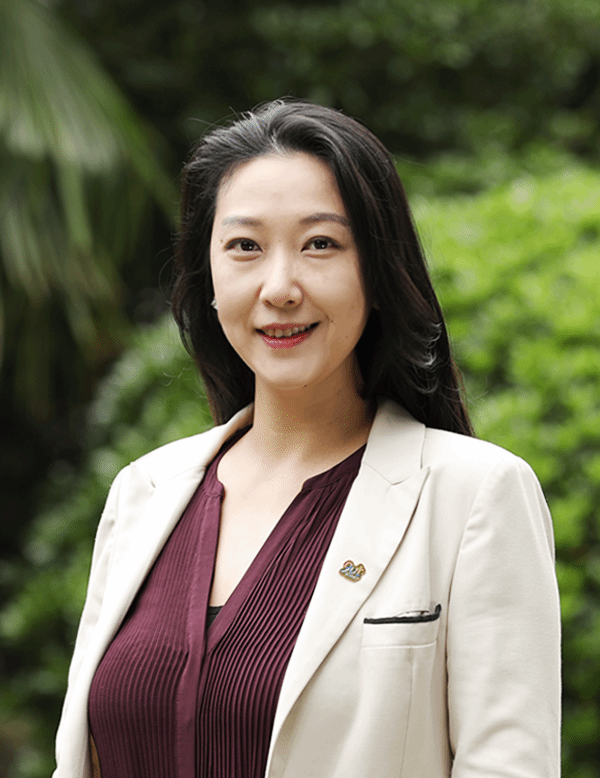
Dr Sissy Shen
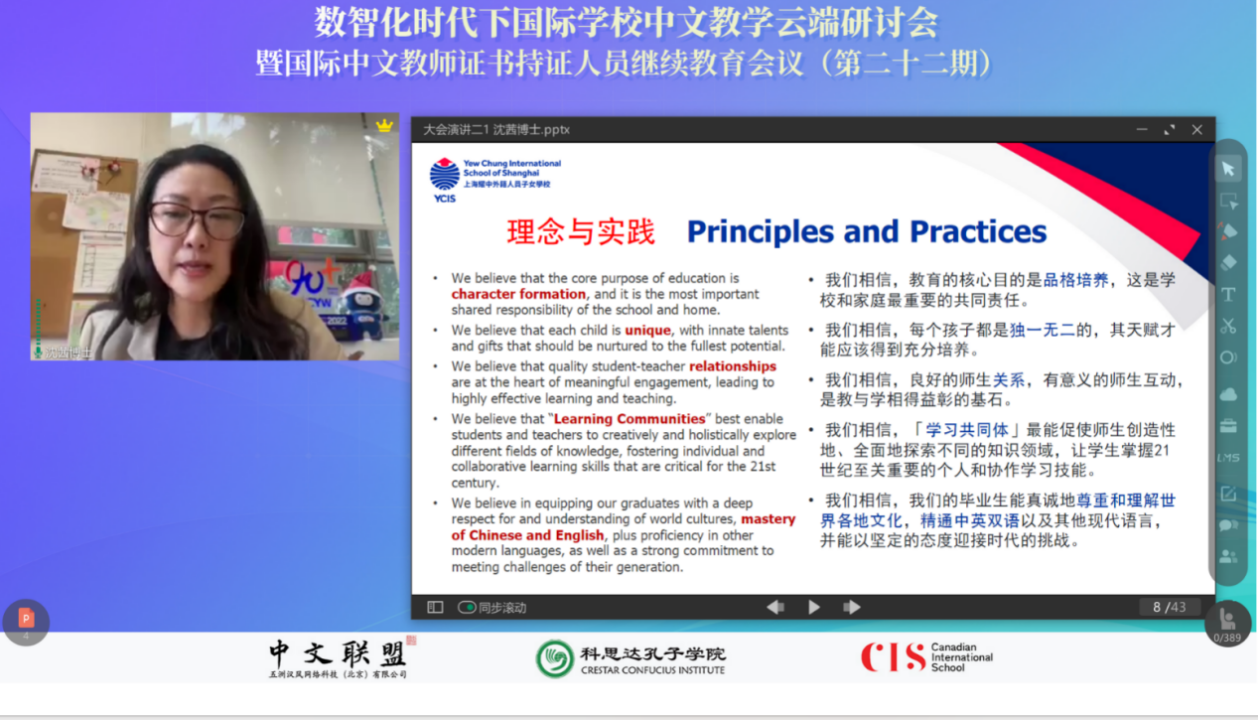
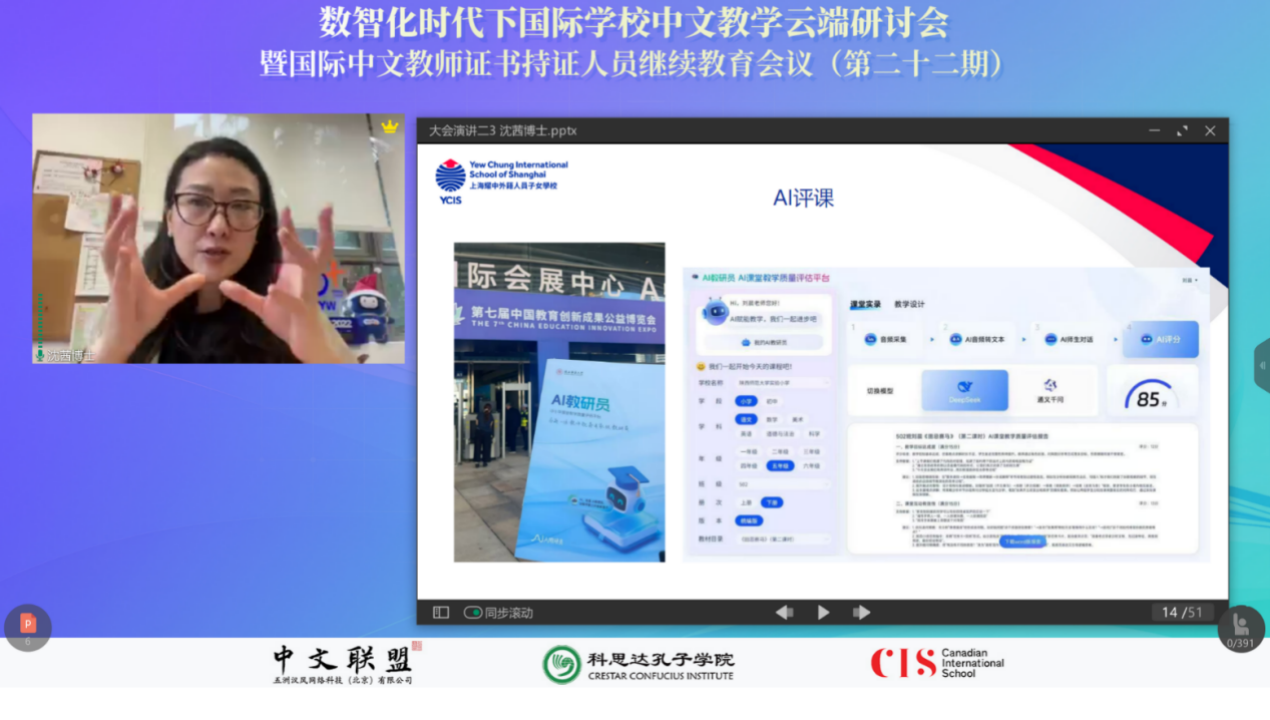
“Chinese Language Teaching at International Schools in the Era of Digital Intelligence: Exploration on Technology Empowerment and Teaching Integration ”
In the keynote-speech session, Dr Shen first reviewed the current state of Chinese-language education at international schools. She focused on how the deep integration of artificial intelligence technology with the teaching of Chinese language has promoted teaching innovation and optimisation.
She also explored how schools can adapt their curricula to meet the demands of digital intelligence, and how teachers can proactively innovate teaching methods and enhance their professional competency.
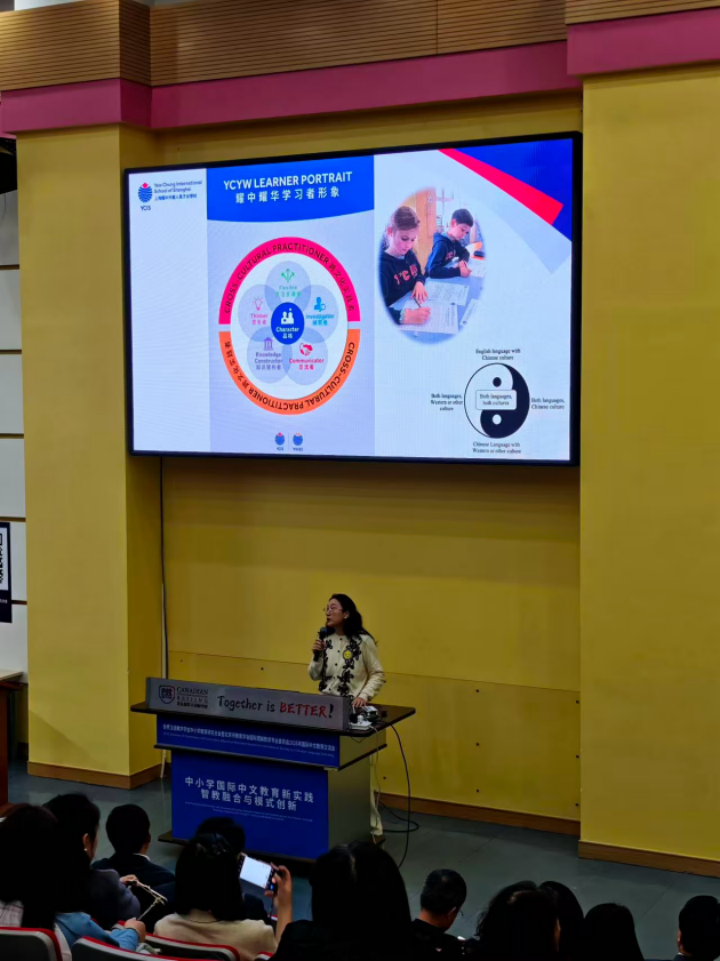
In addition, Dr Shen was recently invited to share her insights on the same topic at the “2025 Seminar of Elementary and Secondary Education Research Branch of International Society for Chinese Language Teaching”.
She noted that our students belong to Generation Alpha (AI-Native Generation). In the future, their relationship with AI will be neither condescending nor deferential, but rather a symbiotic relationship of "I think, AI thinks, we think together”. We treat AI as a member of our learning community to foster development through mutual inspiration.
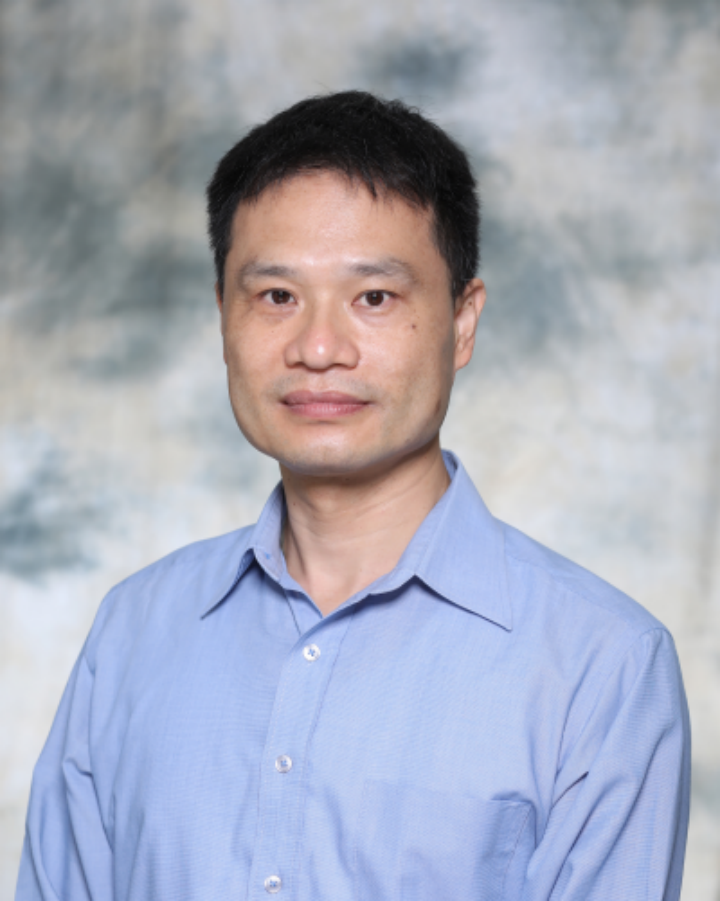
Dr Fei Lam

Mr Well Fu
“Learning Beyond Borders: Yew Chung Chinese Curriculum Design and Practices ”
In the teaching workshop session, Dr Lam and Mr Fu jointly discussed the development of the Yew Chung Chinese-language curriculum under the framework of a bilingual learning community, and shared practical cases from YCIS Hong Kong.
The Yew Chung Chinese-language curriculum is student-centred, aiming to establish the systematic development of Chinese proficiency that bridges first and second languages. The curriculum breaks through the boundaries of traditional language teaching, and positions Chinese as a connector for interdisciplinary learning and cultural understanding, thus enabling students to use Chinese for inquiry and learning.
The case study from YCIS Hong Kong focused on how to use AI intelligent platforms and the PBL (Project Based Learning) model to construct a full-chain teaching design, from pre-class diagnosis and in-class inquiry to post-class assessment.
Through strategies of "situational role-playing + Layered Guidance" and data tracking mechanisms, and by adjusting teaching based on the students' language proficiency and cognitive characteristics, we promote the students' deep reading, cross-cultural communication, and creative expression. This approach helps students to enjoy learning Chinese, achieve significant results, and truly become the protagonists of their learning.
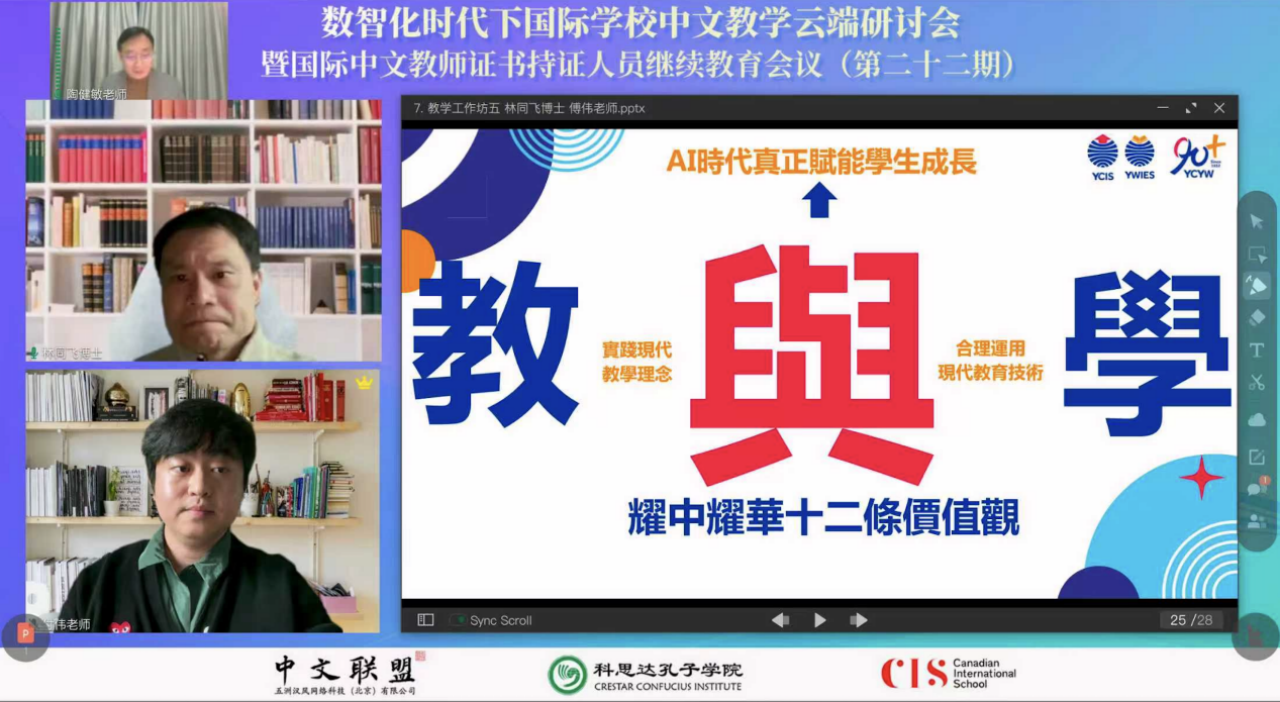
This Symposium provided a high-level exchange platform for international Chinese-language educators to jointly explore the future landscape of Chinese-language teaching in the digital intelligence era.
The deep involvement of YCYW teachers not only highlights the leading position of YCYW in the field of bilingual education, but also reflects its strategic planning for digital intelligence transformation. Through this grand event, YCYW will continue to advance international Chinese education to a new stage and actively provide important references for global international Chinese educators.