

Go Back
News
News
HKDSE Hong Kong Classroom: Turning Exam Topics into Lived Experiences
News
21 Jan, 2026
10 : 07
Just over a month into the 2025-2026 academic year, some students enrolled in the HKDSE (Hong Kong Diploma of Secondary Education) programme at YCIS Shanghai, YCIS Beijing, YWIES Zhejiang Tongxiang, and YWIES Guangzhou, embarked on a week-long, immersive study trip—“HKDSE Hong Kong Classroom”.
For these students, who had just started to study the HKDSE curriculum, Hong Kong had previously been a topic in textbooks or a setting for exam questions, not a city that they had experienced. During the trip, the students conducted field research in groups across different settings. By observing, interviewing, exploring, and debating, they continually reshaped and deepened their understanding of what “Hong Kong” means.
The experiences unfolded before the students at an exhilarating pace: from the iconic urban showpieces represented by Central and Tsim Sha Tsui, to the living conditions depicted in subdivided flats and public housing;
From the historical colonial monuments and the daily life connected by the tram tracks; to the authentic local traditions represented by the walled villages and the heritage trails of the New Territories;
From governance and civic mindedness symbolized by institutions such as the Legislative Council and Tai Kwun, to the natural vibrancy displayed in Hong Kong UNESCO Global Geopark and country trails;
From the public health approach embodied by Kai Tak Sports Park, to the evolving cultural identity taking shape within the West Kowloon Cultural District.
Some students were thrilled; others were bewildered. Many were still grappling with the minutiae of daily life, such as deciphering unfamiliar MTR station names, navigating local fast-food chains, or marvelling at traffic on the left side of the streets.
Here we document the journey of these students, not merely as a record, but also as a testament to authentic moments of learning.
01. Authenticity, also the Gateway to Learning
What is the biggest challenge that students from the Chinese mainland face when preparing for the HKDSE examination? After analysing past exam papers and comparing subject requirements, curriculum coordinators from the YCYW Subject Directors and Leaders (SD&L) Team found that students often lacked general knowledge about Hong Kong.
This foundational knowledge might be described better with a single word “authenticity”.
In classical Chinese, the term “地道” originally meant “the principles of the land”. Over time, it evolved to signify “locally rooted correctness”, and eventually came to describe authentic, time-honoured local customs and ways of life. Recognising this authenticity is precisely what distinguishes being “grounded in place” from being “detached”.
“This trip was primarily designed around three HKDSE core subjects: Chinese Language, English Language, and Citizenship and Social Development. Many HKDSE questions on reading comprehension have a Hong Kong-specific context. If students are not familiar with the local Hong Kong geography and culture, they might not even recognise the place names in the questions. Moreover, for Hong Kong people, a location often carries many associations: what it symbolizes; what its typical environment is like; who lives there. Students need a nuanced understanding of these associations,” explained Jenny Yan, a teacher of the SD&L team.
With this in mind, the itinerary for the trip was carefully designed to enable students to venture beyond typical tourist routes. Students found themselves stepping into the interstices of time and space, and learning about the ordinary daily lives of Hong Kong people.
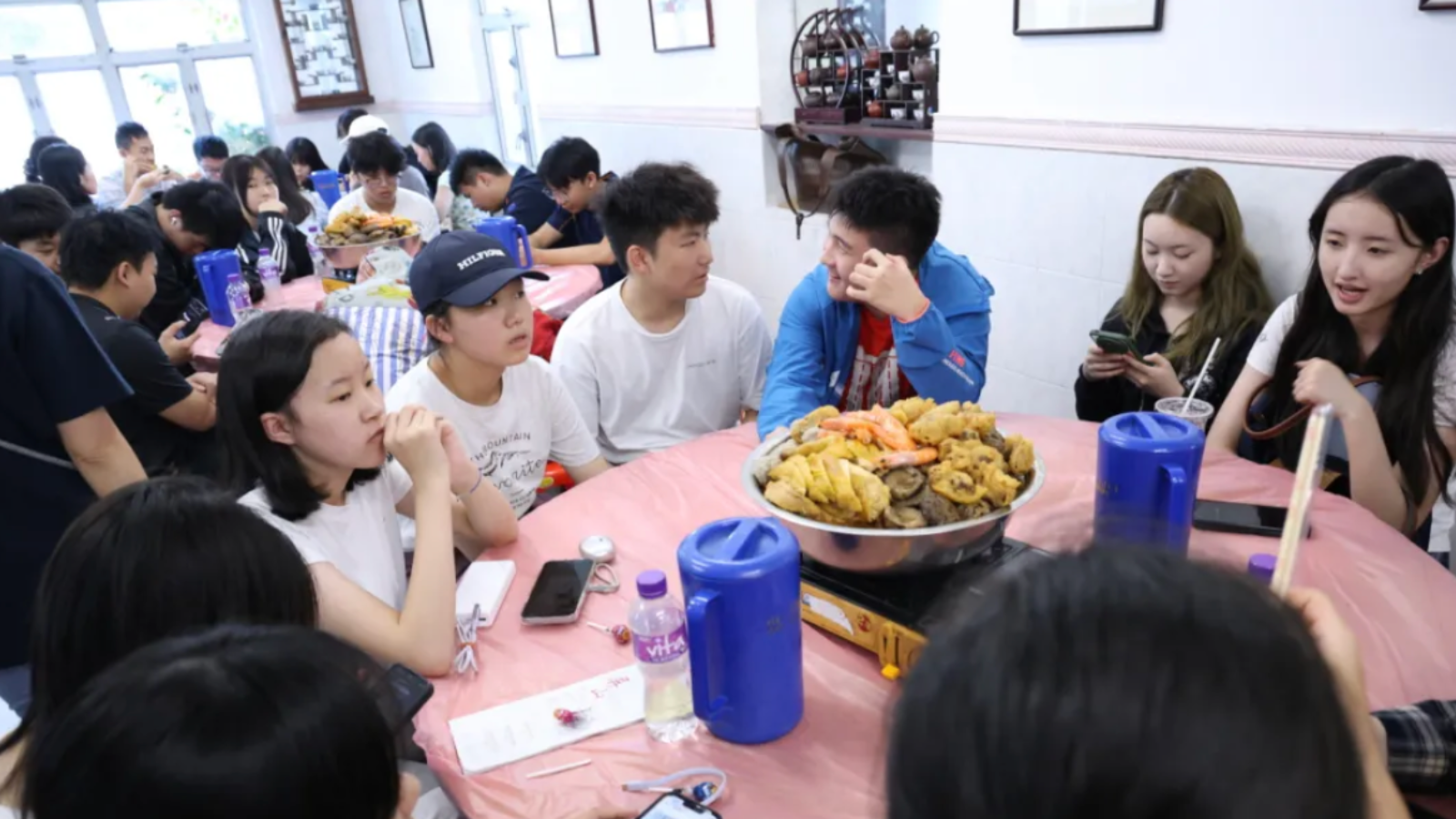
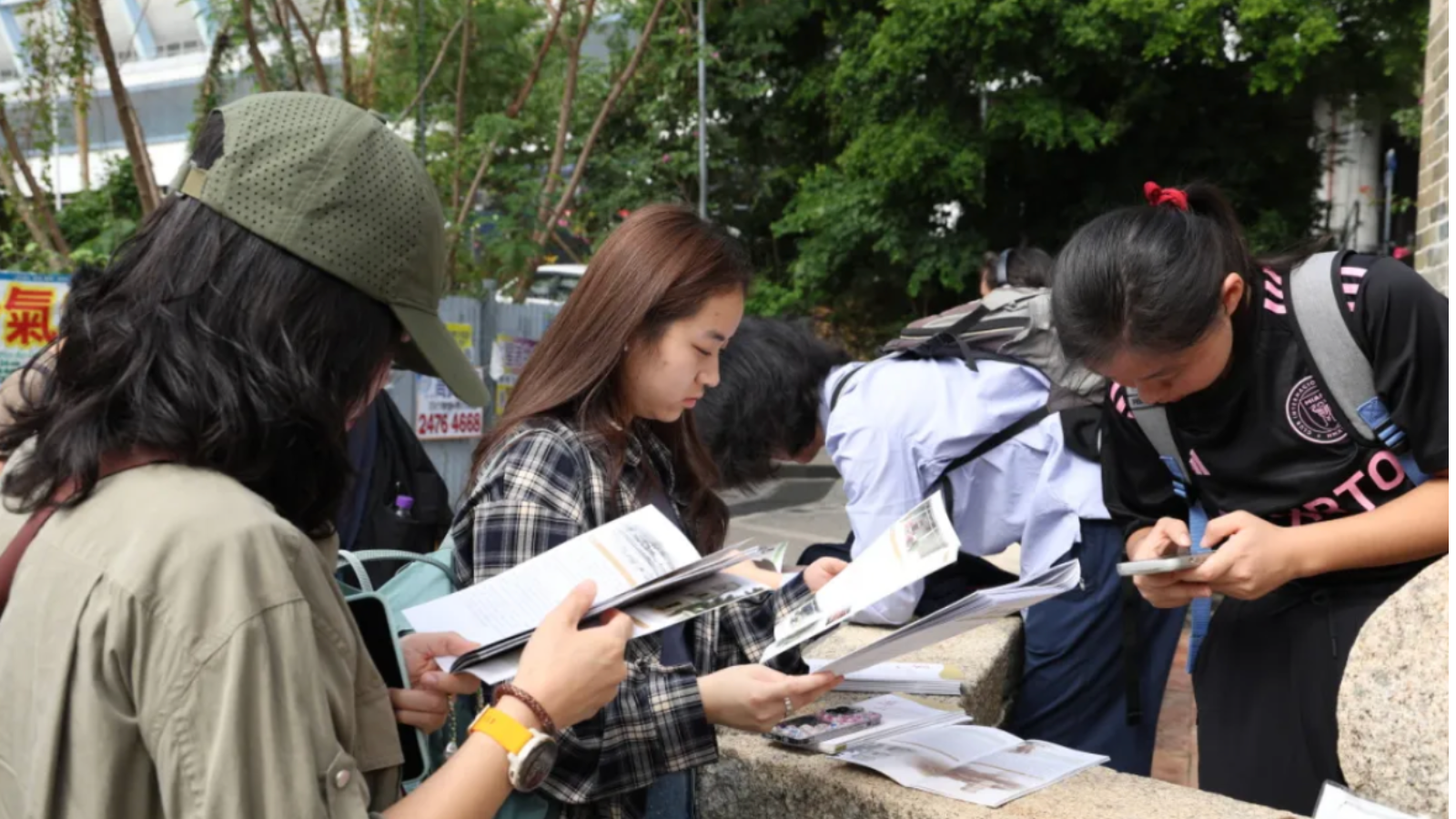
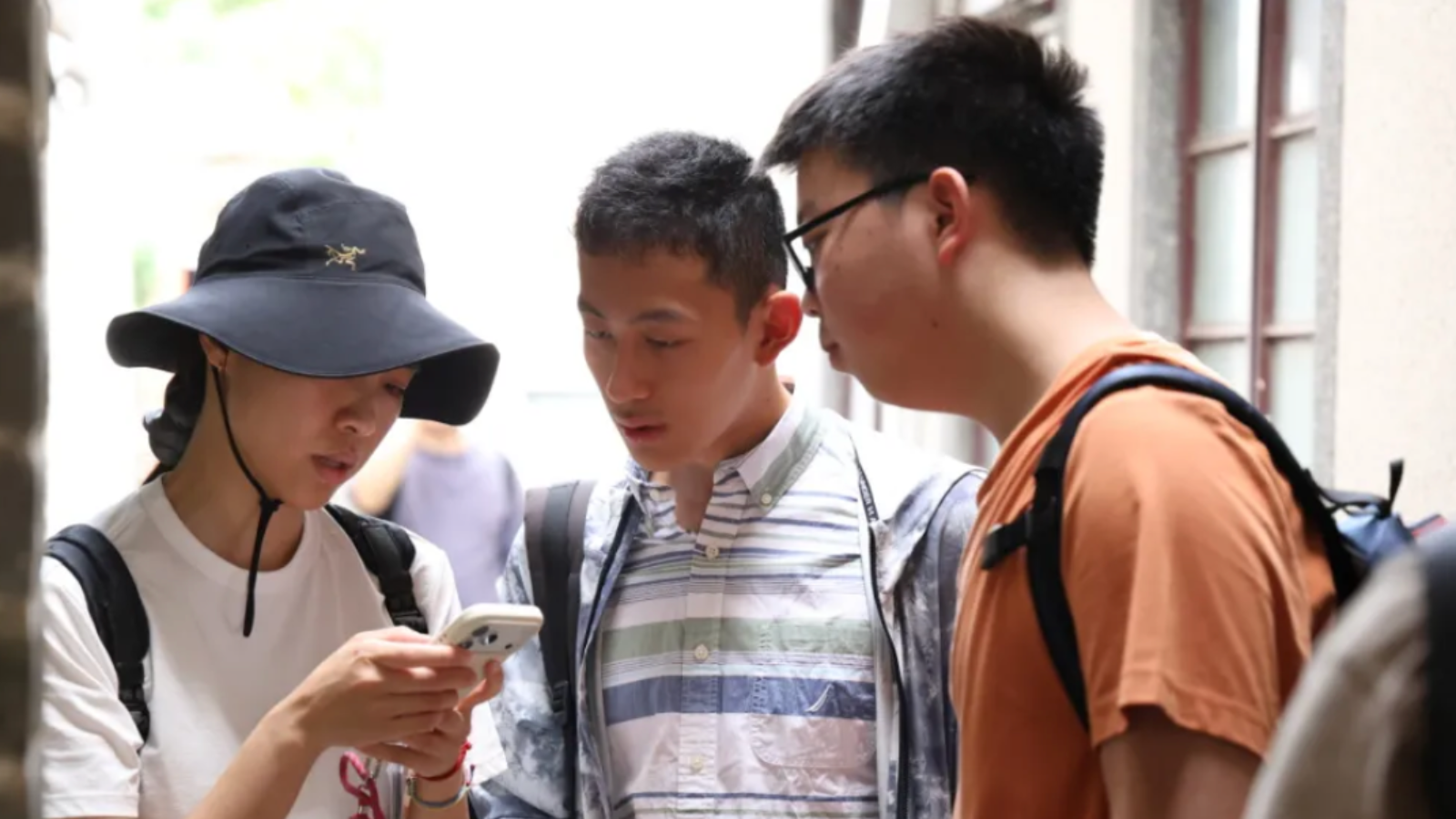
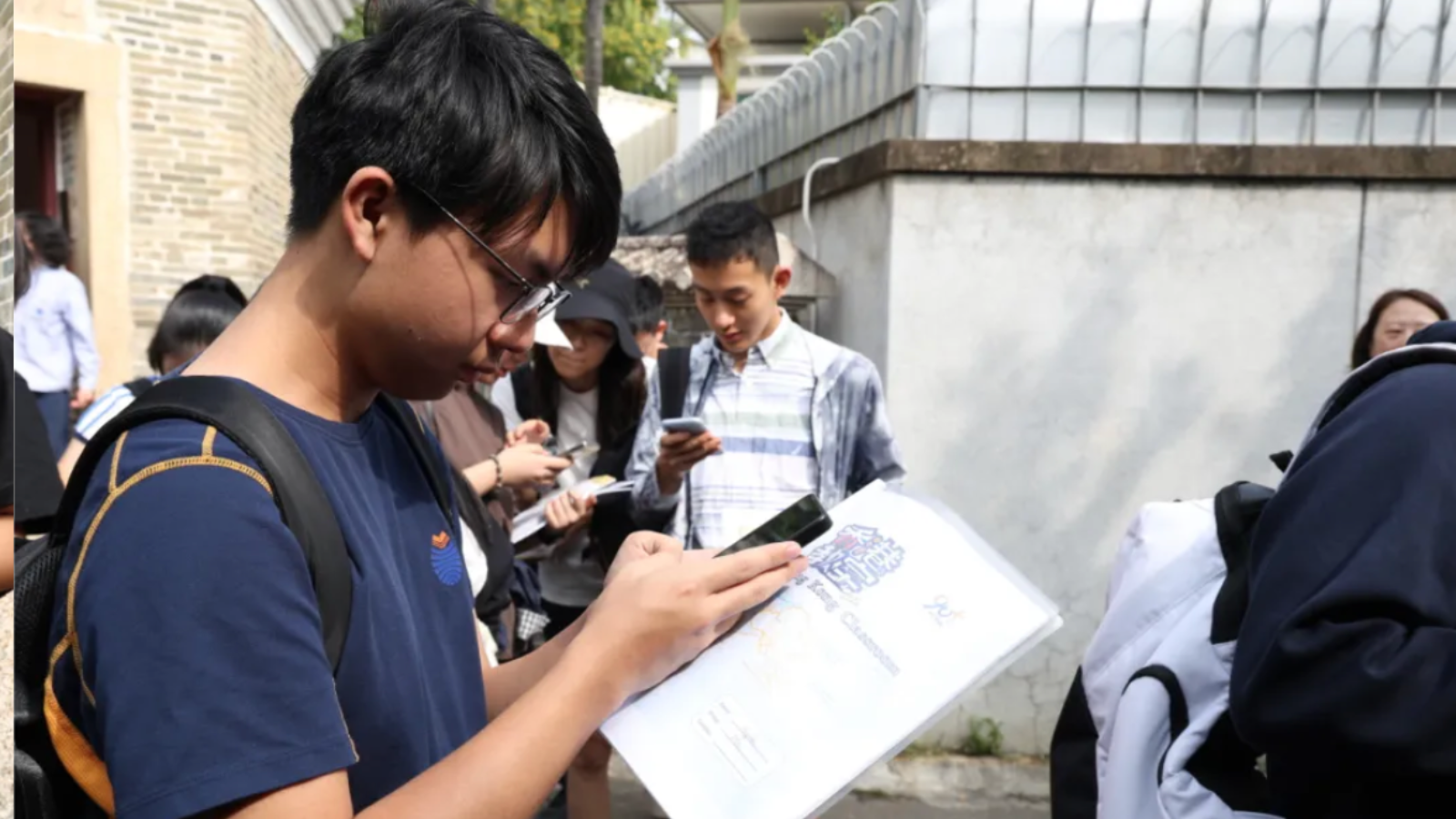
One student had some prior knowledge about Hong Kong. What impressed him the most during the trip was visiting three distinct types of housing. “I didn’t know that Hong Kong had subdivided flats, cage hostels—and such a high proportion of the population living in poverty. I thought Hong Kong was full of iconic landmarks such as Central and Tsim Sha Tsui—not a place where vastly different communities live. ”
At the Trapped Experience Centre , the guide explained the rents for the different types of housing. “The rent per square foot at a luxury residence is actually cheaper than that for the caged hostels. This really shocked me.” the student exclaimed.
The Trapped Experience Centre, a project launched by the Society for Community Organization, replicates the living environments of local residents: cage Hostels, subdivided units, attic cubicles, and coffin-sized dwellings. The Cantonese name “The Cage Dweller侷住” is a homophone of “局住”, meaning “trapped with no choice”. After learning about the various types of living conditions in Hong Kong, the students also gained an understanding of the multiple meanings that Cantonese vocabulary might have.
The itinerary for the same day included visits to Mei Ho House, representing public housing, and Discovery Bay, representing a luxurious residential area. In one day, the students witnessed the “Hong Kong Fold” or the vast “wealth gap” in Hong Kong, and these terms were transformed from an abstract concept in textbooks into reality.
“Language learning requires context, and simply drilling specific facts isn’t effective. Instead, we immersed the students in the actual environments. When you experience something first-hand and connect emotionally, you will remember it and apply it flexibly in exams. We don’t encourage rote memorisation, especially since oral assessments in language subjects value personal insight and authentic expression,” Ms Yan emphasised.
Perhaps one can grasp the very essence of the HKDSE after experiencing Hong Kong’s “authenticity”.
02. People, the Testaments of the City
From the first day of the trip, the teachers encouraged students: “Go talk to the locals!” After all, the local people represent the city, and only by understanding their human stories can a city become meaningful.
“One core philosophy behind the trip draws from the concept of the ‘Human Library’ —every person is a book that can shatter stereotypes. By letting go of preconceptions and listening to authentic stories, we will be able to learn something new. So, for every theme, we wanted the students to hear the real voices of the Hong Kong people. That’s how the students could gain a true, multidimensional understanding of a city,” Ms Yan explained.
On the first day of the trip, during an activity related to Hong Kong’s iconic trams, the teachers designated two investigators in each group and asked them to interview people on the street, just as journalists would do.
The students shared the findings of their investigations: “Our group went to Cloth Street (in Western Market). We met an elderly man who had sold fabrics; he had tailored the concert costumes for many Hong Kong celebrities. But as the industry declined, they had no choice but to leave the place.”
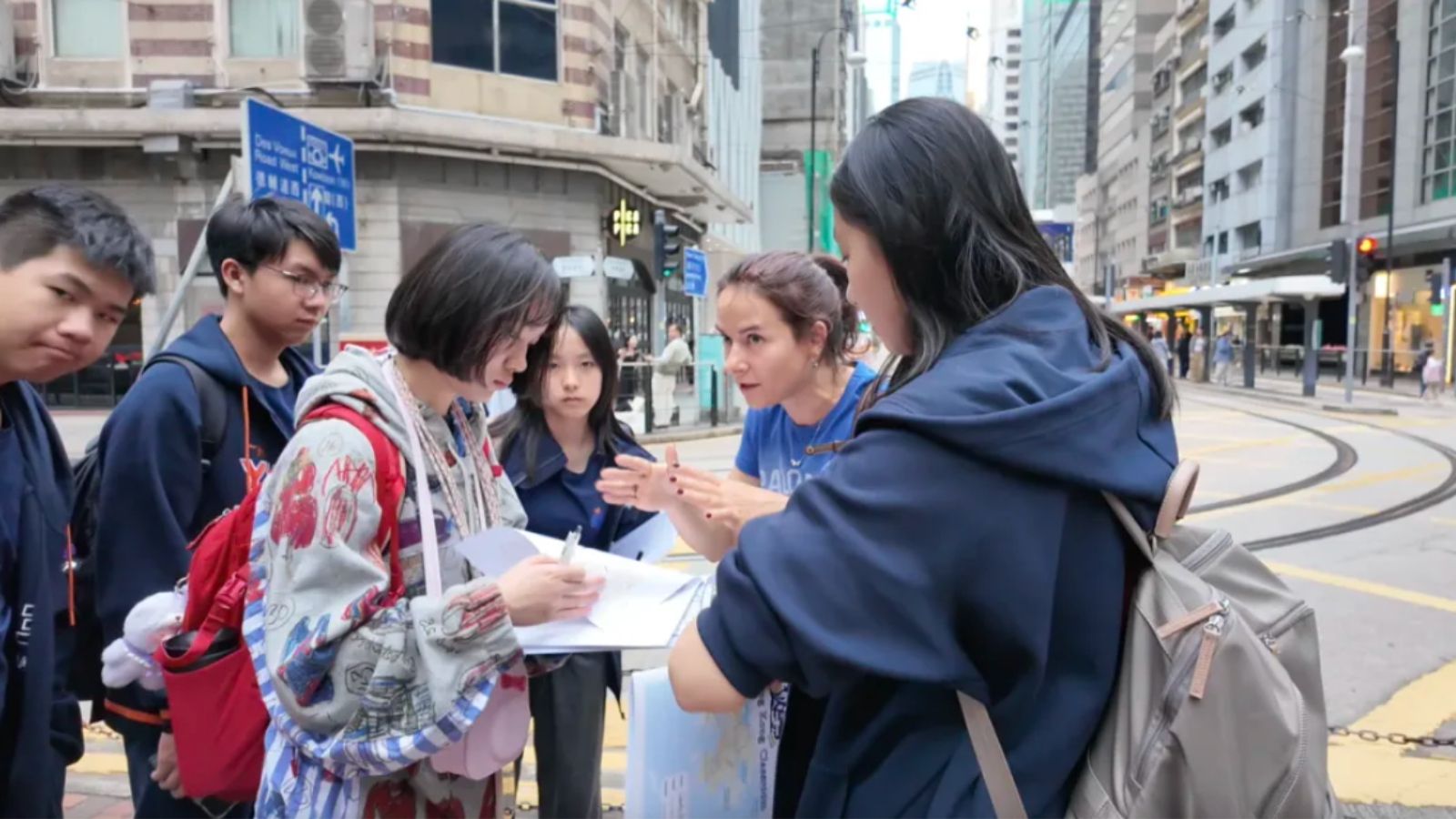
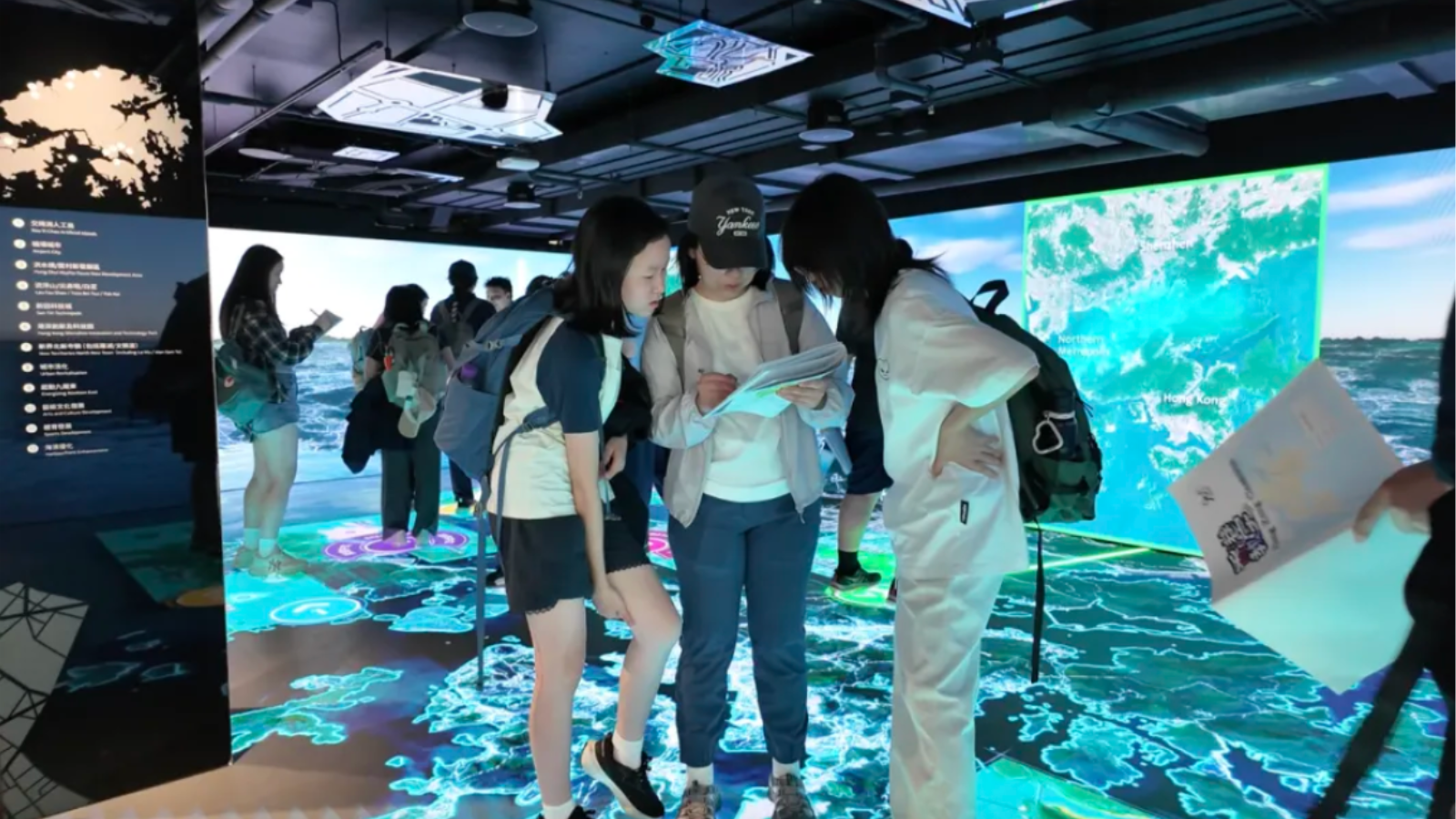
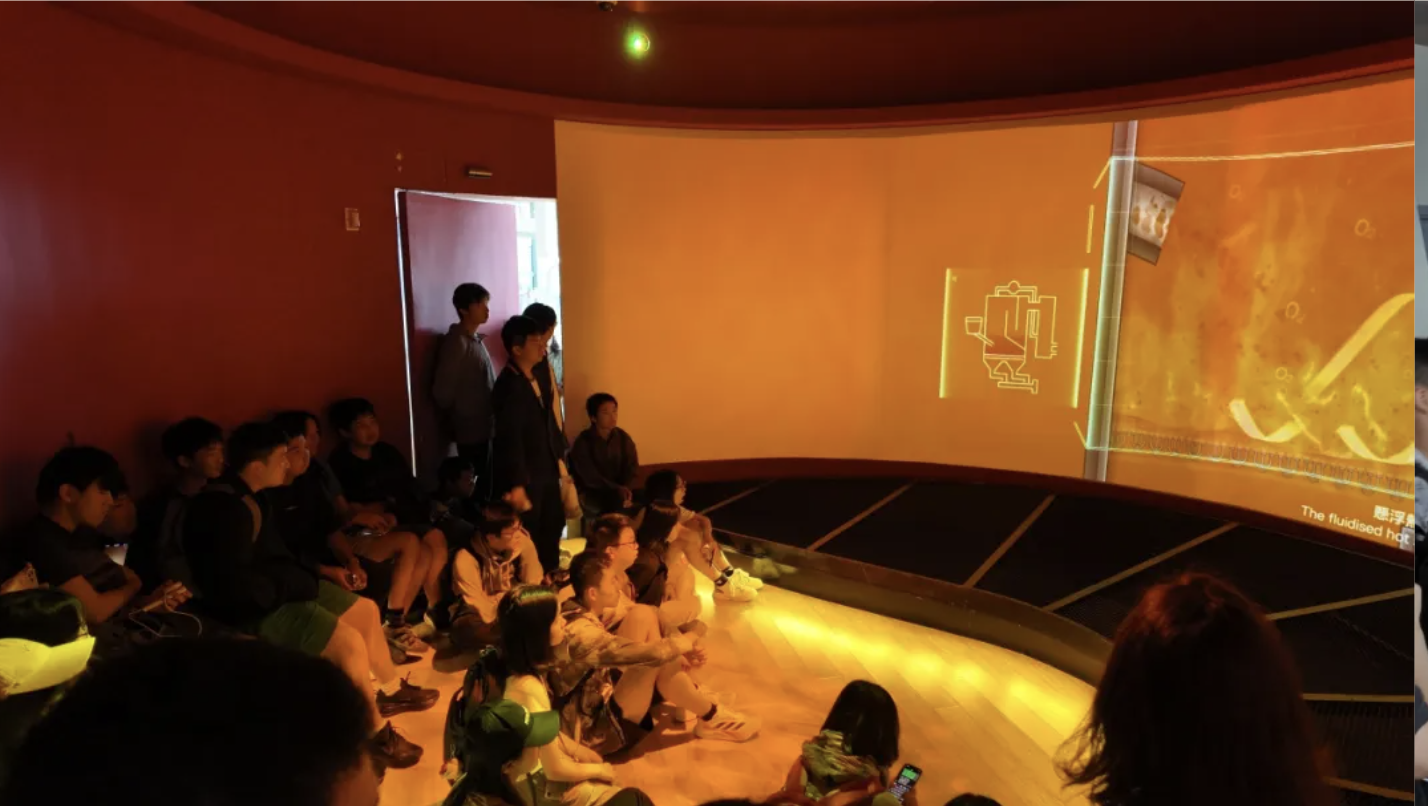
In the section on housing in the middle of the itinerary, the students also approached the stories of ordinary people in various ways.
Mei Ho House was built as a temporary shelter for those affected by the Shek Kip Mei Fire of December, 1953. It later became the starting point for Hong Kong's public housing policy. Although Mei Ho House has now been converted into a youth hostel, the exhibition still preserves the transcribed, oral historical materials left by former residents. The tour guides at the Trapped Experience Centre were actually former residents of this inadequate housing.
Listening to someone recount their personal experiences from a specific time and place might make it easier to understand.
The most interesting activity was undoubtedly the game of “Who Is the Undercover” at the end of the trip.
A few days earlier, students had drawn lots assigning famous Hong Kong celebrities for the students to portray during the trip. The students were supposed to immerse themselves in that person’s life and perspectives. On the last day of the trip, the students were divided into small groups, Almost everyone had played the same celebrity, except for one or two “undercovers” whose identities were easy to confuse. During the game, the tudents took turns giving clues such as, “I grew up in Sham Shui Po”, or “I was born in public housing”. The more one knew about the celebrity’s background, the better one could identify the “undercover” .
“We chose celebrities like Jin Yong (Louis Cha), Li Ka-shing, John Woo, James Wong, Siobhan Bernadette Haughey, Sarah Lee, Joey Yung, and Anita Mui. For instance, Joey Yung had grown up in a public housing, and she has openly shared how that had shaped her. Her story embodies the Hong Kong spirit: With perseverance and passion, anyone can prosper, and Hong Kong offers opportunities across all walks of life. Surprisingly, the students knew far less about these celebrities than we had expected. But the game motivated them to do some thorough research!” Ms Yan said with a smile.
The English idiom “all walks of life” is used to describe “people of diverse backgrounds, social statuses, and professions”. “Walks” here refers to the traces left by different people as they walk.
Perhaps true knowledge about a city can be found in the overlapping life pathways of its diverse inhabitants.
Even animals played a supporting role. On the final day, a visually impaired guest arrived with her guide dog, and shared insights about accessibility and inclusion, important aspects of the theme “People and Society”.
03. Action, the Catalyst for Integrated Learning
Throughout the study trip, the students worked in cross-campus groups with members they had not previously known.
Irina Sialini, a teacher of YWIES Guangzhou, recalled that on the first day, all the students were shy in the new environment, and they tended to stay with the other students from their own campus. But, on the second day, after sharing dorm rooms in a youth hostel, conversations flowed more smoothly. “As the only teacher who did not speak Chinese, I noticed students gradually switching to English, helping me translate, and sharing daily reflections instead of scrolling on phones during dinner.”
As the saying goes: “If you want to go fast, go alone. If you want to go far, go together.” Collaborative group work proved to be extremely valuable.
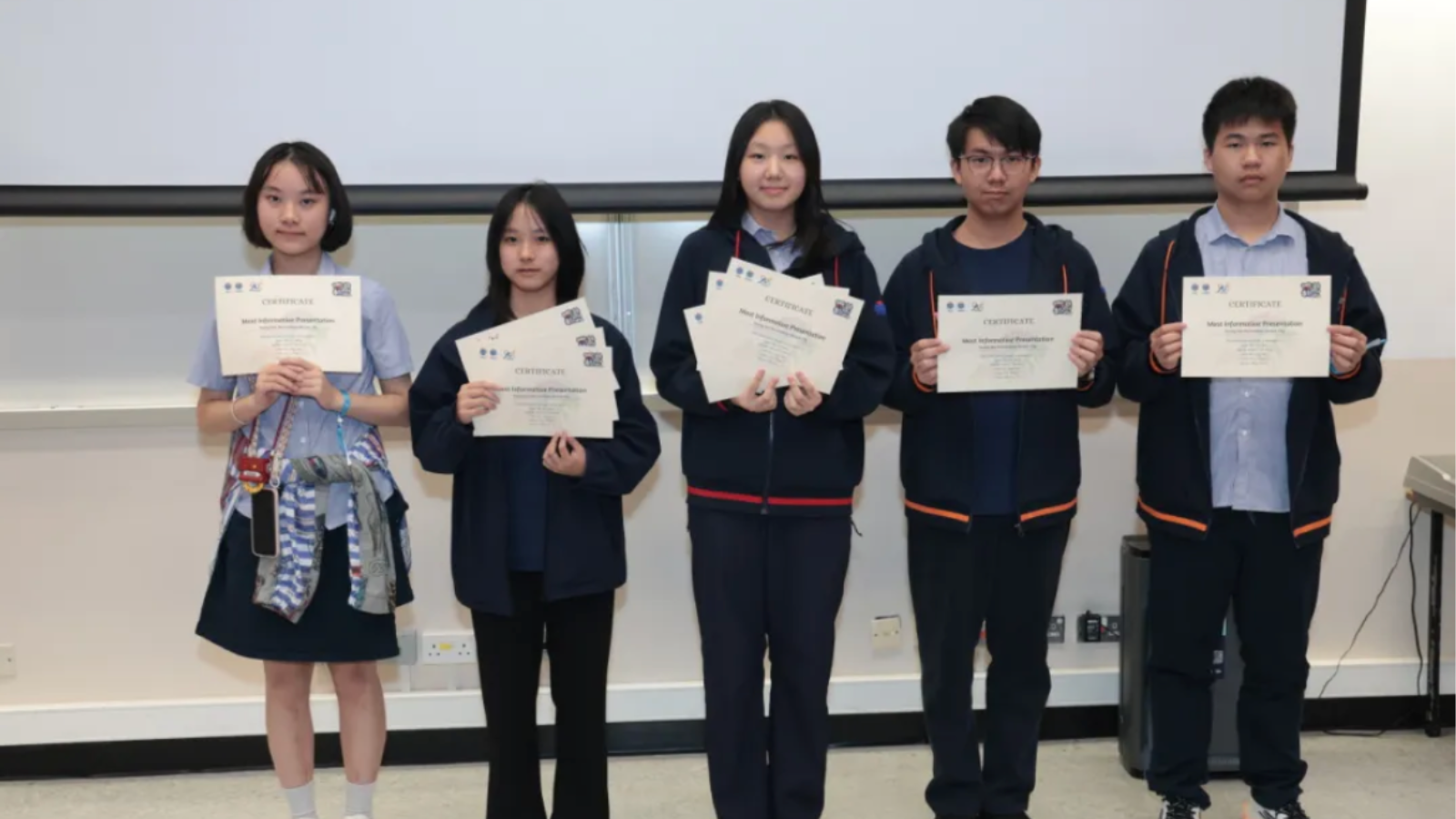
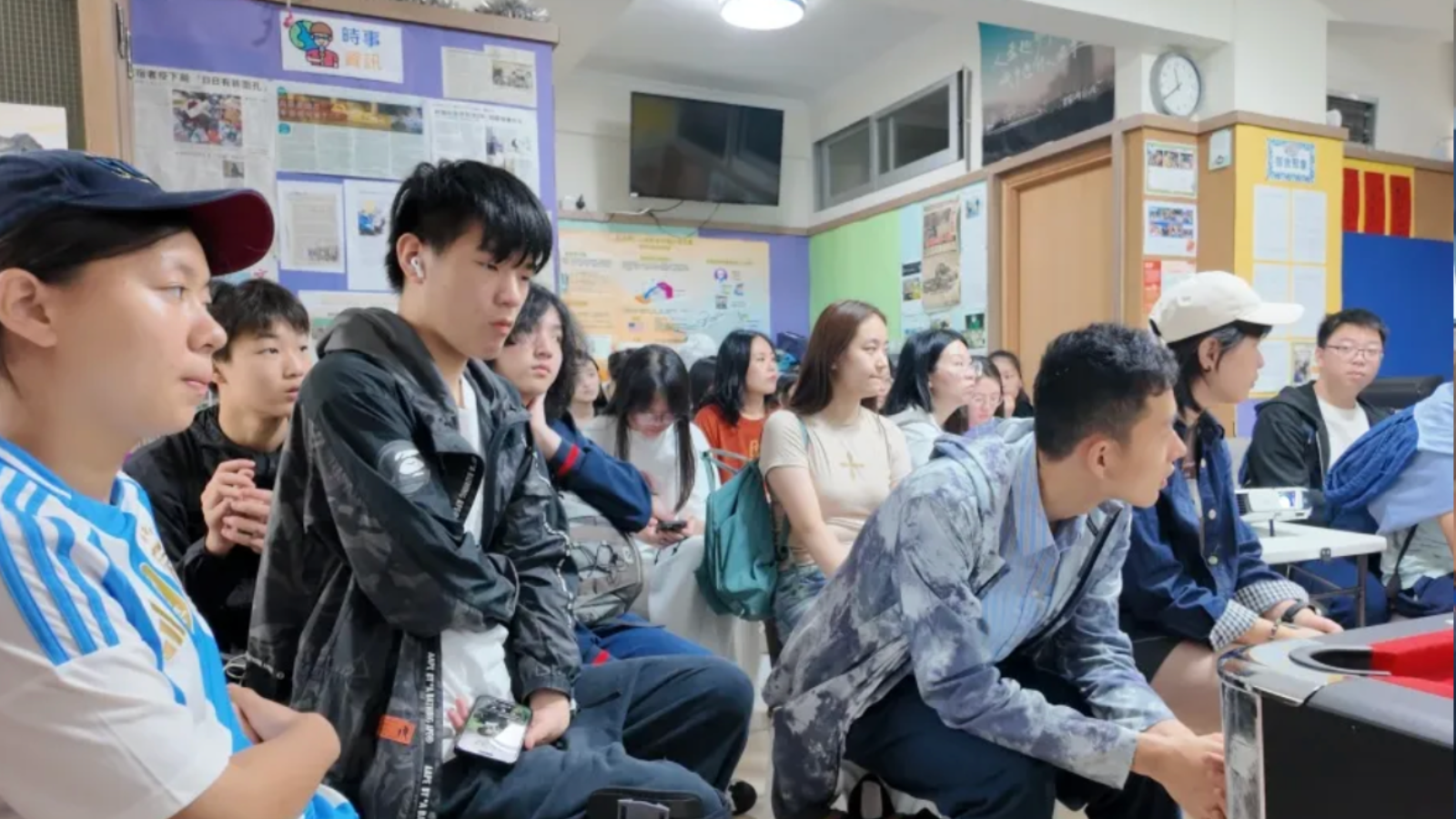
“When working alone, the students might have felt anxious. They might have lacked confidence, becoming fixated on their own ideas. But in groups, the students learned to negotiate, listen, and support one another. Such skills are essential for learning and for their future work,”explained Zoe Wang, another teacher in the trip.
Clear structures and rules unleashed the students’ creativity and passions.
Ms Sialini shared a touching moment: “One boy in our group, who had just recently enrolled at YWIES, hardly spoke any English. I wondered how he would be able to contribute to an English-speaking project. His teammates brilliantly cast him as a local Hong Kong resident because he spoke fluent Cantonese. This added incredible authenticity and gave him a meaningful role. The students were very considerate and thoughtful.”
Their group chose the Kowloon City district as their research site and filmed a mock interview with the boy as a “Kowloon City resident”. This made the project vivid and engaging.
Ms Wang recalled the situation with pride: “Students enjoyed the village mystery-solving challenges, during which everyone could contribute. Those skilled in observation found clues, while those skilled in navigation led the way. All the students could use their strengths in the activites. Even when the students got lost and took long detours, they didn’t complain. Instead, they rushed excitedly to the next challenge. I could clearly observe the motivation and drive of the students.”
After this one-week study tour, what will the students be able to bring back?
“Academically, I hope that this trip will make their knowledge richer and more comprehensive. But in addition to the usefulness for the HKDSE exams, I hope even more that this has journey will broaden their life experiences. By thinking and observing in a city with a different cultural background, the students can enrich their perspectives about life. Memories formed at this age are irreplaceable,” Ms Yan said.
Perhaps that is part of the lesson: sometimes, the greatest learning happens not in the pursuit of grades, but in the simple, expansive wonder of being present.
Ms Yan recalled the stop at Geopark: “We chose this place with careful consideration. Geopark is a frequent topic in HKDSE exams, and related content often appears in both the Chinese and English Language exams or the reading materials.”
But when the students actually arrived at Geopark, Jenny saw the students running, singing, and laughing there.
“That is a kind of pure, unadulterated joy.”