

Go Back
News
EdFutures News
The moment they plunged beneath the water, they glimpsed the future | YCYW Underwater Robotics Challenge
EdFutures News
06 Oct, 2026
18 : 10
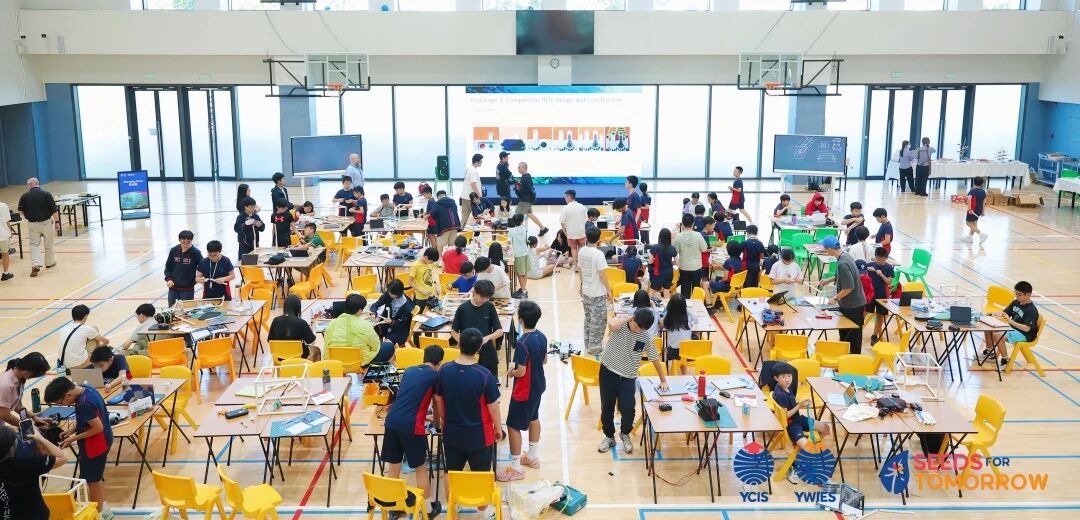
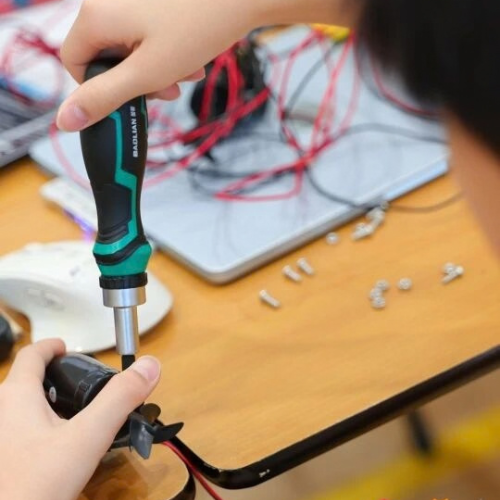
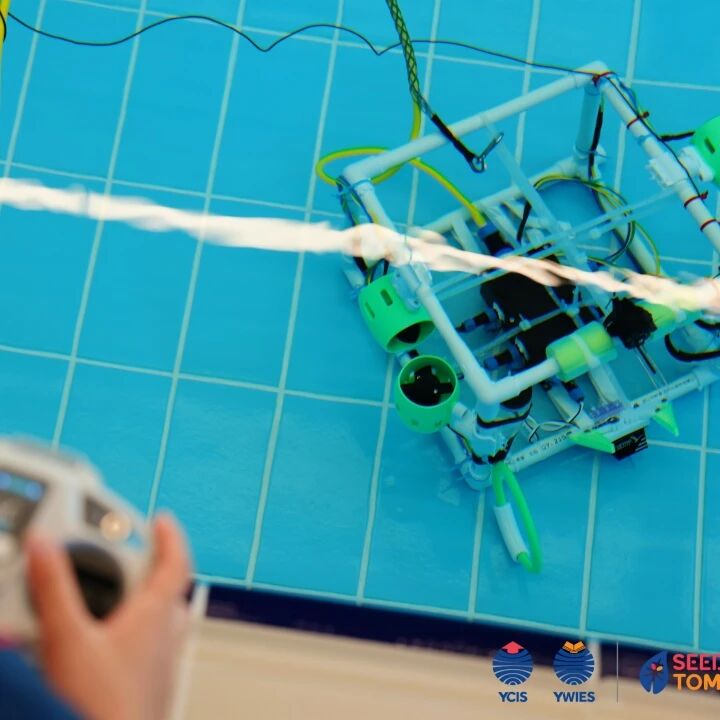
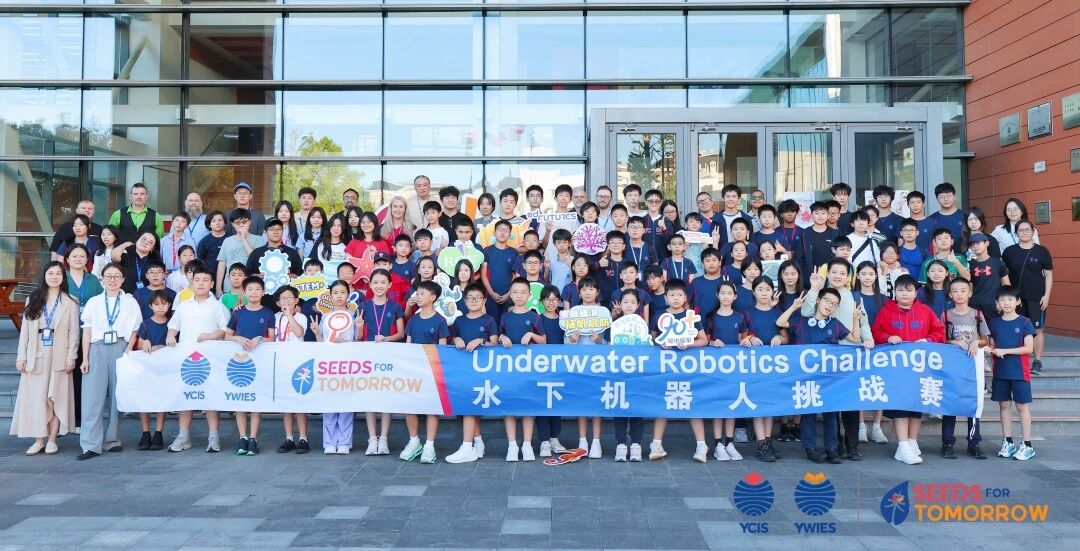
From Sept 11–14, students across the YCYW network gathered at YWIES Lingang, Shanghai — taking ROVs apart, rebuilding, sending them underwater, watching them fail, and starting over. 90 students in 23 teams (14 secondary, 9 primary). No script, no answer key — just committed kids and a body of water waiting to be explored.
01 · RON
“The machine was completely taken apart several times.”
G7 Ron, first time in the programme: sometimes a whole morning's work went into the water, a problem surfaced, and it was back to square one. He even thought about giving up. But the moment the ROV finally moved underwater — "nothing we put into it had been wasted." "None of this gets done without a strong leader making sure everyone knows their job." A first-time competitor figured out teamwork — and quietly set a goal: "come back next time, and become someone important to the team."
02 · MAY
“The most rewarding moment was seeing the ROV we assembled ourselves actually run.”
G9 May, also a first-timer: before this, she had no idea how an ROV's wiring related to its motors — "this activity let me connect them, wire by wire, with my own hands, and make the robot move." The first structure was wrong — the frame couldn't hold the motor. The team leader took them to a teacher; they redesigned, and the problem came undone. "It looks like just connecting a few wires, but get it wrong and the robot does absolutely nothing. You have to truly understand it before it listens to you."
03 · NINA
“This year, I was on my own.”
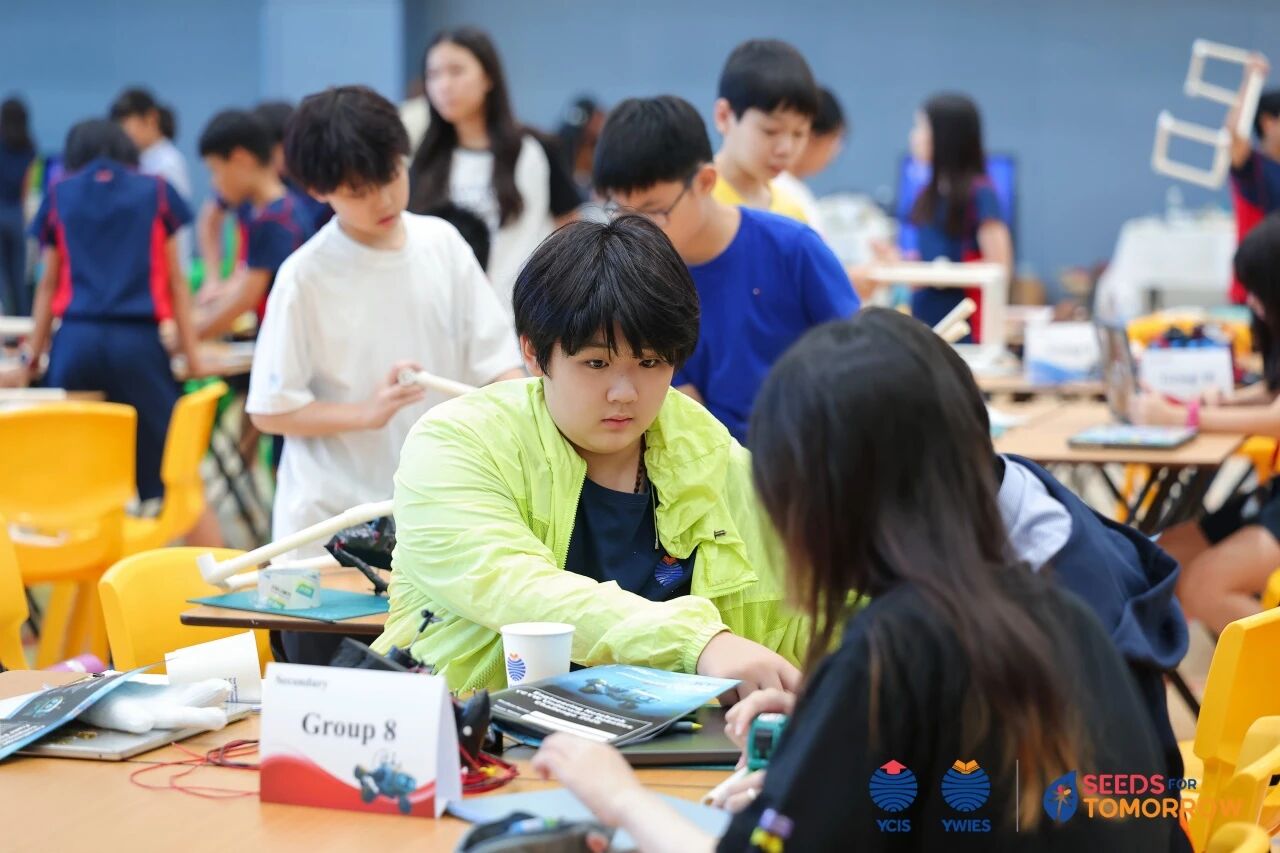
G9 Nina was competing for the third time. Used to partnering with her older sister, this year she became team leader, shepherding newcomers through design, building, testing and piloting. The defining moment came over thrusters: she insisted on eight for stability; a teammate pushed to keep only core functions and use the rest for speed. Neither side would budge — so they tested both. Hers was stable but slow; the other fast but not agile. They combined the strengths of both. "Teamwork isn't about giving orders or winning arguments. It's about being open to different ideas and letting experiments and data — not opinions — make the call."
04 · THE OCEAN
A few dozen centimetres below the surface, the real ocean is only a layer of imagination away
Piloting a self-built ROV and watching currents and light play across the camera feed, Nina pictured researchers' coastal survey ROVs — coral-reef monitoring, clearing abandoned fishing nets, tracking water pollution — collecting data without putting a single diver at risk. The children's hopes point the same way: seabed exploration and archaeology, marine-debris cleanup, and a future where fish and coral are better protected.
05 · CHAMPIONS
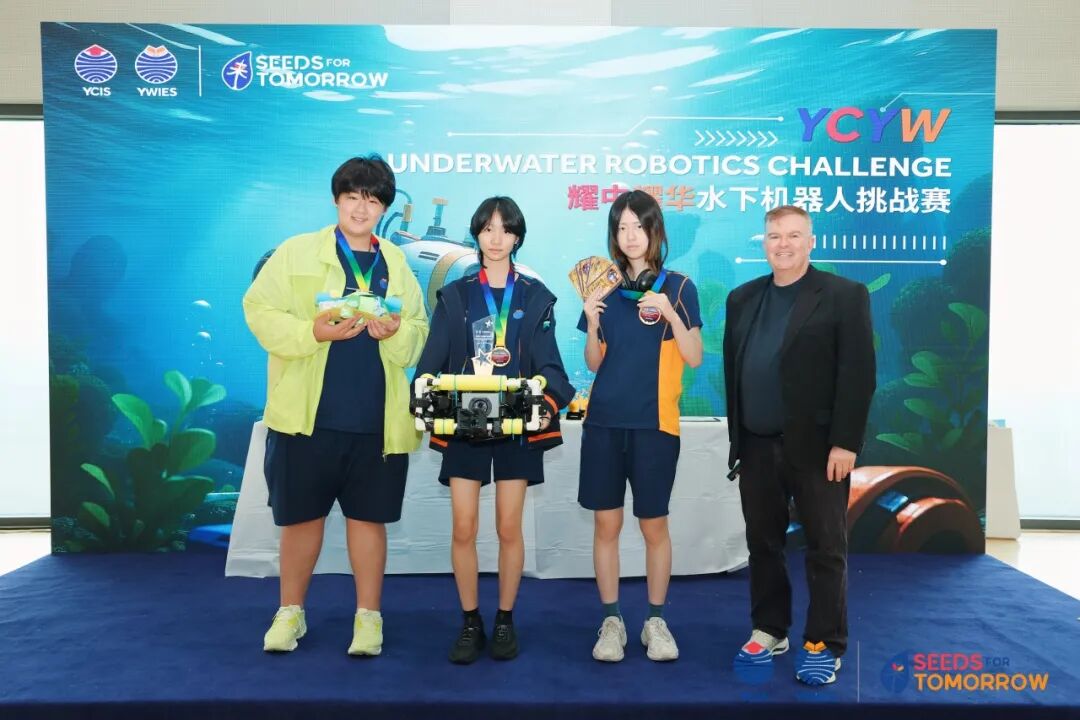
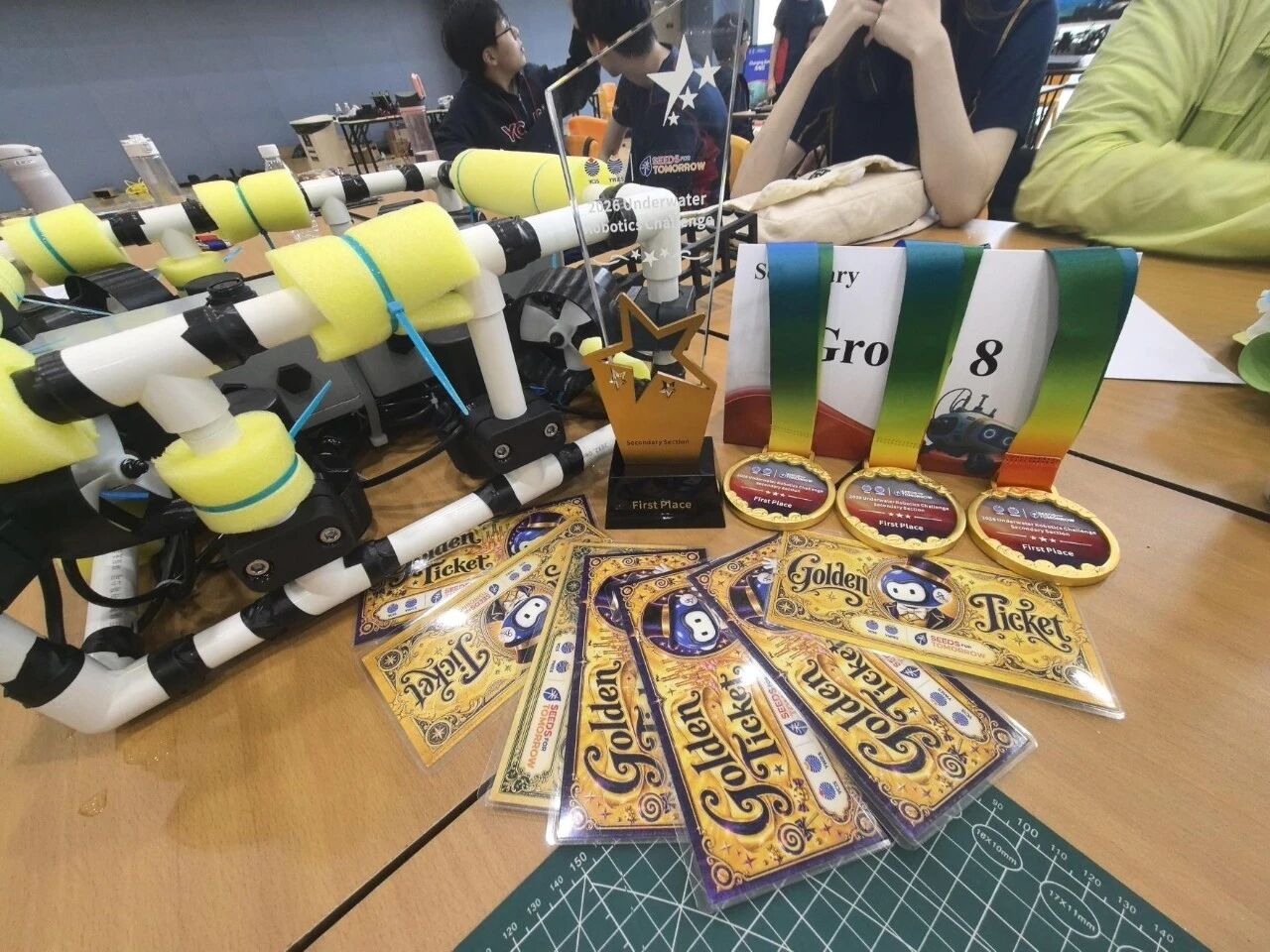
🏆 That team — from YWIES Beijing — took first place in the secondary school section.
A team's victory belongs to everyone who endured failure at the edge of the pool. But the win gave every teardown and rebuild that came before it an echo.
06 · THE MISSION
So what does a challenge like this ask of students?
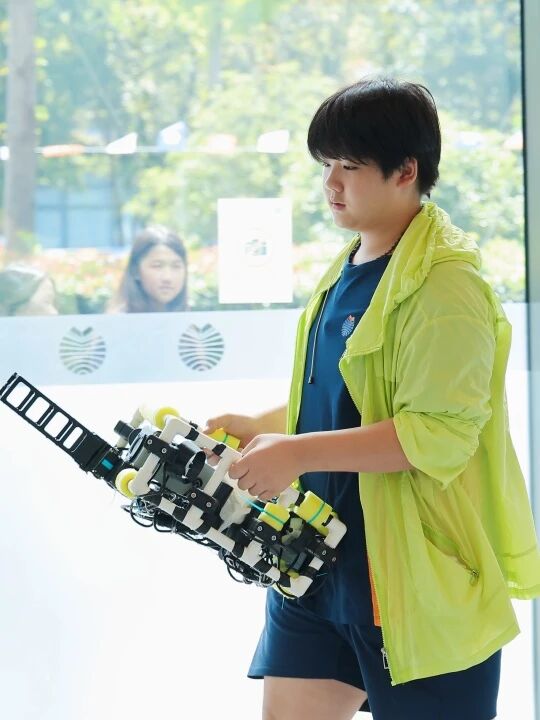
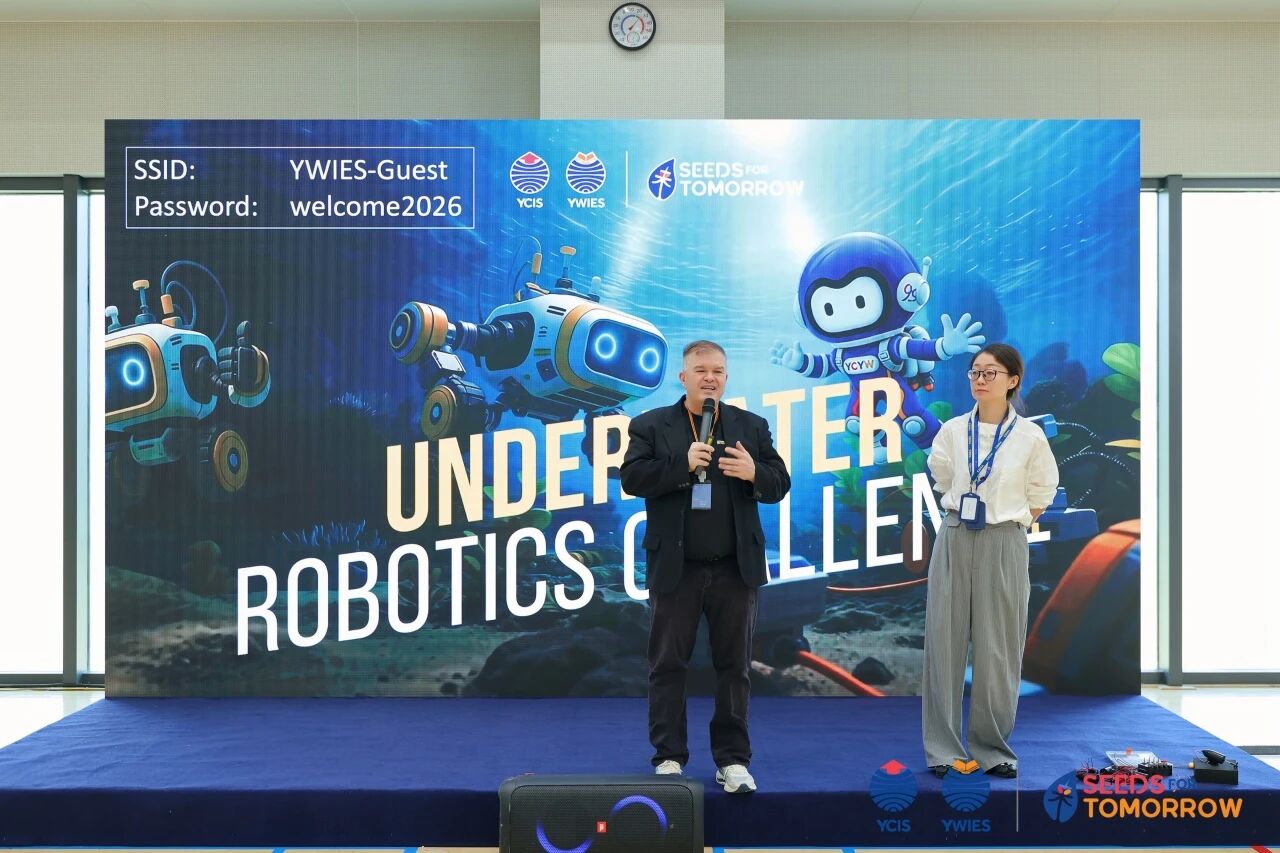
Programme lead Ms. Zhang: this year's tasks are more integrated than ever — students design and build their own ROV, work out buoyancy and stability, and complete a full mission: forward, backward, up, down, remote piloting, grabbing objects at different depths, all monitored on camera. Step by step: a simple prototype tested in the pool, then software simulation, then the competition robot — balance verified, camera and controller connected. Participation has more than doubled, and students' grasp of electronic engineering and structural mechanics — along with their hands-on ability — has deepened.
Four days is short. Passion is long.
After the competition, the school will keep supporting student teams through CCAs to develop their own ROVs. This is only the beginning — next, these students take their robots to a bigger stage: the international MATE ROV Competition in April 2027, where university teams from across China and overseas will be waiting.
Who will be the next child to put a robot in the water?
Follow us — and don't miss their next departure.