


Go Back
News
Alumni Stories
From YCIS to the British Bar
Alumni Stories
27 Apr, 2026
18 : 29
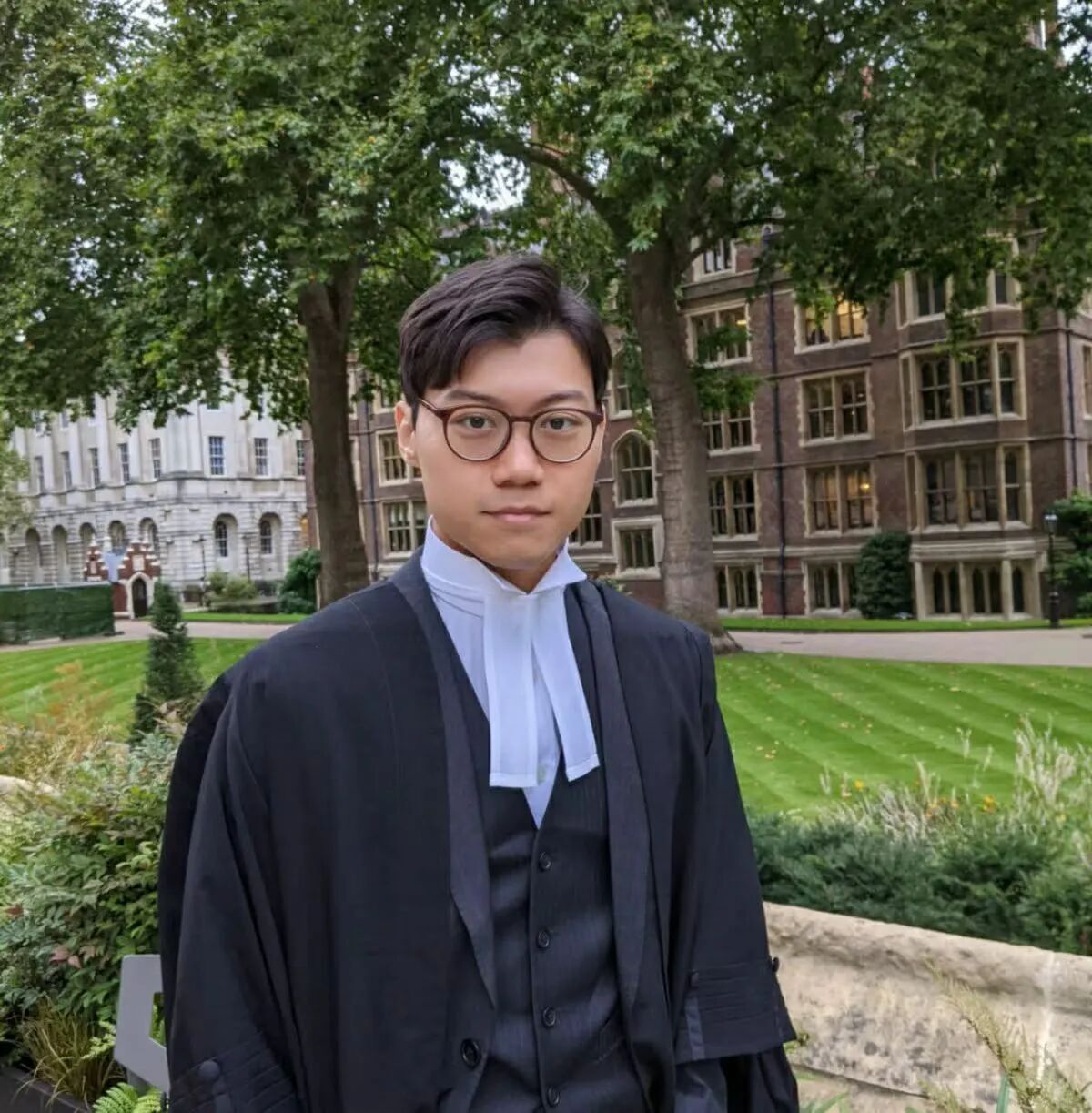
For many people, becoming a practising barrister in the UK might seem like a clear and direct path. For YCIS alumnus Mr Eugene Tang, however, the legal profession was not the career that he had expected to follow. Now practising law in London, he began in a very different field, studying psychology and neuroscience, and later pursued clinical neuroscience. Only after time, reflection, and experience did he gradually realise that scientific research was not right for him, and that law was what truly interested him.
Having studied at different YCIS campuses, Eugene grew up in a learning environment shaped by diversity, openness, and cultural exchange. Those early years enabled him to understand people from various backgrounds and view the world from different perspectives. He later moved to Canada to study at the University of Toronto, where he graduated with a double major in Psychology and Neuroscience. Looking back on these experiences, Eugene does not regard those choices as a detour from law, but as an important part of the person and professional he has become. In many ways, those seemingly unrelated studies helped shape the way he thinks, communicates, and carries himself in court today.
As a practising barrister, Eugene’s career is both demanding and ever-changing. Court days often begin early, and require travel to courts across the UK. After several hours of hearings, he must still finish the paperwork, organise his notes, and prepare for the next day’s cases. Yet for Eugene, the profession involves much more than solid legal knowledge. In his view, being a good barrister requires an understanding of people— knowing how to interact with witnesses, respond to judges, and engage with opposing counsel with clarity and composure.
This is why Eugene particularly values his academic background. Studying psychology and neuroscience not only taught him to analyse complex issues, but also helped him to observe, listen to, and better understand others. Those skills, although developed outside his legal training, have become a natural and important part of his legal practice.


When Eugene reflected on the influence that YCIS has had on him, he spoke about the school’s distinctive blend of Chinese and Western cultures. To him, what makes YCIS so special is the way the two traditions come together so naturally within everyday school life. This unique cultural environment not only deepened his identification with Chinese culture, but also helped him to develop a broader international outlook, enabling him to understand and communicate with different communities and cultures.
For students considering a career in the legal profession, Eugene’s advice is simple. Do not rush into making decisions too early. Instead, take time to explore what genuinely interests you. He believes that the legal profession benefits greatly from people with different academic backgrounds, life experiences, and ways of thinking. This diversity, he says, brings fresh perspectives and keeps the profession vibrant.
From YCIS campuses, to university classrooms in Canada, and courtrooms in London, Eugene’s path has not followed a conventional route. But perhaps that is exactly what makes his story so meaningful. It is a reminder that there is no single formula for success. By staying open, curious, and true to yourself, you can find the path that is right for you.